• Research
  • Politika
  • About
Carnegie Russia Eurasia center logoCarnegie lettermark logo
  • Donate
Latin America’s Polarization in Comparative Perspective
Research

Latin America’s Polarization in Comparative Perspective

Political polarization is a systemic-level and multifaceted process that severs cross-cutting ties and shifts perceptions of politics to a zero-sum game.

Link Copied
By Jennifer McCoy
Published on Aug 28, 2024
Read the publication

About the Author

Jennifer McCoy

Nonresident Scholar, Democracy, Conflict, and Governance Program

Jennifer McCoy is a nonresident scholar in the Democracy, Conflict, and Governance Program, where she focuses on political polarization and democratic resilience in the U.S. and around the world.

    Recent Work

  • Commentary
    Can Venezuela Move From Economic Stabilization to a Democratic Transition?

      Jennifer McCoy

  • Article
    Bet on Big-Tent Opposition Electoral Coalitions to Defeat Democratic Backsliding

      Benjamin Feldman, Jennifer McCoy

Jennifer McCoy
Nonresident Scholar, Democracy, Conflict, and Governance Program
Jennifer McCoy
South AmericaCentral America and the CaribbeanDemocracyPolitical ReformDomestic Politics

Carnegie does not take institutional positions on public policy issues; the views represented herein are those of the author(s) and do not necessarily reflect the views of Carnegie, its staff, or its trustees.
More Work from Carnegie Russia Eurasia Center

  • Commentary
    Carnegie Politika
    After Ilia II: What Will a New Patriarch Mean for Georgia?

    The front-runner to succeed Ilia II, Metropolitan Shio, is prone to harsh anti-Western rhetoric and frequent criticism of “liberal ideologies” that he claims threaten the Georgian state. This raises fears that under his leadership the Georgian Orthodox Church will lose its unifying role and become an instrument of ultraconservative ideology.

      Bashir Kitachaev

  • Commentary
    Carnegie Politika
    “Mr. Nobody Against Putin”: A Deep Dive Into Russian Propaganda

    Talankin and Borenstein’s documentary is a unique inside look at a regime that threatens the world and has killed thousands of people in its neighboring country. And many critics and general viewers alike draw parallels between the Putin regime and their own governments.

      Ekaterina Barabash

  • Commentary
    Carnegie Politika
    Why Did Messaging App Telegram Fall From Grace in Russia?

    The history of Telegram’s relations with the Russian state offers a salutary lesson for international platforms that believe they can reach a compromise with the Kremlin.

      Maria Kolomychenko

  • Commentary
    Carnegie Politika
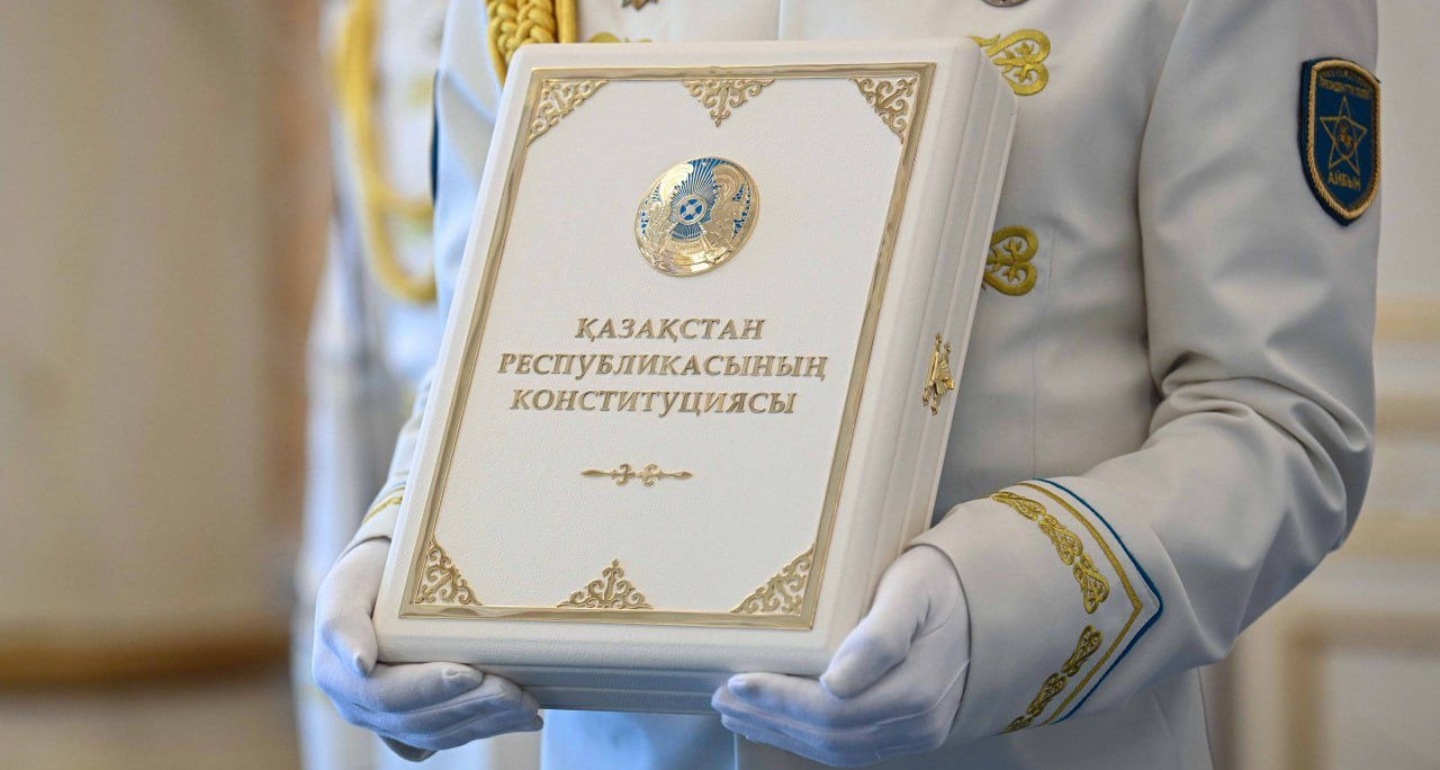
    Tokayev’s New Constitution Is a Bet on Stability—At Freedom’s Expense

    Kazakhstan’s new constitution is an embodiment of the ruling elite’s fears and a self-serving attempt to preserve the status quo while they still can.

      Serik Beysembaev

  • Commentary
    Carnegie Politika
    The Nuances of Oscar-Winning Film “Mr. Nobody Against Putin”

    It’s disingenuous to criticize a film for simplifying Russia’s complexities when Russia is waging a brutally simple war of aggression against its neighbor.

      Alexander Baunov

Get more news and analysis from
Carnegie Russia Eurasia Center
Carnegie Russia Eurasia logo, white
  • Research
  • Politika
  • About
  • Experts
  • Events
  • Contact
  • Privacy
  • For Media
Get more news and analysis from
Carnegie Russia Eurasia Center
© 2026 Carnegie Endowment for International Peace. All rights reserved.