

Article
Thomas Carothers
{
  "authors": [
    "Thomas Carothers"
  ],
  "type": "legacyinthemedia",
  "centerAffiliationAll": "dc",
  "centers": [
    "Carnegie Endowment for International Peace"
  ],
  "collections": [
    "Democracy and Governance"
  ],
  "englishNewsletterAll": "democracy",
  "nonEnglishNewsletterAll": "",
  "primaryCenter": "Carnegie Endowment for International Peace",
  "programAffiliation": "DCG",
  "programs": [
    "Democracy, Conflict, and Governance"
  ],
  "projects": [],
  "regions": [
    "North America",
    "United States",
    "Middle East",
    "North Africa",
    "Egypt",
    "Iraq",
    "East Asia",
    "China",
    "Central Asia",
    "Kyrgyz Republic",
    "Caucasus",
    "Russia",
    "Georgia",
    "Eastern Europe",
    "Ukraine"
  ],
  "topics": [
    "Political Reform",
    "Democracy",
    "Security",
    "Foreign Policy"
  ]
}
Source: Getty
Authoritarian leaders around the world have recently started to crack down on democracy-promotion efforts in their countries. The Bush administration's pro-democracy bombast has not helped matters, but has contributed to the false idea that political liberalization is a U.S.-driven phenomenon.
Source: Foreign Affairs

In January, Russian President Vladimir Putin signed into law a controversial new bill imposing heightened controls on local and foreign nongovernmental organizations (NGOs) operating in the country. The new legislation, which requires all NGOs in Russia to inform the government in advance about every project they intend to conduct, is another marker of the country's dispiriting slide back toward authoritarianism.
The law is also a sign of an equally disturbing and much broader trend. After two decades of the steady expansion of democracy-building programs around the world, a growing number of governments are starting to crack down on such activities within their borders. Strongmen -- some of them elected officials -- have begun to publicly denounce Western democracy assistance as illegitimate political meddling. They have started expelling or harassing Western NGOs and prohibiting local groups from taking foreign funds -- or have started punishing them for doing so. This growing backlash has yet to coalesce into a formal or organized movement. But its proponents are clearly learning from and feeding off of one another.
The recent "color revolutions" in Georgia, Ukraine, and Kyrgyzstan and the widespread suspicion that U.S. groups such as the National Democratic Institute (NDI), the International Republican Institute (IRI), Freedom House, and the Open Society Institute played a key behind-the-scenes role in fomenting these upheavals have clearly helped trigger the backlash. Politicians from China to Zimbabwe have publicly cited concerns about such events spreading to their own shores as justification for new restrictions on Western aid to NGOs and opposition groups. Yet there is something broader at work than just a fear of orange (Ukraine's revolution came to be known as the Orange Revolution). The way that President George W. Bush is making democracy promotion a central theme of his foreign policy has clearly contributed to the unease such efforts (and the idea of democracy promotion itself) are creating around the world. Some autocratic governments have won substantial public sympathy by arguing that opposition to Western democracy promotion is resistance not to democracy itself, but to American interventionism. Moreover, the damage that the Bush administration has done to the global image of the United States as a symbol of democracy and human rights by repeatedly violating the rule of law at home and abroad has further weakened the legitimacy of the democracy-promotion cause.
Just as the sources of the backlash have been multilayered, so too must be the response. To remain as effective in the next decade as they have been in the last, groups that promote democracy must come to grips with how the international context for their work has changed. This will mean rethinking some of their methods. The Bush administration, meanwhile, must also face some unpleasant realities, specifically about how the president's "freedom agenda" is perceived around the world, and must engage seriously an effort to build credibility for its democracy endeavor.
Please click here to read full article (purchase required).
Reprinted by permission of FOREIGN AFFAIRS, March/April 2006. Copyright 2006 by the Council on Foreign Relations, Inc.

Harvey V. Fineberg Chair for Democracy Studies; Senior Fellow, Democracy, Conflict, and Governance Program
Thomas Carothers, a senior fellow in the Carnegie Endowment for International Peace’s Democracy, Conflict, and Governance Program, is a leading expert on comparative democratization and international support for democracy.
Recent Work
Thomas Carothers
Thomas Carothers
Carnegie does not take institutional positions on public policy issues; the views represented herein are those of the author(s) and do not necessarily reflect the views of Carnegie, its staff, or its trustees.

China’s banking crisis in the 2000s was resolved by transferring the costs to households through financial repression—a decision that recapitalized the banks while exacerbating the structural imbalances that continue to shape the Chinese economy today.

Michael Pettis

Chinese biotech companies have been on the receiving end of U.S. economic coercion. Yet their responses have differed significantly because firm and state interests are not uniformly aligned. For Washington, treating all Chinese tech firms the same, irrespective of their actual interests, risks pushing them farther into Beijing’s corner.

Xue Gong
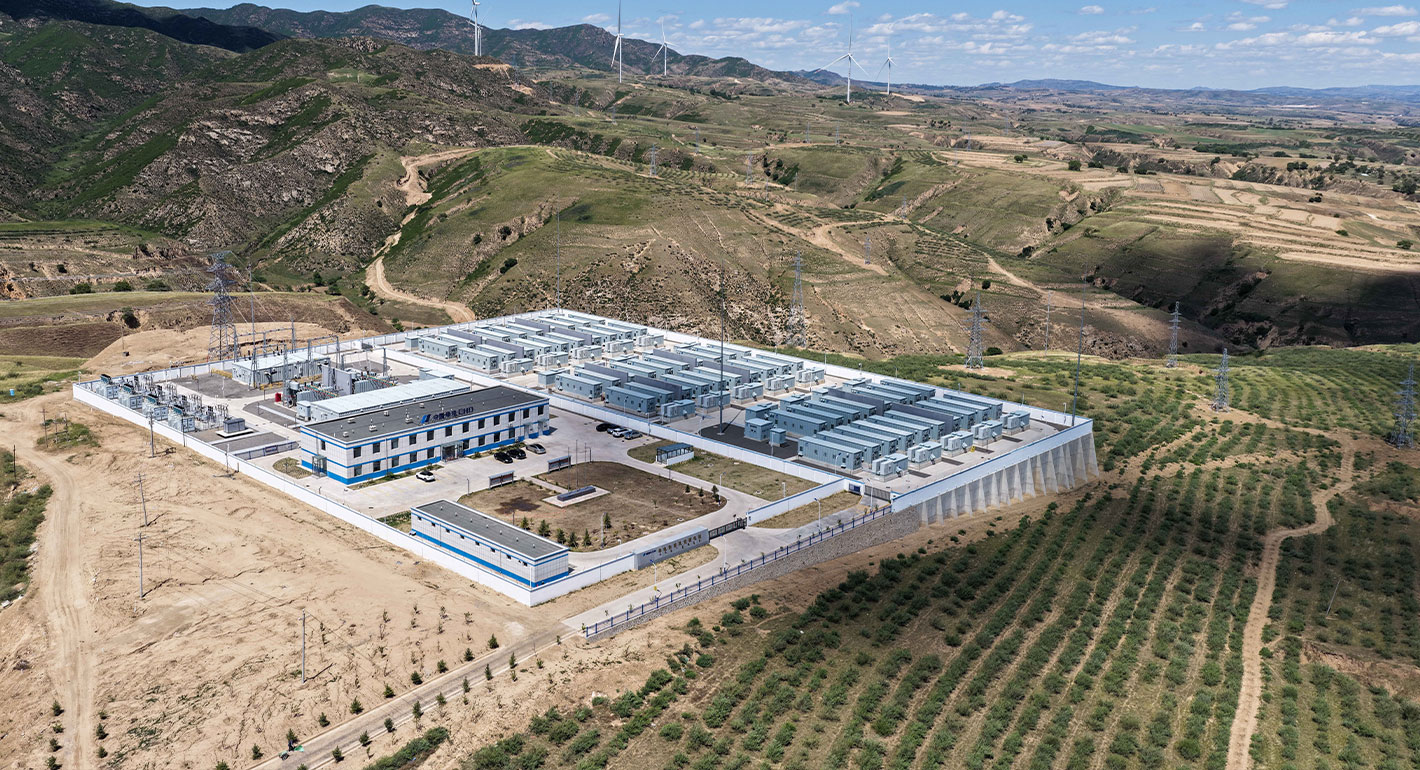
China’s latest energy plan explicitly calls for integrating data centers into the electricity system, particularly connecting them to green energy. It appears Beijing wants to use compute as a source of domestic demand to absorb renewables excess capacity.

Damien Ma

But their "principal to principal" model will only be as effective as the political strength of each leader back home.
Damien Ma

U.S. unpredictability has allowed China to capitalize on its positioning as the “responsible great power”. Paradoxically, the more China wins the perception game, the more likely expectations will rise for Beijing to deliver not just words but to demonstrate with its deeds.

Chong Ja Ian