

Commentary
Maria Lipman
{
  "authors": [
    "Maria Lipman"
  ],
  "type": "legacyinthemedia",
  "centerAffiliationAll": "",
  "centers": [
    "Carnegie Endowment for International Peace",
    "Carnegie Russia Eurasia Center"
  ],
  "collections": [],
  "englishNewsletterAll": "",
  "nonEnglishNewsletterAll": "",
  "primaryCenter": "Carnegie Russia Eurasia Center",
  "programAffiliation": "",
  "programs": [],
  "projects": [],
  "regions": [
    "Caucasus",
    "Russia"
  ],
  "topics": [
    "Political Reform",
    "Economy"
  ]
}
Source: Getty
here's a sea of rumors and theories raging about the Russian presidential succession and what Vladimir Putin would do after -- and if -- he stepped down. The diversity of theories is impressive, illustrating how unpredictable and potentially unstable the situation may become. The range of guesses made by pundits, Kremlin insiders, political analysts and experts at home and abroad is getting broader, not narrower, as the election draws nearer. Moreover, those who venture guesses don't seem to be basing them on even partial knowledge; rather, it's a desire by each to sound more interesting than the other guy.
Source: Washington Post

The list of potential successors starts with the prime minister's two deputies, Sergei Ivanov and Dmitri Medvedev, whom Putin has pushed to the fore. Both have been given ample television coverage and have become generally popular, though if Putin changes his mind, the public will be "informed" who the new favorites are by a shift in coverage.
There's no shortage of hypotheses about who the real candidate may be if, as a common theory goes, Ivanov and Medvedev are merely meant to divert the public's attention. Policy moves, Putin's casual remarks or any reshuffling in the top tiers of officialdom are being scrutinized for clues regarding the future configuration of power.
The pool of Putin's potential "heirs" also includes the chairman of the railroad monopoly, the Kremlin chief of staff, a prominent regional governor, the prime minister and the mayor of St. Petersburg as well as a few other high office-holders.
The guessing game has spread far beyond the circles of serious political analysts. This week Echo Moskvy, a popular political radio station, asked listeners to pick their dream president from figures in classic Russian literature.
Those too cautious to make concrete predictions speculate on whether the new president will be weak, so that Putin would remain the decision-maker even after stepping down, or strong, meaning Putin would have to exit Russian politics.
This leads to another field of guesswork, regarding Putin's future employment. While former U.S. national security adviser Zbigniew Brzezinski sees Putin as a "colleague, a boss or a deputy of [Gerhard] Schroeder" (the German ex-chancellor now serving as chairman of a prospective Russian-German gas pipeline), some Russians envision Putin as chairman of the International Olympic Committee. Others believe he will become prime minister; chief justice of the Constitutional Court; head of the Russian Security Council; chairman of a massive charity fund; leader of the biggest pro-Kremlin party; or chairman of the two biggest Russian energy companies, which would merge so that Putin would be at the helm of the world's largest energy company.
Obviously, such speculation is pointless. What we are trying to figure out is not the result of an interplay of interests represented in democratic institutions -- Russian politics has been deinstitutionalized so that no institution is relevant except the omnipotent president and his top aides. We're trying to guess the workings of one man's brain, a man to whom secrecy is a primary concern.
As political analysts try to guess whom he'll anoint -- and the Russian people stand ready to accept any choice he makes -- Putin generally declines to comment. When he does answer questions, he dismisses talk about succession or anointment. Russia will have a competition like any other democratic country, he said a few months ago.
The two men regarded, at least for now, as the leading possible successors also pretend not to understand what this successor jive is about. This year, Ivanov said he was too busy with his current job to worry about the presidential race. "I don't think about this at all," he said.
He's right not to think about it, because what he -- or anyone else -- thinks is of secondary importance. The decision will be Putin's, and whether he's chosen yet is anybody's guess. Even four years ago the Kremlin already had full control over who would -- and wouldn't -- run for president. The 2004 race was farcical, so much so that the speaker of parliament's upper house, who was running for president himself but declared he was a supporter of Putin, explained his candidacy by saying that "when a leader who is trusted goes into battle, he must not be left alone. One must stand beside him."
This time the election may again be a farce, but the stakes are high. The political upper class has evolved into groups with conflicting interests. Putin has been able to maintain balance among them, but when he is no longer able to serve as arbiter, their struggle for power and property may break the fragile stability. Moreover, during Putin's tenure, many long-overdue reforms were suspended, and the quality of governance has deteriorated. Putin's successor will inherit heavy burdens. But the way this person is likely to be selected leaves little chance that he'll rise to the task.
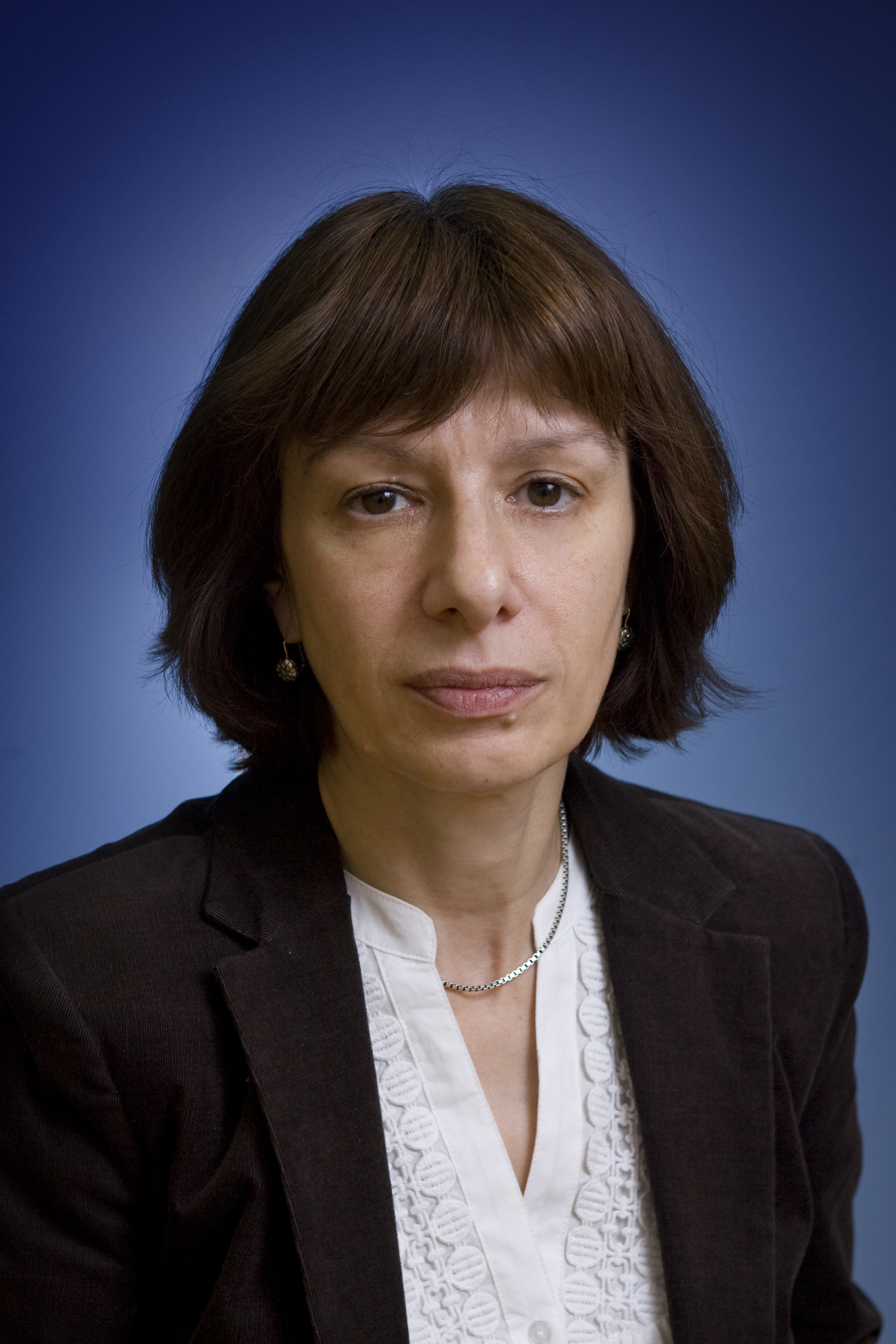
Masha Lipman, editor of the Carnegie Moscow Center's Pro et Contra journal, writes a monthly column for The Washington Post.
Former Scholar in Residence, Society and Regions Program, Editor in Chief, Pro et Contra, Moscow Center
Lipman was the editor in chief of the Pro et Contra journal, published by the Carnegie Moscow Center. She was also the expert of the Carnegie Moscow Center’s Society and Regions Program.
Recent Work
Maria Lipman
Maria Lipman
Carnegie does not take institutional positions on public policy issues; the views represented herein are those of the author(s) and do not necessarily reflect the views of Carnegie, its staff, or its trustees.

China’s banking crisis in the 2000s was resolved by transferring the costs to households through financial repression—a decision that recapitalized the banks while exacerbating the structural imbalances that continue to shape the Chinese economy today.

Michael Pettis

In the latest Five-Year Plan, the Chinese president cements the shift to an innovation-driven economy over a consumption-driven one.

Damien Ma
Rather than climate ambitions, compatibility with investment and exports is why China supports both green and high-emission technologies.
Mathias Larsen
“Involution” is a new word for an old problem, and without a very different set of policies to rein it in, it is a problem that is likely to persist.
Michael Pettis
While China's investment story seems contradictory from the outside, the real answers to Beijing's high-quality growth ambitions are hiding in plain sight across the nation's cities.
Yuhan Zhang