

Other
- +1
Dmitri Trenin, Sergei Aleksashenko, Sam Greene, …
{
  "authors": [
    "Sam Greene"
  ],
  "type": "legacyinthemedia",
  "centerAffiliationAll": "",
  "centers": [
    "Carnegie Endowment for International Peace",
    "Carnegie Russia Eurasia Center"
  ],
  "collections": [],
  "englishNewsletterAll": "",
  "nonEnglishNewsletterAll": "",
  "primaryCenter": "Carnegie Russia Eurasia Center",
  "programAffiliation": "",
  "programs": [],
  "projects": [],
  "regions": [
    "Caucasus",
    "Russia"
  ],
  "topics": [
    "Political Reform",
    "Democracy",
    "Economy",
    "Foreign Policy"
  ]
}
REQUIRED IMAGE
Russia-watchers breathed a sigh of relief Monday with the news that Vladimir Putin had selected his successor. Finally, we knew the name of Russia's next president: Dmitry Medvedev. The initial consensus was, it could have been worse. But what we learned on Monday is dwarfed by what we still do not know about Russia's immediate future.
Source: Washington Post
Russia-watchers breathed a sigh of relief Monday with the news that Vladimir Putin had selected his successor. Finally, we knew the name of Russia's next president: Dmitry Medvedev. The initial consensus was, it could have been worse. But what we learned on Monday is dwarfed by what we still do not know about Russia's immediate future.
To be fair, we know a lot more about Medvedev than we did about Putin in 1999, when Boris Yeltsin unveiled him as Russia's second president. A lawyer with a strong grasp of market economics, Medvedev has a proven knack for soothing Russia's Western partners and international investors; Russia's stock markets soared on the news of his anointment. Within Russia, he is seen as a relative liberal. Liberal because he has not been an outspoken proponent of strong-armed government, but a relative liberal, because he has been more than willing to take part in massive state intervention into the economy.
Thanks in large part to his long friendship with the outgoing president -- dating back to law school in Leningrad, followed by a stint together in St. Petersburg's city hall -- we know also that Medvedev is very much Putin's man. Unlike other heirs apparent, such as Sergey Ivanov, with deep roots in the security apparatus, Medvedev has very little power base of his own. His rise through the government, as well as his place atop Gazprom's board of directors, is owed exclusively to Putin. As a result, any loyalty Medvedev commands hinges entirely on the trust Putin has invested in him.
Medvedev's résumé, though, tells us very little about what Russia's political future will look like. Yet if, as Medvedev has suggested, Putin simply moves over to the prime minister's chair, Medvedev becomes little more than a lieutenant, and we continue to live with Putin's Russia.
It is pretty clear that Medvedev will not come to power through legitimate democratic elections. The support he enjoys from Putin and the Kremlin's United Russia Party -- not to mention three other Kremlin-linked parties -- is sufficient to ensure that the Russian political establishment, news media and bureaucracy will truly countenance no other candidate. Those who do run nonetheless, including opposition leader Mikhail Kasyanov, will get no traction.
In some ways, the process that put Putin in power in 1999 is being replicated. The same competing, irreconcilable interest groups that compromised on Putin to succeed Yeltsin will coalesce around Medvedev, seeing him as suitably harmless (read powerless) as a neutral arbiter.
But Russia in 2007 is very different from Russia in 1999. The flood of money from oil, gas and other natural resources into an increasingly centralized power structure has raised the stakes of the political game dramatically. Trust in Russian politics is in very short supply, as cutthroat tactics within the elite are on the rise.
The only way Russia's ruling cliques will agree to support Medvedev is if Putin continues to guarantee their unimpeded and unaccountable prosperity. A presidential nomination and successful election will not confer on Medvedev the power that Putin has wielded to date. And because that power must be wielded, it will continue to reside with Putin even after Medvedev becomes president.
What the relationship between the two men will be, and how that relationship will affect political competition, is yet to be seen. In today's Russia, even more so than in the old Soviet Union, there are no guides for us to follow. We find it difficult to understand how the system works, because there is no system.
All we know is this: Next spring, when Putin moves out of the Kremlin and Medvedev moves in, Russia will undoubtedly change. Unfortunately, knowing who will be president tells us virtually nothing about the direction that change will take.
The author is a scholar-in-residence at the Moscow Center of the Carnegie Endowment for International Peace.
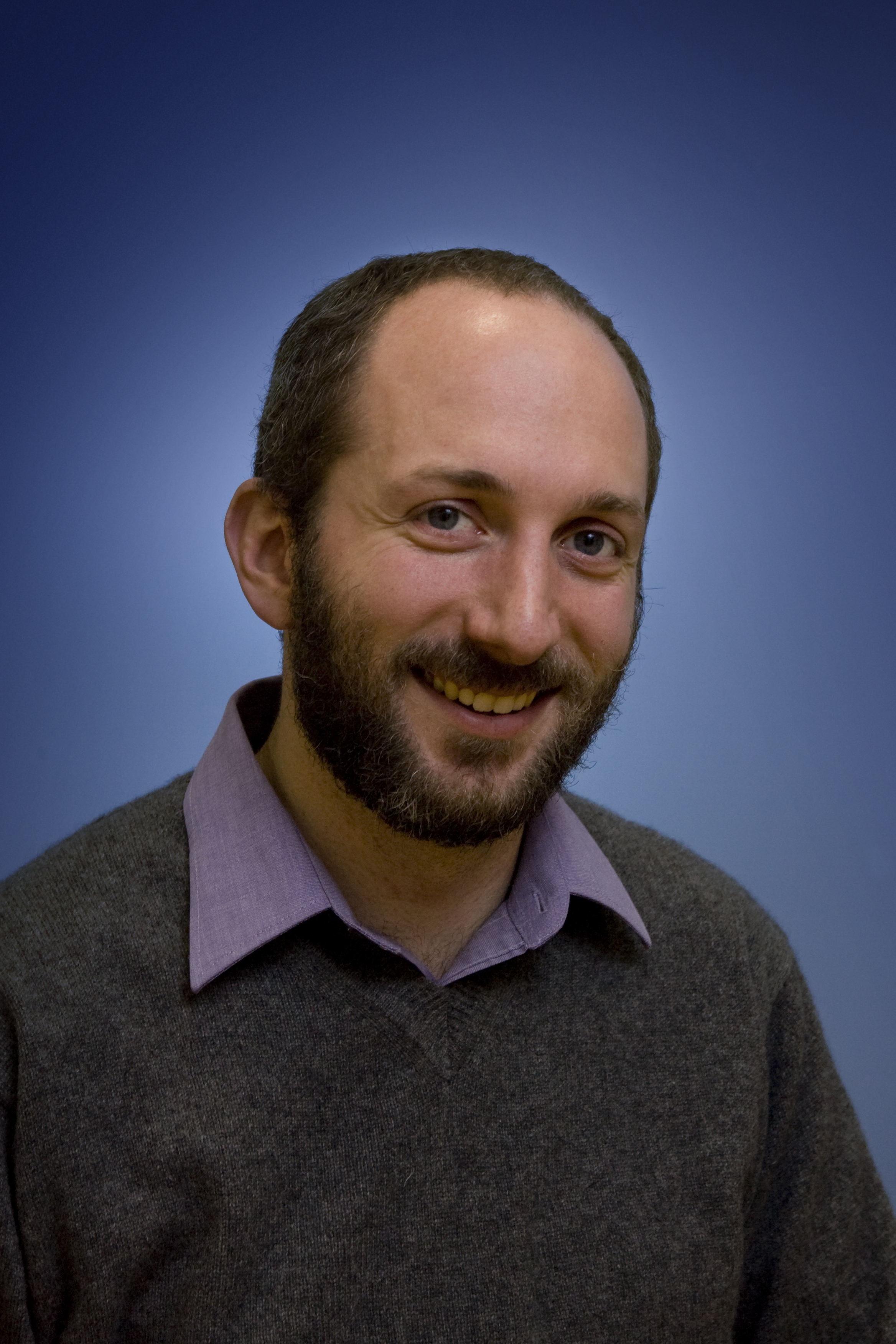
Former Deputy Director for Operations, Moscow Center
Sam Greene was a deputy director for operations at the Moscow Center. He joined the Moscow Center in 2005. Previously, he was senior media program advisor for the New Eurasia Foundation, and a London and Moscow correspondent for FT Business.
Recent Work
Dmitri Trenin, Sergei Aleksashenko, Sam Greene, …
Sam Greene
Carnegie does not take institutional positions on public policy issues; the views represented herein are those of the author(s) and do not necessarily reflect the views of Carnegie, its staff, or its trustees.

China’s banking crisis in the 2000s was resolved by transferring the costs to households through financial repression—a decision that recapitalized the banks while exacerbating the structural imbalances that continue to shape the Chinese economy today.

Michael Pettis

But their "principal to principal" model will only be as effective as the political strength of each leader back home.

Damien Ma

U.S. unpredictability has allowed China to capitalize on its positioning as the “responsible great power”. Paradoxically, the more China wins the perception game, the more likely expectations will rise for Beijing to deliver not just words but to demonstrate with its deeds.

Chong Ja Ian

Hanoi and Beijing have long treated each other as distant cousins rather than comrades in arms. That might be changing as both sides draw closer to hedge against uncertainty and America’s erratic behavior.

Nguyễn Khắc Giang

Across Asia, China is better positioned to withstand energy shocks from the fallout of the Iran war. Its abundant coal capacity can ensure stability in the near term. Yet at the same time, the country’s energy transition away from coal will make it even less vulnerable during the next shock.
Damien Ma