

Paper
Thomas Carothers
{
  "authors": [
    "Thomas Carothers"
  ],
  "type": "legacyinthemedia",
  "centerAffiliationAll": "dc",
  "centers": [
    "Carnegie Endowment for International Peace"
  ],
  "collections": [],
  "englishNewsletterAll": "democracy",
  "nonEnglishNewsletterAll": "",
  "primaryCenter": "Carnegie Endowment for International Peace",
  "programAffiliation": "DCG",
  "programs": [
    "Democracy, Conflict, and Governance"
  ],
  "projects": [],
  "regions": [
    "North America",
    "United States"
  ],
  "topics": [
    "Political Reform",
    "Democracy",
    "Foreign Policy"
  ]
}
Source: Getty
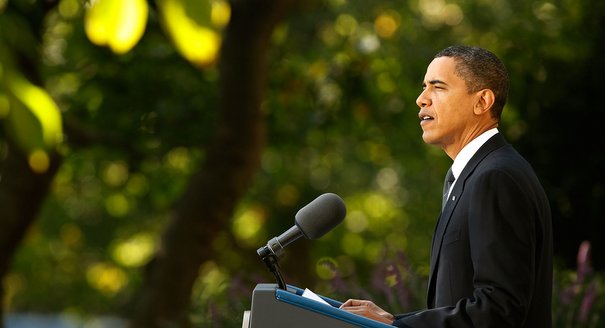
The awarding of the Nobel peace prize to President Obama reflects just how strongly many Europeans felt that a rift opened up between the United States and the rest of the world during the Bush years. In their view, Obama’s global reengagement itself merits reward.
Source: The New York Times

The prize reflects just how strongly many Europeans felt that a conflictive rift opened up between the United States and the rest of the world during the Bush years. In their view, Mr. Obama’s election and his determination to reengage globally already have done much to heal this rift and thus merit reward.
In several past cases the Nobel boost was short-lived.
This isn’t the first peace prize to look forward as much as backward. The prize to South Korean President Kim Dae Jung in 2000 came just after his historic summit with North Korea. It sought to bolster the chances that a promising but as yet only preliminary diplomatic step might pay off in terms of peace down the road.
Kofi Annan’s prize in 2001 came in the first half of his tenure as secretary general of the United Nations, possibly aiming to fortify him for what the Nobel committee expected would be hard times ahead for international peace in the aftermath of September 11.
The award to Iranian human rights lawyer Shirin Ebadi in 2003 was not simply a recognition of her past accomplishments defending human rights in Iran. It aimed to boost her future efforts at a time when Iran’s reform movement was losing steam and troubling political waters clearly lay ahead.
Iran may also been on the Nobel committee’s mind this time as well. Europeans are extremely anxious for Mr. Obama’s diplomatic overture to Iran to succeed. The committee may have calculated that it will be harder domestically and internationally for Iran’s Supreme Leader and president to bite an outstretched hand if it that hand comes not just from an American president but the holder of a Nobel Peace Prize.
Yet optimism must be qualified by the record. In those past cases the Nobel boost was short-lived. Peace with North Korea remained elusive. Kofi Annan locked horns unsuccessfully with the Bush administration over the invasion of Iraq. And despite Shirin Ebadi’s continued valiant work, human rights in Iran deteriorated steadily after 2003.

Harvey V. Fineberg Chair for Democracy Studies; Senior Fellow, Democracy, Conflict, and Governance Program
Thomas Carothers, a senior fellow in the Carnegie Endowment for International Peace’s Democracy, Conflict, and Governance Program, is a leading expert on comparative democratization and international support for democracy.
Recent Work
Thomas Carothers
Thomas Carothers
Carnegie does not take institutional positions on public policy issues; the views represented herein are those of the author(s) and do not necessarily reflect the views of Carnegie, its staff, or its trustees.

But their "principal to principal" model will only be as effective as the political strength of each leader back home.

Damien Ma

U.S. unpredictability has allowed China to capitalize on its positioning as the “responsible great power”. Paradoxically, the more China wins the perception game, the more likely expectations will rise for Beijing to deliver not just words but to demonstrate with its deeds.

Chong Ja Ian

Hanoi and Beijing have long treated each other as distant cousins rather than comrades in arms. That might be changing as both sides draw closer to hedge against uncertainty and America’s erratic behavior.

Nguyễn Khắc Giang

Across Asia, China is better positioned to withstand energy shocks from the fallout of the Iran war. Its abundant coal capacity can ensure stability in the near term. Yet at the same time, the country’s energy transition away from coal will make it even less vulnerable during the next shock.
Damien Ma

Malaysia’s chairmanship sought to fend off short-term challenges while laying the groundwork for minimizing ASEAN’s longer-term exposure to external stresses.

Elina Noor