

Paper
Matthew Rojansky
{
  "authors": [
    "Matthew Rojansky"
  ],
  "type": "legacyinthemedia",
  "centerAffiliationAll": "dc",
  "centers": [
    "Carnegie Endowment for International Peace",
    "Carnegie Russia Eurasia Center"
  ],
  "collections": [],
  "englishNewsletterAll": "ctw",
  "nonEnglishNewsletterAll": "",
  "primaryCenter": "Carnegie Endowment for International Peace",
  "programAffiliation": "russia",
  "programs": [
    "Russia and Eurasia"
  ],
  "projects": [
    "U.S.-Russia Bilateral Presidential Commission"
  ],
  "regions": [
    "North America",
    "United States",
    "Caucasus",
    "Russia"
  ],
  "topics": [
    "Political Reform",
    "Foreign Policy"
  ]
}
Source: Getty
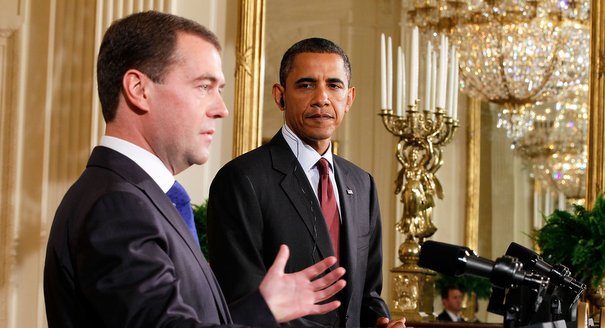
When he met with President Obama in Washington, Russian President Medvedev’s chief goals were to continue the trend of the reset in U.S.-Russian relations and to further his domestic modernization and economic development initiative.
Source: PBS NewsHour

For more on the visit and the state of U.S.-Russian relations, we spoke to Matthew Rojansky, deputy director of the Russia and Eurasia Program at the Carnegie Endowment for International Peace:
What does President Medvedev hope to get out of the visit?
I think for Medvedev, this visit serves two purposes. One is that it continues the trend of the reset which has been a pretty significant engagement between the U.S. and Russia, both on a personal level not quite as personalized as it was between Bush and Putin in the beginning of the decade but I think still relatively warm, good personal relations between Obama and Medvedev and so this is essentially the counterpart to the summit that those two leaders had in Moscow a year ago. So this will be the first official visit by Medvedev bilaterally to Washington.
He's going to talk about the full range of U.S.-Russia cooperation and also potential cooperation on things like Kyrgyzstan, continued cooperation on Afghanistan and obviously the START treaty is still pending for both sides. There are conventional (weapons) issues, Iran sanctions, and passage of the U.S.-Russia 123 civilian nuclear cooperation agreement (under the U.S. Atomic Energy Act).
So I think that will all be on top of the agenda, but then the second big purpose, which was illustrated very well in yesterday's visit to California is that Medvedev has a major modernization and an economic development initiative domestically, which he's seeking to engage the United States and Europe and other countries in support of. And I think you may see the announcement of some enhanced economic cooperation on top of the private sector deals that were announced yesterday and at the St. Petersburg economic forum last week.
Speaking of the modernization plan, tell us about the tech center President Medvedev envisions outside of Moscow.
This is at a place called Skolkovo, where basically the Russian government wants to create a Silicon Valley for Russia. And the theory of it is not only are they going to have a physical space like a business park more or less, where they want to locate high-technology businesses -- and that's not just software, it's also nanotechnology and clean energy technology and medical devices and all the range of high-tech that Silicon Valley and related innovation communities in the United States have produced -- Russia would like to have, too.
The theory is Moscow is a university city and they have some elite international universities there, they have the intellectual capital, why can't they have the commercialized side of that. Of course, the answer to that is because Russia is not California, and it doesn't have the rule of law climate, it doesn't have the investor-friendly climate, it doesn't have the capital, it has to attract it from abroad.
So there are a lot of things that are lacking, and the goal of Skolkovo -- of the Russian Silicon Valley -- is somewhat I would say mismatched to the Silicon Valley model in the sense that instead of growing this thing organically by approaching the root-level drivers of innovation and profitability and commercialization of high technology, Medvedev is seeking to sort of create this top-down. He wants to drive these deals himself. He wants to create a little bubble outside of Moscow in which the rules of the laws the protections for intellectual property will all be there within this bubble but not outside, not in the rest of Russia.
And it's difficult to imagine that you can draw on all of Russia's intellectual resources -- the Russian people -- their creativity and their energy without giving them the basis of rule of law and protections that Americans and Californians and foreigners who come to this country have traditionally had, which has made our technology revolution possible.
What's on President Obama's agenda?
I think for Obama, the relationship with Russia has clearly been a front-burner priority. I think this administration certainly views the reset as a success. This meeting is part of a trend of continued engagement with the Russians. It delivers the message quite intentionally to the Russians that this is an important relationship and that Russia is an important global power, which is a very wise thing to do.
And I think there are very concrete benefits to be had. For example, the United States depends to a significant degree for a supply of our forces in Afghanistan on Russian support. Indirectly, in terms of not interfering with our relationships with countries like Kyrgyzstan, where we have bases, but also directly because we have flights passing over Russian airspace with lethal material. So there's further cooperation in counternarcotics. There's counterterrorism cooperation. Now these are all things that cut right to the core of America's national security interests.
And then, of course, the sort of 800 pound gorilla in the room is the START treaty that we put over a year of work into negotiating this treaty It's a big deal for the United States and Russia at least politically. The numbers are not huge, but it's an important step. I think if the treaty were to fail, it would be a very bad sign, potentially the beginning of the end of the reset. So I think both presidents are very interested in creating momentum to see it ratified on both sides and then to continue with the next steps. They're both committed to this ultimate global elimination of nuclear weapons but certainly to at least exploring what the next steps might be bilaterally.
So I think in a sense the agendas are similar for both sides, I just think that they come at it from slightly different priorities.
How would you describe U.S.-Russian relations at this point?
I think relations are far better than they were two years ago. In 2008, around this time, they were at a pretty low level, certainly they were terrible after the Georgia war. So I think things are generally looking up. My concern, if I could describe it as maybe a potential pothole or a bump in the road, on reset is that Russia thinks very differently from the United States about how you do international relations and how you do politics generally.
It's a very different system of government, it's a very different set of leaders and therefore there is a danger that a perception has been created from the warmth of the reset, from the willingness of the United States to essentially separate out and treat on dual tracks issues like our relationship with Georgia, our relationship with Ukraine, our relationship with Russia, our commitment to our Central European allies on missile defense, on NATO, etc. The fact that we're sort of saying, well, there aren't going to be linkages between these things, but we're still going to pursue them. Likewise, Russian domestic rule of law issues, human rights, the (Russian former oil tycoon Mikhail) Khodorkovsky trial, all of these things.
The danger is there is a perception in Moscow that there is actually linkage and we're just not saying it and that a quid pro quo deal has been made whereby the importance of good relations with Moscow is going to cause the United States to stand down the next time that there is a confrontation over Russian domestic issues, next time that Russia has a confrontation or tensions with Georgia, and perhaps even in our commitment to countries in Central Europe. This would be the concern -- and critics have expressed this in harsher terms -- I would simply say that there is a danger of a misperception in Moscow of the nature of America's reset policy.
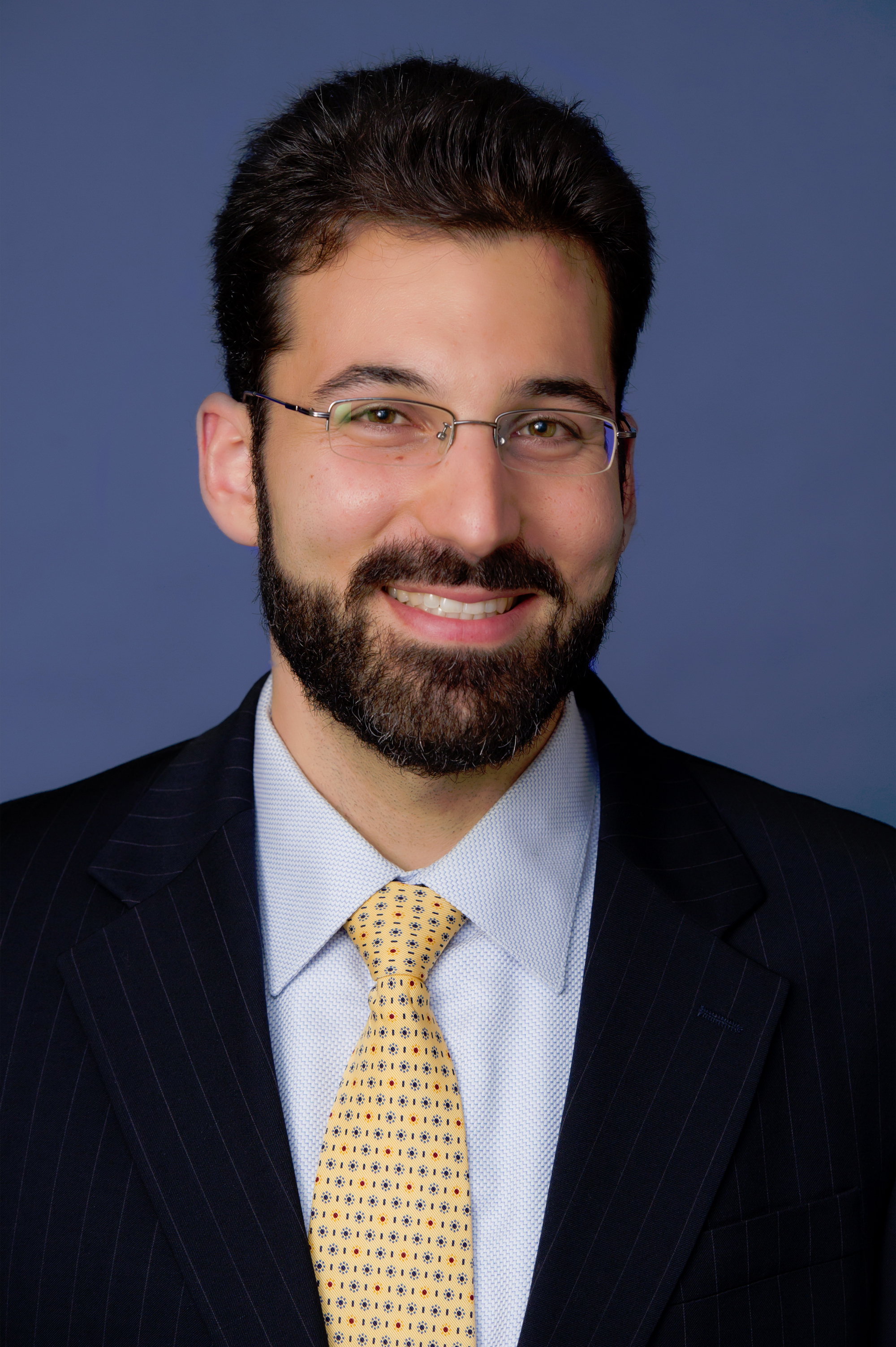
Former Deputy Director, Russia and Eurasia Program
Rojansky, formerly executive director of the Partnership for a Secure America, is an expert on U.S. and Russian national security and nuclear-weapon policies.
Recent Work
Matthew Rojansky
Matthew Rojansky
Carnegie does not take institutional positions on public policy issues; the views represented herein are those of the author(s) and do not necessarily reflect the views of Carnegie, its staff, or its trustees.

The nuclear relationship between China and the United States is increasingly shaped by widening perception gaps rather than deliberate strategic design.

Tong Zhao

But their "principal to principal" model will only be as effective as the political strength of each leader back home.

Damien Ma

U.S. unpredictability has allowed China to capitalize on its positioning as the “responsible great power”. Paradoxically, the more China wins the perception game, the more likely expectations will rise for Beijing to deliver not just words but to demonstrate with its deeds.

Chong Ja Ian

Hanoi and Beijing have long treated each other as distant cousins rather than comrades in arms. That might be changing as both sides draw closer to hedge against uncertainty and America’s erratic behavior.

Nguyễn Khắc Giang

Across Asia, China is better positioned to withstand energy shocks from the fallout of the Iran war. Its abundant coal capacity can ensure stability in the near term. Yet at the same time, the country’s energy transition away from coal will make it even less vulnerable during the next shock.
Damien Ma