

Commentary
Judy Dempsey
{
  "authors": [
    "Judy Dempsey"
  ],
  "type": "legacyinthemedia",
  "centerAffiliationAll": "",
  "centers": [
    "Carnegie Endowment for International Peace",
    "Carnegie Europe"
  ],
  "collections": [],
  "englishNewsletterAll": "",
  "nonEnglishNewsletterAll": "",
  "primaryCenter": "Carnegie Europe",
  "programAffiliation": "",
  "programs": [],
  "projects": [],
  "regions": [
    "Middle East",
    "Europe",
    "Gulf",
    "Bahrain",
    "Western Europe"
  ],
  "topics": [
    "Foreign Policy",
    "Political Reform",
    "Democracy"
  ]
}
Source: Getty
In a bid to prevent European companies from selling electronic eavesdropping gear to Bahrain, several groups have filed a complaint with the OECD.
Source: New York Times
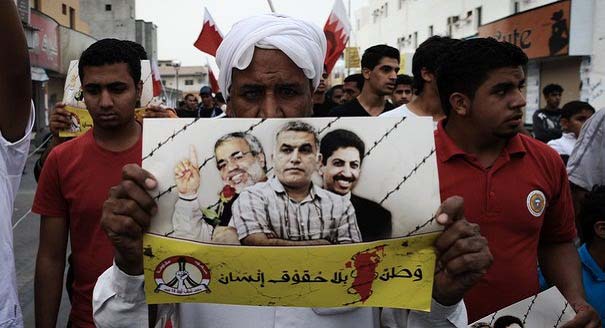
Nabeel Rajab, president of the Bahrain Center for Human Rights, has been in jail since pro-democracy demonstrations began in Bahrain two years ago. The center’s vice president, Said Yousif al-Muhafdha, has also been imprisoned on several occasions.
Mr. Muhafdha continues to fight for human rights even though the Bahraini government has clamped down on any opposition, intensifying its electronic surveillance. “No matter how I communicate, they know,” Mr. Muhafdha said in an interview. “The regime has sophisticated electronic surveillance equipment allowing it to spy on everything we do by social media, e-mail and phone.
In a bid to prevent European companies from selling such equipment to Bahrain, the Bahrain Center for Human Rights, Reporters Without Borders and other nongovernmental organizations took action this month. They filed a complaint against two companies at the Organization for Economic Cooperation and Development, which represents the developed economies.The O.E.C.D. has guidelines for “responsible business conduct,” including human rights. Its National Contact Point offices in the member states try to encourage businesses to observe the guidelines and encourage individuals or organizations to complain about questionable business practices.
The two companies in question are Gamma International, which is British-German, and Trovicor, which is German. Both make software that allows users to infect computer and phone devices and intercept e-mails, social media messages and Skype calls, according to the complaint. The O.E.C.D. now has to decide whether both companies exported, and continue to export, surveillance software to the Bahraini authorities that is used for suppressing human rights.
If so, these companies would be in breach of the guidelines. They could also be breaching national export controls that place restrictions on equipment being used to quash dissent.
Gamma International confirmed that it was the subject of a complaint at the National Contact Point office in Britain. “Intrusion software is a relatively new form of technology. Laws around the world are being modified to ensure its legal use,” Martin J. Muench, Gamma’s managing director, replied to e-mailed questions. Export licensing for Intrusion Software is under constant review by the export authorities.
Mr. Muench, however, would not confirm whether Gamma had sold such equipment to Bahrain. “Naming a client can prejudice criminal or counterterror investigations and compromise security of the members of the police or security services involved,” he stated.
Trovicor would not confirm the complaint. “Trovicor’s product and systems aim to protect and keep nations, citizens and public infrastructure safe,” Birgitt Fischer-Harrow, the company’s spokeswoman, replied to e-mailed questions. “As a supplier of lawful interception technology, Trovicor conducts a legal business and strictly observes all international laws.”
The O.E.C.D. said there was a “rising trend in the number of cases brought before the National Contact Points on the grounds of human rights.” But rights activists say the O.E.C.D. guidelines are toothless because they are voluntary and because the O.E.C.D. does not believe in naming and shaming. That is why human rights activists and lawmakers argue that European governments should tighten their export legislation for highly sensitive equipment that can be adapted for dual use, meaning for both civilian and military purposes.
“The current legislation is not sufficient,” said Tom Koenigs, chairman of the German Parliament’s committee for human rights. “The Bahrain case shows this clearly. German technology helps to suppress democratic protests in the country.”
When it comes to exporting such technology and armaments, Chancellor Angela Merkel’s center-right government is torn between interests and values.
The recent controversy over plans by Berlin to sell tanks to Saudi Arabia provoked an intense debate among lawmakers over the morality of selling weapons to authoritarian regimes that could use them against activists. In 2011, Saudi Arabia sent tanks and troops into Bahrain to help the monarchy suppress pro-democracy protests.
Mr. Koenigs, a member of the opposition Greens, and other opposition figures want such exports to be subject to more stringent and transparent controls and not decided in secrecy.
The German government has in the past argued that particular military exports, like tanks, were needed to protect Saudi Arabia’s borders. Analysts said Berlin’s primary motivation was to help the Saudi government maintain stability. That was the prevailing argument before the Arab Spring.
Yet once the democracy movement took off in 2011, European governments admitted that they had discredited their own values by exporting weapons to the region’s autocratic governments. Now, Mr. Muhafdha is asking, are Berlin and other E.U. governments making the same mistake again?
This article was originally published in the New York Times.

Nonresident Senior Fellow, Carnegie Europe
Judy Dempsey is a nonresident senior fellow at Carnegie Europe
Recent Work
Judy Dempsey
Judy Dempsey
Carnegie does not take institutional positions on public policy issues; the views represented herein are those of the author(s) and do not necessarily reflect the views of Carnegie, its staff, or its trustees.

But their "principal to principal" model will only be as effective as the political strength of each leader back home.

Damien Ma

U.S. unpredictability has allowed China to capitalize on its positioning as the “responsible great power”. Paradoxically, the more China wins the perception game, the more likely expectations will rise for Beijing to deliver not just words but to demonstrate with its deeds.

Chong Ja Ian

Hanoi and Beijing have long treated each other as distant cousins rather than comrades in arms. That might be changing as both sides draw closer to hedge against uncertainty and America’s erratic behavior.

Nguyễn Khắc Giang

Across Asia, China is better positioned to withstand energy shocks from the fallout of the Iran war. Its abundant coal capacity can ensure stability in the near term. Yet at the same time, the country’s energy transition away from coal will make it even less vulnerable during the next shock.
Damien Ma

Malaysia’s chairmanship sought to fend off short-term challenges while laying the groundwork for minimizing ASEAN’s longer-term exposure to external stresses.

Elina Noor