

Article
Thomas de Waal, Areg Kochinyan, Zaur Shiriyev
{
  "authors": [
    "Thomas de Waal"
  ],
  "type": "commentary",
  "centerAffiliationAll": "",
  "centers": [
    "Carnegie Endowment for International Peace",
    "Carnegie Europe",
    "Carnegie Russia Eurasia Center"
  ],
  "collections": [],
  "englishNewsletterAll": "",
  "nonEnglishNewsletterAll": "",
  "primaryCenter": "Carnegie Europe",
  "programAffiliation": "",
  "programs": [],
  "projects": [],
  "regions": [
    "Caucasus",
    "Georgia",
    "Western Europe"
  ],
  "topics": [
    "Security",
    "Military",
    "Foreign Policy"
  ]
}
Source: Getty
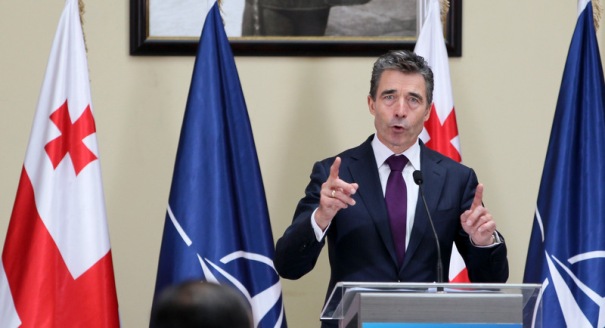
Georgia continues to try to prove itself a de facto ally of the United States, even without a formal alliance. This is the policy that Georgia needed all along: a stronger security relationship with the United States that makes it feel safer, without raising a red flag of NATO.
The story of Georgia’s pursuit of NATO membership has been a saga without an ending ever since the mid-1990s when the Georgian government first expressed a desire to join the alliance.
However well Georgia does to meet the membership criteria, key NATO members—France, Germany and Italy in particular—have always resisted the idea. The killer question is, “How can NATO guarantee Article 5 protection to Georgia when two of its de jure provinces, Abkhazia and South Ossetia, have broken away?”
Since he took office in 2012, Georgian defense minister—and leading pro-Western politician--Irakli Alasania has taken a new approach, deciding to make Georgia unilaterally compliant with NATO standards.
Alasania has streamlined and cleaned up the ministry, even making one of the former heads of Georgia’s office of Transparency International, Tamara Karosanidze, one of his deputies. Georgian troops continued to play a disproportionately important role in the combat mission in Afghanistan and were deployed to the EU missions in Central African Republic and Mali. It was all the substance of NATO without the actual form.
As expected, at the NATO summit in Wales, Georgia was not put on the path to membership. Instead it was one of five nations awarded “new elevated status” by the alliance.
Immediately after the summit, U.S. defense secretary Chuck Hagel visited Tbilisi to signal that the declaration meant something. Besides the show of solidarity with Georgia during the Ukraine crisis, there was a suggestion that the Georgian government might acquire U.S. Blackhawk helicopters.
The Foreign Policy website on September 22 reported on what could be the next chapter in this relationship—an apparent offer by Georgia to host a training center for anti-ISIS fighters.
There was confusion about the report with some Georgian officials appearing to confirm it, while others denied it.
This may be more a reflection of the current dysfunctional nature of the Georgian government than of the veracity of the information. In any case, Georgia continues to try to prove itself a de facto ally of the United States, even without a formal alliance, and earns a lot of credit in the Pentagon in the process.
This is surely the policy that Georgia needed all along: a stronger bilateral security relationship with the United States that makes it feel safer, without raising a red flag of NATO that enrages Russia and thereby only ends up making the country more insecure. A policy of unilateral implementation of standards is also a good model for the country’s even bigger strategic challenge, economic approximation and harmonization with the European Union.

Senior Fellow, Carnegie Europe
De Waal is a senior fellow at Carnegie Europe, specializing in Eastern Europe and the Caucasus.
Recent Work

Thomas de Waal, Areg Kochinyan, Zaur Shiriyev
Thomas de Waal
Carnegie does not take institutional positions on public policy issues; the views represented herein are those of the author(s) and do not necessarily reflect the views of Carnegie, its staff, or its trustees.

Across Asia, China is better positioned to withstand energy shocks from the fallout of the Iran war. Its abundant coal capacity can ensure stability in the near term. Yet at the same time, the country’s energy transition away from coal will make it even less vulnerable during the next shock.

Damien Ma

Malaysia’s chairmanship sought to fend off short-term challenges while laying the groundwork for minimizing ASEAN’s longer-term exposure to external stresses.

Elina Noor

For Malaysia, the conjunction that works is “and” not “or” when it comes to the United States and China.
Elina Noor
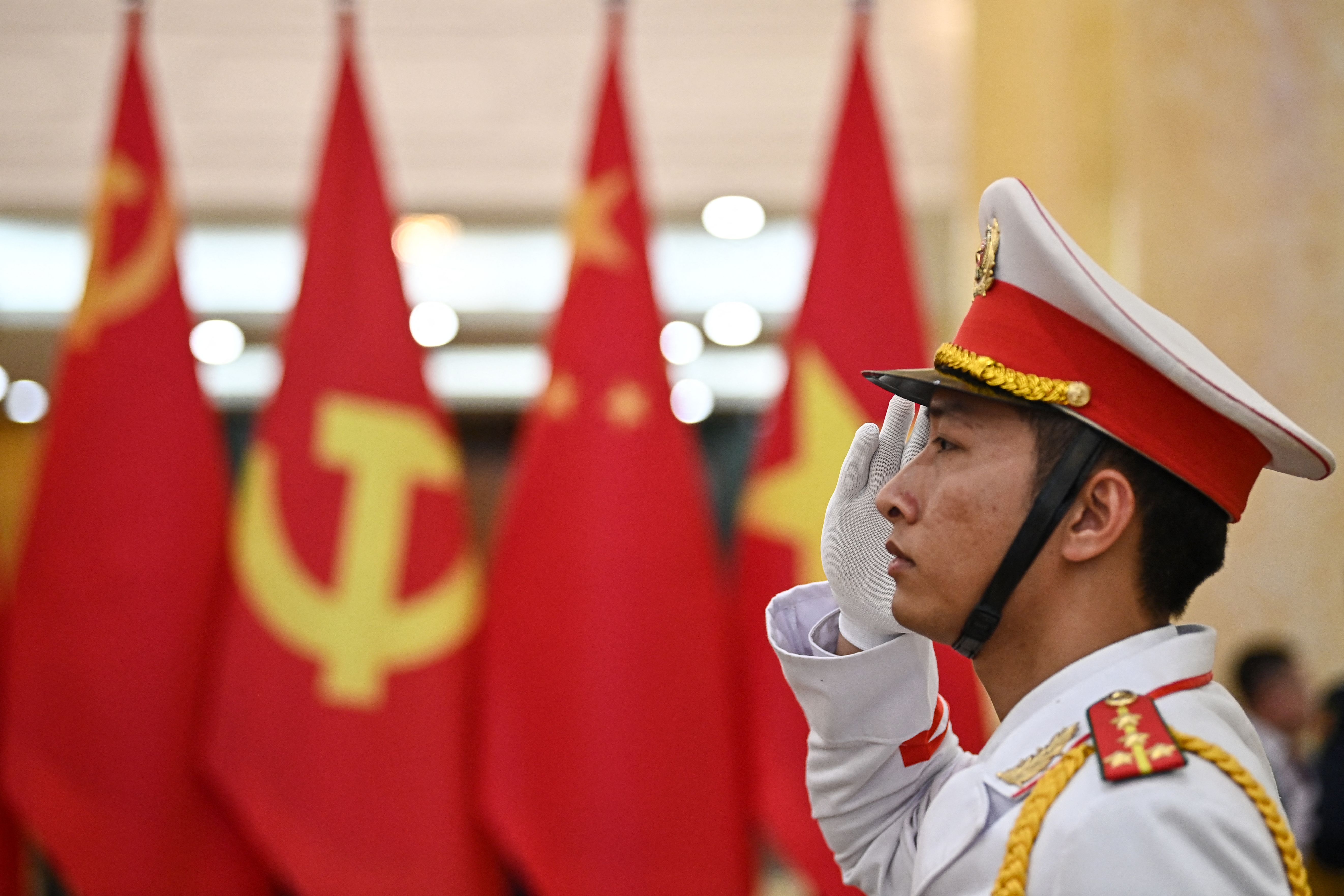
In July 2025, Vietnam and China held their first joint army drill, a modest but symbolic move reflecting Hanoi’s strategic hedging amid U.S.–China rivalry.

Nguyễn Khắc Giang

The Thai-Cambodian conflict highlights the limits to China's peacemaker ambition and the significance of this role on Southeast Asia’s balance of power.

Pongphisoot (Paul) Busbarat