

Paper
The nuclear relationship between China and the United States is increasingly shaped by widening perception gaps rather than deliberate strategic design.
Tong Zhao
{
  "authors": [
    "David Rothkopf",
    "Nancy Lindborg"
  ],
  "type": "legacyinthemedia",
  "centerAffiliationAll": "",
  "centers": [
    "Carnegie Endowment for International Peace"
  ],
  "collections": [],
  "englishNewsletterAll": "",
  "nonEnglishNewsletterAll": "",
  "primaryCenter": "Carnegie Endowment for International Peace",
  "programAffiliation": "",
  "programs": [],
  "projects": [],
  "regions": [
    "North America",
    "United States",
    "Middle East",
    "Iraq",
    "Syria",
    "Southern, Eastern, and Western Africa",
    "Afghanistan"
  ],
  "topics": [
    "Security",
    "Military",
    "Foreign Policy",
    "Global Governance"
  ]
}
Source: Getty
As the military campaign against the Islamic State stalls, it is time to turn to a civilian solution.
Source: Foreign Policy
In the past two weeks, revelations have mounted that the U.S.-led military campaign against the Islamic State terrorist group in Syria and Iraq is flagging. The commander of U.S. Central Command testified that only a handful of moderate fighters trained in an American program are ready for combat; investigators began probing whether officials distorted claims of progress; and a Kurdish offensive has ground to a halt. But if the drive to “degrade and ultimately defeat” these extremists is troubled, maybe part of the reason is that the military campaign is all we talk about most of the time?
The urgent need to counter the self-styled Islamic State and violent extremism writ large — the focus of a White House summit this past February — takes top billing again this week as world leaders gather in New York for the start of the 70th annual session of the United Nations General Assembly. On Tuesday morning, U.S. President Barack Obama convened a special discussion with more than 40 global leaders on countering violent extremism. He does so at a moment when research has shown that violent extremist movements are at the center of a rising death toll worldwide. The number of terrorist attacks has steadily increased in the last decade, according to a study from the Institute for Economics and Peace, and last year terrorist attacks claimed some 33,000 lives, according to a June State Department report.The most virulent movements are concentrated in collapsed or fragile states in the Middle East, Africa, and Asia, although fighters are coming from around the world to join these conflicts. Governments and their militaries have struggled to defeat the threats. In Iraq and Syria, a U.S.-led coalition of 62 nations is fighting the Islamic State. Nigeria and its neighbors are beset by the extremist violence of the militant Islamist group Boko Haram. Somalia and Kenya have struggled for nearly a decade against al-Shabab. In Myanmar, Buddhist ultranationalists have targeted Muslims as social media campaigns stir old resentments amid the changes of the country’s transition. In many cases, a military solution has been the go-to fix — and it has fallen short.
The U.N. discussion is a perfect opportunity to declare a resolute global commitment to the kinds of inclusive political, economic, and social strategies that are essential for tackling key underlying causes of extremist radicalization. These factors include government practices that marginalize whole groups; chronic lack of opportunity, especially for growing youth populations; the failure of governments to provide essential services to people; and rampant corruption. The result, so often, is a sense of no positive alternative to extremism. Though these factors are widely understood to fuel the growth of groups like the Islamic State, few, if any, can be addressed by boots on the ground alone.
Without question, there are times and places when military action is required to establish physical security as a starting point. We see that with the need to recapture territory from a well-armed and well-financed Islamic State that has terrorized, raped, and killed in communities across the region. But too often the United States leans on its armed forces to solve problems that even military leaders say are beyond their expertise.
Former and current officials, as well as experts from academia and the military, reached similar conclusions when asked to find solutions to the growth of violent extremism this June at the fourth installment of the PeaceGame — a war game-style exercise pursuing the best possible options for peace hosted with Foreign Policy at the U.S. Institute of Peace. The daylong event expanded on a similar exercise in December that focused on the political and economic roots of extremism. In one scenario after another, the results illustrated the power of civilian approaches, the need to clarify when armed action will make a difference, and the imperative to ensure that any military operations are calibrated and coordinated with political, economic, and social strategies.
Unfortunately, we rarely have the same kind of passionate, full-throated public support for civilian-led strategies as we hear for military action. When retired Army Gen. David Petraeus, a former commander of the Iraq and Afghanistan wars, testified before the Senate Armed Services Committee on Sept. 22 on the war against the Islamic State group, the vast majority of the attention from the panel and the news media was on military strategy and tactics. But he strongly emphasized the need for civilian-military coordination too.
“The reality is that the challenges in Iraq are neither purely political nor purely military. They are both,” Petraeus told the committee. “What is required therefore is an integrated civil-military plan in which diplomatic and military lines of effort are coordinated to reinforce each other.”
The lack of such a balance is being played out today in Iraq, where the United States has mobilized a military response to the rampage of the Islamic State group, but without a commensurate investment in civilian-led action focused on supporting Iraqi efforts to restore — or, arguably, develop for the first time — a viable state-society contract. Most agree that the current rise of the extremist group was predictable: The regime of former Prime Minister Nouri al-Maliki systematically excluded Sunni leadership and deprived whole segments of society from participating in the future of the country. To sustain any military gains realized now, it will be critical to support Iraq as it undertakes reform and reconciliation, or risk it sliding into cycles of violence and extremism that will trigger yet another round of calls for military action.
So as global leaders gather on Tuesday, here are a few guiding points that emerged from the PeaceGame that can help illuminate a way forward.
First, coalitions fighting these groups need to mobilize a substantive and serious commitment to address the underlying causes of extremism. The lessons from Iraq should serve as a red flag of warning for other regimes that attempt to govern through exclusion, repression, and corrupt means. And the costs are global, as we have seen first with the Islamic State and now with the surge of refugees running from conflict, repression, and poverty. This is not solely, or even fundamentally, a military fight, and efforts at countermessaging cannot be based on hype or propaganda. Rather, any approach must be grounded in a serious effort to understand the underlying grievances, promote inclusive, legitimate governance, and, most importantly, enable a positive alternative vision for the future to emerge. This means significantly enabling women, local leaders, and youth — who are the most credible messengers of a better future — by strengthening their role in decision-making and as leaders in rebuilding trust and new social contracts.
Second, it is essential to maintain a balance between security and human rights. The role of security forces is pivotal, both for maintaining security and for ensuring that citizens have trust and confidence in their government. As discussed during the PeaceGame, when police have the justified trust of local communities, they can play an important role in helping to prevent youth from following the lure of extremism. Or, conversely, if security force crackdowns erode basic rights, they can trigger an even greater push toward extremism.
Third, international forces need to establish a clear balance between global and locally based solutions. Dynamics related to extremism now play out on a worldwide level, but the conditions that enable extremism — and therefore key solutions — are resolutely locally based. Strategies for countering violent extremism must be grounded in a clear understanding of local contexts — of individual communities, even neighborhoods in some cases. This underscores the importance of each country developing its own strategies for preventing and countering violent extremism, as each country will have specific issues that will drive the necessary responses.
Finally, defeating groups like the Islamic State demands the development of a much better evidence base for understanding and developing effective solutions to prevent and counter violent extremism. We still lack sufficient evidence for understanding more fully which strategies are the most effective for preventing and countering extremism. For that reason, this week the U.S. Institute of Peace, working with the State Department and the U.S. Agency for International Development, launched a network of researchers who will bring local data, more rigorous research, and a greater understanding to this growing global effort.
Militaries alone cannot defeat the growth of global extremism. Taking these lessons to heart, and embracing the power of civilian approaches, is the best start to a solution that can.
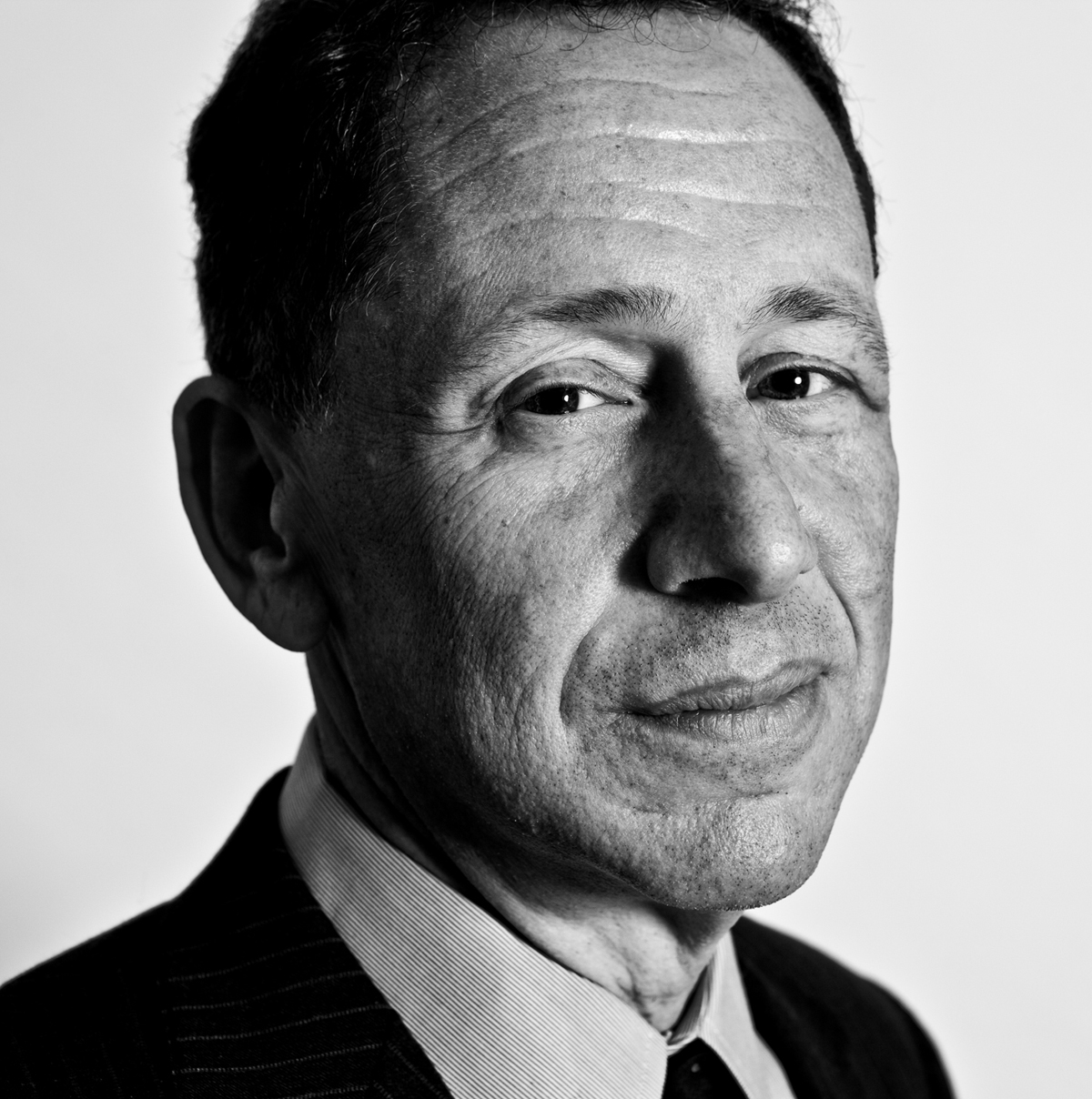
Former Visiting Scholar
David Rothkopf was a visiting scholar at the Carnegie Endowment as well as the former CEO and editor in chief of the FP Group.
Nancy Lindborg
USIP
Carnegie does not take institutional positions on public policy issues; the views represented herein are those of the author(s) and do not necessarily reflect the views of Carnegie, its staff, or its trustees.

The nuclear relationship between China and the United States is increasingly shaped by widening perception gaps rather than deliberate strategic design.

Tong Zhao

But their "principal to principal" model will only be as effective as the political strength of each leader back home.

Damien Ma

U.S. unpredictability has allowed China to capitalize on its positioning as the “responsible great power”. Paradoxically, the more China wins the perception game, the more likely expectations will rise for Beijing to deliver not just words but to demonstrate with its deeds.

Chong Ja Ian

Hanoi and Beijing have long treated each other as distant cousins rather than comrades in arms. That might be changing as both sides draw closer to hedge against uncertainty and America’s erratic behavior.

Nguyễn Khắc Giang

Across Asia, China is better positioned to withstand energy shocks from the fallout of the Iran war. Its abundant coal capacity can ensure stability in the near term. Yet at the same time, the country’s energy transition away from coal will make it even less vulnerable during the next shock.
Damien Ma