

Article
- +1
Rudra Chaudhuri, Tejas Bharadwaj, Konark Bhandari, …
{
  "authors": [
    "Rudra Chaudhuri"
  ],
  "type": "other",
  "centerAffiliationAll": "",
  "centers": [
    "Carnegie Endowment for International Peace",
    "Carnegie India"
  ],
  "collections": [],
  "englishNewsletterAll": "",
  "nonEnglishNewsletterAll": "",
  "primaryCenter": "Carnegie India",
  "programAffiliation": "",
  "programs": [],
  "projects": [
    "Security Studies"
  ],
  "regions": [
    "United States",
    "Asia",
    "South Asia",
    "Pakistan",
    "India"
  ],
  "topics": [
    "Foreign Policy"
  ]
}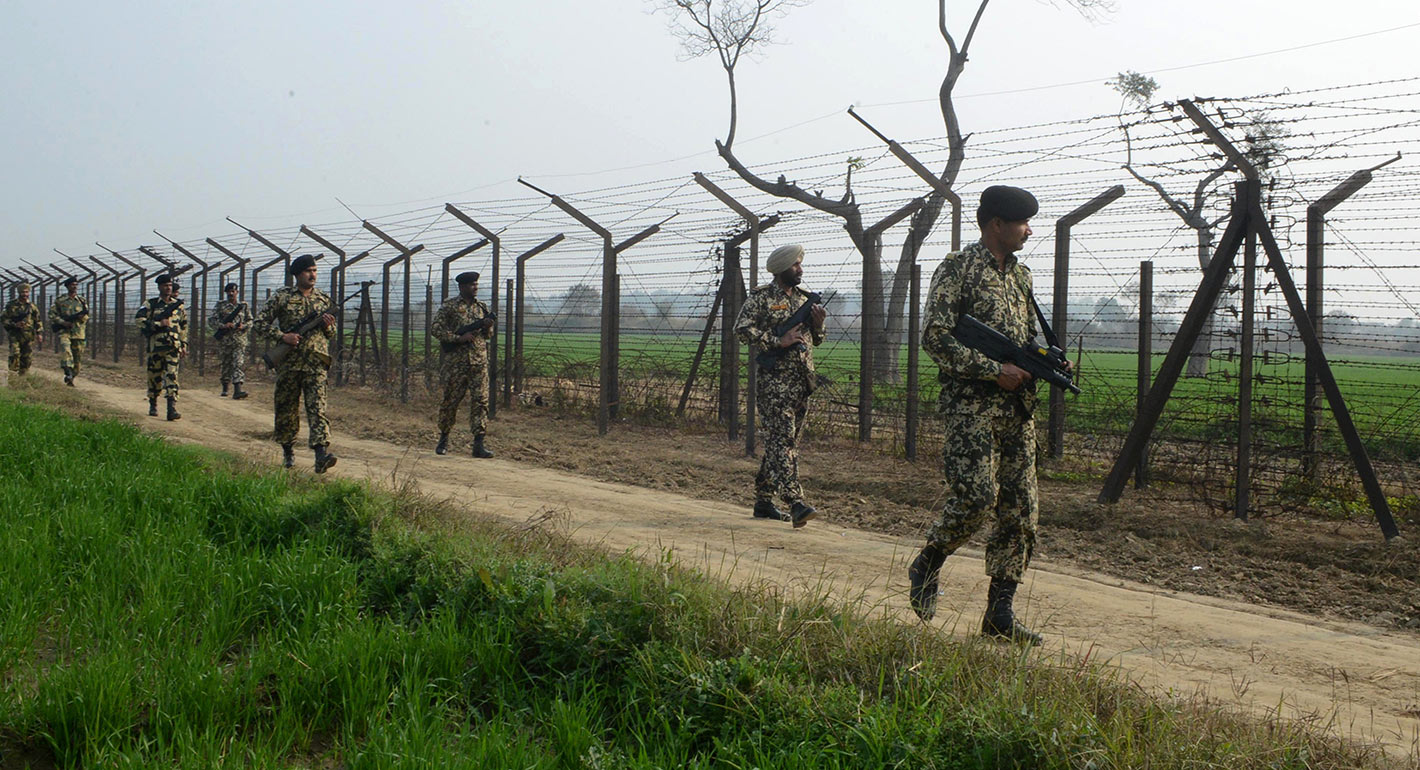
Source: Getty
Pakistani President Ayub Khan learnt that military escalation is difficult, if not impossible, to control during the 1965 India-Pakistan War.
Source: Journal of Strategic Studies
Pakistani President Ayub Khan learnt that military escalation is difficult if not impossible to control during the 1965 India-Pakistan War. Ayub Khan and Zulfikar Ali Bhutto developed a strategy to wrest control of Jammu and Kashmir based on four assumptions. First, that Kashmir was ripe for rebellion. Second, that India did not have an appetite for war following her defeat to China in 1962. Third, a military solution to the Kashmir dispute was time bound, as India’s massive military imports would make conventional conflict redundant by the end of the 1960s. Lastly, and perhaps most importantly, Khan betted that Indian retaliation would be controlled because of what he believed to be the United States' and the UK’s inherent interest in a stable South Asia. He was wrong on all four counts. This article underlines why gambling on external support in matters of military adventurism is a dicey strategy at best, and a disaster at worst.
This article was originally published in a special issue of the Journal of Strategic Studies.

Former Director, Carnegie India
Rudra Chaudhuri was the director of Carnegie India. His research focuses on the diplomatic history of South Asia, contemporary security issues, and the important role of emerging technologies and digital public infrastructure in diplomacy, statecraft, and development. He and his team at Carnegie India chair and convene the Global Technology Summit, co-hosted with the Ministry of External Affairs, Government of India.
Recent Work


Rudra Chaudhuri, Tejas Bharadwaj, Konark Bhandari, …
Rudra Chaudhuri
Carnegie does not take institutional positions on public policy issues; the views represented herein are those of the author(s) and do not necessarily reflect the views of Carnegie, its staff, or its trustees.

China’s banking crisis in the 2000s was resolved by transferring the costs to households through financial repression—a decision that recapitalized the banks while exacerbating the structural imbalances that continue to shape the Chinese economy today.

Michael Pettis

Chinese biotech companies have been on the receiving end of U.S. economic coercion. Yet their responses have differed significantly because firm and state interests are not uniformly aligned. For Washington, treating all Chinese tech firms the same, irrespective of their actual interests, risks pushing them farther into Beijing’s corner.

Xue Gong

But their "principal to principal" model will only be as effective as the political strength of each leader back home.

Damien Ma

U.S. unpredictability has allowed China to capitalize on its positioning as the “responsible great power”. Paradoxically, the more China wins the perception game, the more likely expectations will rise for Beijing to deliver not just words but to demonstrate with its deeds.

Chong Ja Ian

Hanoi and Beijing have long treated each other as distant cousins rather than comrades in arms. That might be changing as both sides draw closer to hedge against uncertainty and America’s erratic behavior.

Nguyễn Khắc Giang