

Commentary
- +11
Cornelius Adebahr, Dan Baer, Rosa Balfour, …
{
  "authors": [
    "Erik Brattberg"
  ],
  "type": "legacyinthemedia",
  "centerAffiliationAll": "dc",
  "centers": [
    "Carnegie Endowment for International Peace"
  ],
  "collections": [
    "European Defense in a New Transatlantic Context"
  ],
  "englishNewsletterAll": "ctw",
  "nonEnglishNewsletterAll": "",
  "primaryCenter": "Carnegie Endowment for International Peace",
  "programAffiliation": "EP",
  "programs": [
    "Europe"
  ],
  "projects": [],
  "regions": [
    "North America",
    "United States",
    "Western Europe",
    "Iran"
  ],
  "topics": [
    "Security",
    "Military",
    "Foreign Policy"
  ]
}
Source: Getty
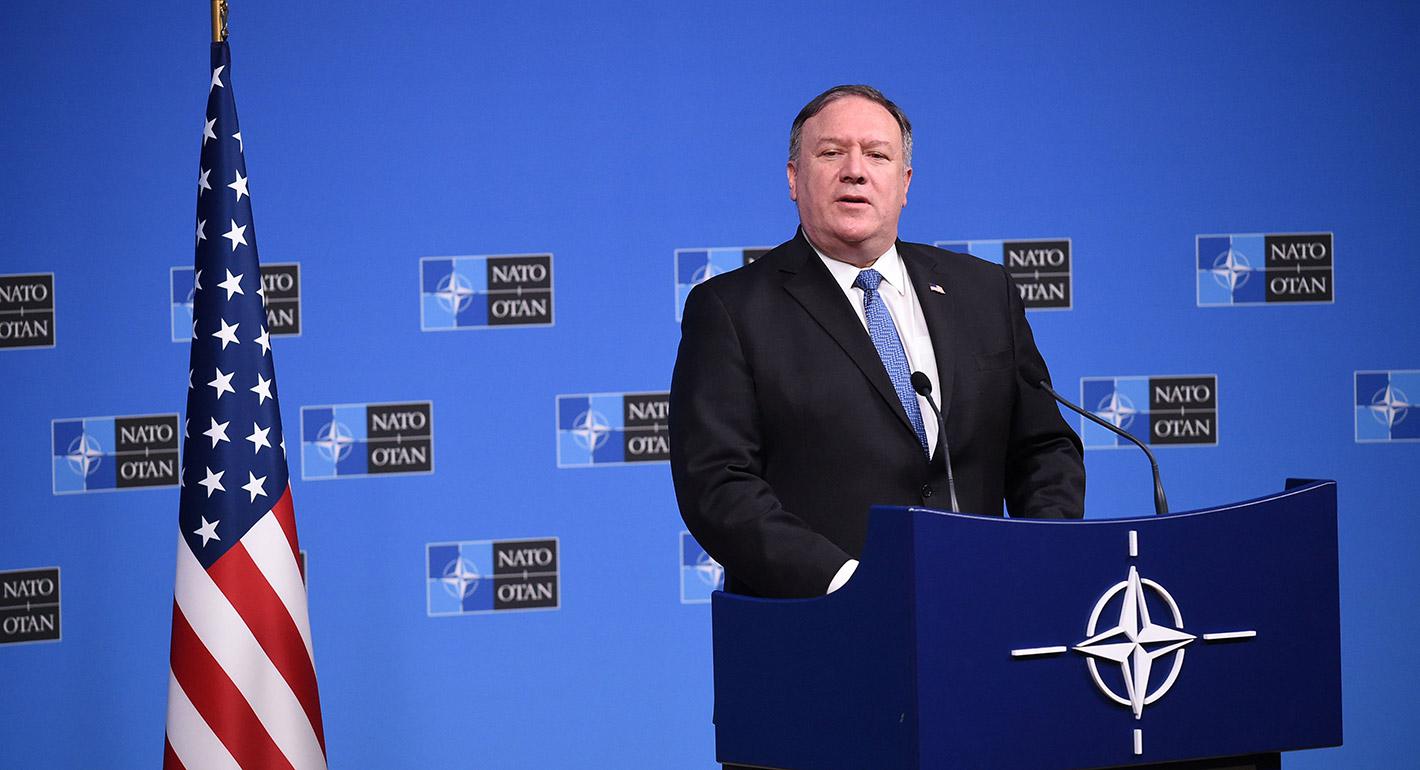
The United States has traditionally held many reservations and mixed views about the evolution of an autonomous European defense identity apart from NATO.
Source: Maanpuolustus
The United States has traditionally held many reservations and mixed views about the evolution of an autonomous European defense identity apart from NATO. It is well-known how in the 1990s the Clinton administration stipulated its famous “three D’s” about how new EU defense initiatives should relate to NATO. The Bush administration held a fairly critical view whereas the Obama administration was generally somewhat more supportive. However, the dominant American view of EU defense cooperation over the past two decades can best be described as disinterest and skepticism about the EU’s ability to implement serious defense proposals. Rather than prioritizing European defense schemes, the main U.S. preference is still for European allies and partners to fulfill their defense spending commitments and focus on strengthening NATO.
The Trump administration has adopted a particularly negative view of EU defense schemes colored by its overall euroskeptical outlook. There is little sympathy for the argument that such defense cooperation represents an important vehicle for advancing overall European integration. In fact, some in the U.S. administration even see EU defense initiatives as potentially limiting U.S. influence on the European continent.
When it comes to the latest iteration of European defense projects like Permanent Structured Cooperation (PESCO) and European Defence Fund (EDF), the principled U.S. reaction has been lukewarm at best, and in some cases even openly antagonistic. While administration officials have gradually gained a better understanding of these initiatives, they have also become more vocal about specific concerns especially related to them.
On PESCO, the Trump administration is largely supportive as long as these projects do not duplicate or take away resources from NATO. That said, the U.S. remains fairly unimpressed with the list of PESCO projects launched so far and thinks that emphasis should be implementing these rather than launching additional ones. In particular, PESCO’s contributions toward advancing military mobility is highly appreciated and is even viewed as a litmus test for PESCO’s usefulness overall. Another major concern relates to role of third states in participating in PESCO projects. The main concern here is that the potential exclusion of American companies might yield inferior EU capabilities and harm alliance interoperability.
Meanwhile, U.S. criticisms against EDF are even more pointed. The U.S. administration contends that the current regulatory formulation of EDF is far too restrictive for third states to participate due to restrictive IPR and export control stipulations. More broadly, the U.S. is concerned that EDF would create a dangerous precedent for the future of European defense industrial cooperation.
Adding further fuel to the fire is some of the language frequently by European officials to describe these initiatives. In particular, terms like “strategic autonomy” and “European Army” have generated misunderstandings and even suspicions on the other side of the Atlantic. They risk reinforcing suspicions about European intentions – such as that current EU defense initiatives aim to undermine the centrality of NATO in European security or that new EU initiatives are merely a reaction to President Trump. Even many Atlanticists in Washington are uncomfortable with the notion of strategic autonomy as it risks feeding into a political narrative that Europeans are ungrateful by saying they want to go it alone.
In sum, the by far biggest American concern has to do with defense industrial rationales and the fear is that EU defense cooperation will shut out American companies. For an American administration with a tendency to link economics and security together and pursue a distinct economic nationalist agenda, the importance of this perspective should not be underestimated.
In Defender Europe 2020 exercise United States will deploy a division-size force from the United States to Europe. It is the largest deployment of US-based forces to Europe for an exercise in more than 25 years. The photo shows M2 Bradleys waiting to be loaded during the exercise in Savannah, Georgia February 7th 2020.
Donald Trump, if reelected in November 2020, is not expected to develop a more positive view of European defense anytime soon. In contrast, a Democratic administration – especially if adopting a more positive view of the European Union as such – would likely take a more supportive and pragmatic stance toward European defense cooperation, though certain defense industrial concerns would likely persist.
The strong and sometimes vocal U.S. opposition to European defense initiatives in recent years is understandable, but is ultimately short-sighted and counter-productive. If successful, new EU defense initiatives have potential to make significant contributions toward strengthening NATO by bringing about more European capabilities and promoting defense technological innovation. There are also concrete examples of how EU defense projects, such as promoting military mobility or countering hybrid warfare, contributes to NATO’s task on the eastern flank.
Ultimately, Washington should recognize that European defense presents an opportunity. As the U.S. struggles to gear itself up for sustained period of great power competition against China, having a more militarily capable European partner is an asset. The overarching goal should accordingly be for Europe to be able to take more responsibility for some of its own regional security tasks and, in doing so, also become a stronger partner to the United States.

Former Director, Europe Program, Fellow
Erik Brattberg was director of the Europe Program and a fellow at the Carnegie Endowment for International Peace in Washington. He is an expert on European politics and security and transatlantic relations.
Recent Work



Cornelius Adebahr, Dan Baer, Rosa Balfour, …

Erik Brattberg, Philippe Le Corre, Paul Stronski, …
Carnegie does not take institutional positions on public policy issues; the views represented herein are those of the author(s) and do not necessarily reflect the views of Carnegie, its staff, or its trustees.

The nuclear relationship between China and the United States is increasingly shaped by widening perception gaps rather than deliberate strategic design.

Tong Zhao

But their "principal to principal" model will only be as effective as the political strength of each leader back home.

Damien Ma

U.S. unpredictability has allowed China to capitalize on its positioning as the “responsible great power”. Paradoxically, the more China wins the perception game, the more likely expectations will rise for Beijing to deliver not just words but to demonstrate with its deeds.

Chong Ja Ian

Hanoi and Beijing have long treated each other as distant cousins rather than comrades in arms. That might be changing as both sides draw closer to hedge against uncertainty and America’s erratic behavior.

Nguyễn Khắc Giang

Across Asia, China is better positioned to withstand energy shocks from the fallout of the Iran war. Its abundant coal capacity can ensure stability in the near term. Yet at the same time, the country’s energy transition away from coal will make it even less vulnerable during the next shock.
Damien Ma