

Q&A
Suzanne Maloney, Aaron David Miller, Karim Sadjadpour
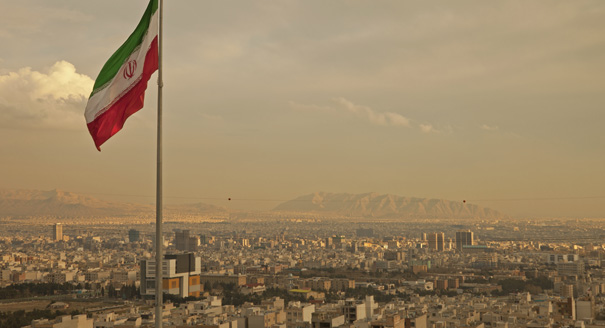
Source: Getty
For Tehran, the Syrian conflict is at the center of an ideological, sectarian, and geopolitical struggle against a diverse array of adversaries.
This piece is part of the Global Dynamics of the Syrian Conflict series, in which Carnegie experts from all over the world analyze the strategic and geopolitical interests at play in the ongoing civil war. View the full series here.
Few countries in the world stand to lose more from the collapse of the regime of Bashar al-Assad in Syria than its lone regional ally, the Islamic Republic of Iran. Despite being subjected to onerous economic sanctions over its nuclear ambitions, Tehran’s unwavering financial and military support has proven critical to Assad’s continued survival. For Tehran, the Syrian conflict is not simply about who controls Damascus. It is the epicenter of a broader ideological, sectarian, and geopolitical struggle against a diverse array of adversaries, including radical Sunni jihadists, Arab Gulf states, Israel, and the United States.
The Iran-Syria alliance is less an organic bond between nations and more a strategic partnership between two authoritarian regimes. Despite the ideological incongruence between Syria’s secular Baathist regime and the Islamic Republic of Iran, mutual contempt for Saddam Hussein’s Iraq initially brought the states together in 1980, and mutual fear and loathing of the United States and Israel has helped sustain them.
In addition to being Iran’s only consistent ally since 1979, under both Bashar al-Assad and his late father Hafez, Syria has provided Tehran a critical geographic link to the Lebanese Shia militia Hezbollah, the creation of which is one of the crowning achievements of Iran’s postrevolutionary government. Syria and Hezbollah are crucial elements of Iran’s so-called axis of resistance against the United States and Israel, and much of Hezbollah’s armaments are believed to come from Iran through the Damascus airport. Without Assad, that link could be severed.Iran is also deeply concerned about the geopolitical implications of regime change. Syria’s population is overwhelmingly Sunni Arab, although the country is currently ruled by Alawites, a Shia sect. Given that anti-Shia, anti-Persian sentiment is rife among Syria’s rebels, Tehran fears a post-Assad Damascus that is ruled by a sectarian regime aligned with deeper-pocketed Sunni Arab powers, such as Saudi Arabia, and hostile to Shia Iran. These factors have also led Iran to determinedly back Assad.
While Iran’s outsized role in Syria is undeniable, it is impossible to discern Tehran’s precise financial and military assistance to the Assad regime. Iran has long provided Syria subsidized oil, but since the fighting began in 2011, Iranian financial largesse has increased significantly. While state media in both countries have confirmed that Iran has provided Syria with over $4 billion in credit (ostensibly “to finance the purchase of petrol and associated products”), unconfirmed estimates allege that Iran gives Syria as much as $700 million per month.
In conjunction with Hezbollah, Iran provides Syria with military aid and intelligence training to help crush the rebellion. In June 2013, Hezbollah fighters—estimated to be as many as 5,000 in Syria—played a critical role in recapturing the strategic border town of Qusayr. Tehran has also reportedly helped create a 50,000-strong Syrian paramilitary group known as Jaysh al-Shabi (the People’s Army) to aid Syrian government forces.
Similar to other Iranian strategic outposts in countries undergoing tumult—such as Iraq and Afghanistan—in Syria, it is not the Iranian foreign ministry but the elite wing of the Islamic Revolutionary Guard Corps, known as the Quds Force, that oversees Tehran’s activities. Former Syrian prime minister Riad Hijab, who defected in August 2012, went so far as to say, “Syria is occupied by the Iranian regime. The person who runs the country is not Bashar al-Assad but [Quds Force commander] Qassem Suleimani.” The Revolutionary Guard also allegedly supported Syria’s chemical weapons program by providing the country with Iranian scientists, equipment, and precursor chemicals.
While Iranian largesse has helped prevent the collapse of the Assad regime, prolonged conflict in Syria may be difficult for Tehran to sustain financially. Draconian international sanctions have ravaged Iran’s oil production and exports, its economic lifeblood. Absent a comprehensive nuclear deal that reduces economic sanctions and allows Iran to access the global banking system once again, Tehran’s financial support for the Assad regime could be viewed with increasing scrutiny at home by a population chafing under external pressure and internal mismanagement.
Prolonged conflict in Syria will also continue to cause Iran great reputational harm throughout the predominantly Sunni Arab world. Whereas in the past Shia, Persian Iran has been able to transcend ethnic and sectarian divides by appealing to popular Arab outrage against U.S. and Israeli policies, today Iran is increasingly perceived by Sunni Arabs as a nefarious, sectarian actor complicit in the death and displacement of millions of Syrians. Hezbollah has suffered a similar fate due to its support for Assad.
Iranian President Hassan Rouhani and Foreign Minister Mohammad Javad Zarif have raised hopes for a nuclear détente. But, it remains an open question whether a nuclear deal between Iran and the P5+1 (composed of the United States, Russia, China, France, UK, and Germany) would make Tehran more or less amenable to compromising on its support for Assad in order to achieve a diplomatic breakthrough in Syria.
To be sure, Tehran would welcome a breakthrough that would halt the destruction of its finances and reputation while at the same time preserving its interests. In this context, some Iranians close to Rouhani have advocated finding a “Syrian Karzai” to unite the disparate forces with interests in Syria—a Sunni Arab politician palatable to Tehran, Washington, the Syrian regime, and the Syrian opposition. Given the arguably irreconcilable interests among these actors, finding such a consensus figure has predictably proven an impossible task.
Tehran has also rejected UN-supported international efforts—including the so-called Geneva communiqué—to halt fighting in Syria by establishing a transitional government. Outside powers—be it the United States, Russia, or states in the Arab world—cannot offer Tehran assurances that any post-Assad government in Syria will accommodate Iranian interests.
Despite the more conciliatory rhetoric from Rouhani and Zarif, up until now Tehran has shown no discernible shifts in its long-standing regional policies. While hopes have recently been raised of a potential détente between Iran and Saudi Arabia that could defuse the Syrian crisis, neither side has shown any clear signs of recalibrating its position. Moreover, given statements from influential U.S. national security elites—such as decorated U.S. ambassador Ryan Crocker—that Assad is “the least worst” alternative to the “radicalized” rebels, Iranian officials may feel confident that Washington and its regional allies will soon resign themselves to Tehran’s position, rather than vice versa.

Senior Fellow, Middle East Program
Karim Sadjadpour is a senior fellow at the Carnegie Endowment for International Peace, where he focuses on Iran and U.S. foreign policy toward the Middle East.
Recent Work


Suzanne Maloney, Aaron David Miller, Karim Sadjadpour

Aaron David Miller, Karim Sadjadpour, Robin Wright
Carnegie does not take institutional positions on public policy issues; the views represented herein are those of the author(s) and do not necessarily reflect the views of Carnegie, its staff, or its trustees.

But their "principal to principal" model will only be as effective as the political strength of each leader back home.

Damien Ma

U.S. unpredictability has allowed China to capitalize on its positioning as the “responsible great power”. Paradoxically, the more China wins the perception game, the more likely expectations will rise for Beijing to deliver not just words but to demonstrate with its deeds.

Chong Ja Ian

Hanoi and Beijing have long treated each other as distant cousins rather than comrades in arms. That might be changing as both sides draw closer to hedge against uncertainty and America’s erratic behavior.

Nguyễn Khắc Giang

Across Asia, China is better positioned to withstand energy shocks from the fallout of the Iran war. Its abundant coal capacity can ensure stability in the near term. Yet at the same time, the country’s energy transition away from coal will make it even less vulnerable during the next shock.
Damien Ma

Malaysia’s chairmanship sought to fend off short-term challenges while laying the groundwork for minimizing ASEAN’s longer-term exposure to external stresses.

Elina Noor