

Commentary
In Donald Trump’s second term in office, the transatlantic relationship that helped define the postwar European project and global order appears broken. Is it time for Brussels to chart its own path?
Nathalie Tocci, Jan Techau
{
  "authors": [
    "Deepti Choubey"
  ],
  "type": "legacyinthemedia",
  "centerAffiliationAll": "",
  "centers": [
    "Carnegie Endowment for International Peace"
  ],
  "collections": [],
  "englishNewsletterAll": "",
  "nonEnglishNewsletterAll": "",
  "primaryCenter": "Carnegie Endowment for International Peace",
  "programAffiliation": "",
  "programs": [
    "Nuclear Policy"
  ],
  "projects": [],
  "regions": [],
  "topics": [
    "Nuclear Policy"
  ]
}
The most important strategic foreign policy issue facing the next President and Congress will be how to prevent the further spread of nuclear weapons. For almost four decades the world has been protected by a global agreement -- the Nuclear Non-Proliferation Treaty -- which worked to keep the number of nuclear weapon states small. That agreement badly needs U.S. leadership.
Whoever wins in 2008, the most important strategic foreign policy issue facing the next President and Congress will be how to prevent the further spread of nuclear weapons. For almost four decades the world has been protected by a global agreement -- the Nuclear Non-Proliferation Treaty (NPT) -- which worked to keep the number of nuclear weapon states small. That agreement, and the world order that relies on it, badly needs U.S. leadership.
There are three reasons why American influence is needed. First, the nuclear "have-not" states, who signed away their right to develop nuclear weapons, don't believe that the "haves" are living up to their side of the deal to eventually dismantle their weapons.
Second, Iran's continuing refusal to comply with International Atomic Energy Agency (IAEA) obligations and legally binding UN Security Council resolutions undermines the effectiveness of a rule-based system for managing nuclear technology and threatens international peace and security.
And third, as excitement over a nuclear energy renaissance grows, non-nuclear-weapon states in the developing world declare large ambitions to master the nuclear fuel cycle, a scenario the old rules didn't account for.
But the regime can be saved.
Last month marked the eighth anniversary of the Senate's failure to ratify the Comprehensive Test Ban Treaty (CTBT). The treaty bans all nuclear explosions in all places and provides an opportunity for nuclear weapons states -- China, France, Russia, the U.K. and U.S. -- to make good on their legal obligation to dismantle their nuclear weapons arsenals.
Forty-four states need to sign and then ratify the Treaty for it to go into effect. Pakistan, North Korea and India are the only three states not to sign. An additional seven states -- the U.S., Iran, China, Colombia, Egypt, Indonesia and Israel -- have signed but not ratified.
U.S. leadership, in the form of Senate ratification, would pressure other "hold out" states to follow suit.
Opponents to the CTBT have three concerns: can cheaters be detected, can the U.S. maintain a credible nuclear deterrent without testing, and will the CTBT help prevent the spread of nuclear weapons?
Political and technical progress over the last decade has reduced these concerns: The CTBT monitoring system detected last year's nuclear test in North Korea (twenty times smaller than the Hiroshima bomb). Government studies have confirmed that U.S. weapons will be reliable for 85 years -- twice their expected life span -- further diminishing the need to test ever again. And finally, the world's leading experts agree that U.S. ratification of the Treaty would pressure other states to clarify their nuclear policies to the rest of the world -- including Iran, China, Egypt, India and Israel.
Without the CTBT, it is difficult to imagine non-nuclear weapon states agreeing to the tighter rules the U.S. seeks to reshape the nuclear fuel cycle and prevent the emergence of more nuclear weapon states.
The CTBT would also freeze currently inferior arsenals in North East Asia, South Asia and the Middle East by cementing the technical superiority of the U.S. nuclear weapons arsenal, while forbidding other nuclear weapons states from conducting tests needed to improve their own. Those who fear China as a "peer competitor" should jump at this opportunity. China, already a signatory to the CTBT, with no domestic political opposition, could ratify within months.
China could conceivably be persuaded to do so within the current negotiations with North Korea. If the Six Party Talks' plan to dismantle North Korea's nuclear program bears fruit and removes fissile material from the Korean peninsula, there should be few obstacles to securing North Korea's agreement to not test again. It would be easier to achieve this outcome if two of the six parties -- the U.S. and China -- ratified the treaty.
In South Asia, the CTBT could help to prevent the arms race that Pakistan warns could result from the Bush administration's pursuit of an unprecedented exception to both U.S. and global rules on nuclear trade for India. Securing Indian support of the CTBT could diminish concerns about India's ability to increase its arsenal. Pakistan, eager to keep up with reciprocal measures and gain the same treatment as India, could likely also be persuaded to do the same.
In the Middle East, Iran could ratify the CTBT as further evidence that its nuclear program is truly for peaceful purposes. Whether Iran ratifies it or not, there is no doubt that crossing the redline of exploding a nuclear device, as the North Koreans did after withdrawing from the NPT, would only shore up international opinion against Iran and finally unify the UN Security Council to take serious action. The CTBT also represents another obstacle to thwart the nuclear weapons ambitions of Iran's neighbors. Nine of the fifteen states that have announced interest in developing nuclear energy programs since 2005 are in the Middle East and include Egypt, Saudi Arabia and Turkey. They could follow the South African example of constructing crude gun-type weapons that do not require testing. The CTBT would, however, inhibit efforts to develop more sophisticated arsenals because without nuclear testing these nations could have no confidence that their covertly and illegally developed weapons would even work.
Moving forward requires recognizing that earlier concerns are outdated and that a world with a CTBT better promotes American interests than a world without one. It seems foolish to forego the benefits of the test ban. This is a strategic flaw that Congress should begin to address now in preparation for the next Congress and President.
This article was originally published in The Washington Post:
Carnegie does not take institutional positions on public policy issues; the views represented herein are those of the author(s) and do not necessarily reflect the views of Carnegie, its staff, or its trustees.

In Donald Trump’s second term in office, the transatlantic relationship that helped define the postwar European project and global order appears broken. Is it time for Brussels to chart its own path?


Nathalie Tocci, Jan Techau
The debate on the future of European deterrence has intensified, as NATO allies seek to balance three key aims. Going forward, they will need to cooperate more deeply to craft a coherent strategy for confronting new threats.


Sophia Besch, Jamie Kwong

To turn U.S. strikes on Iran’s nuclear program into a long-term resolution, Washington should seize the moment and cooperate with France, Germany, and the UK on diplomatic talks.

Rym Momtaz
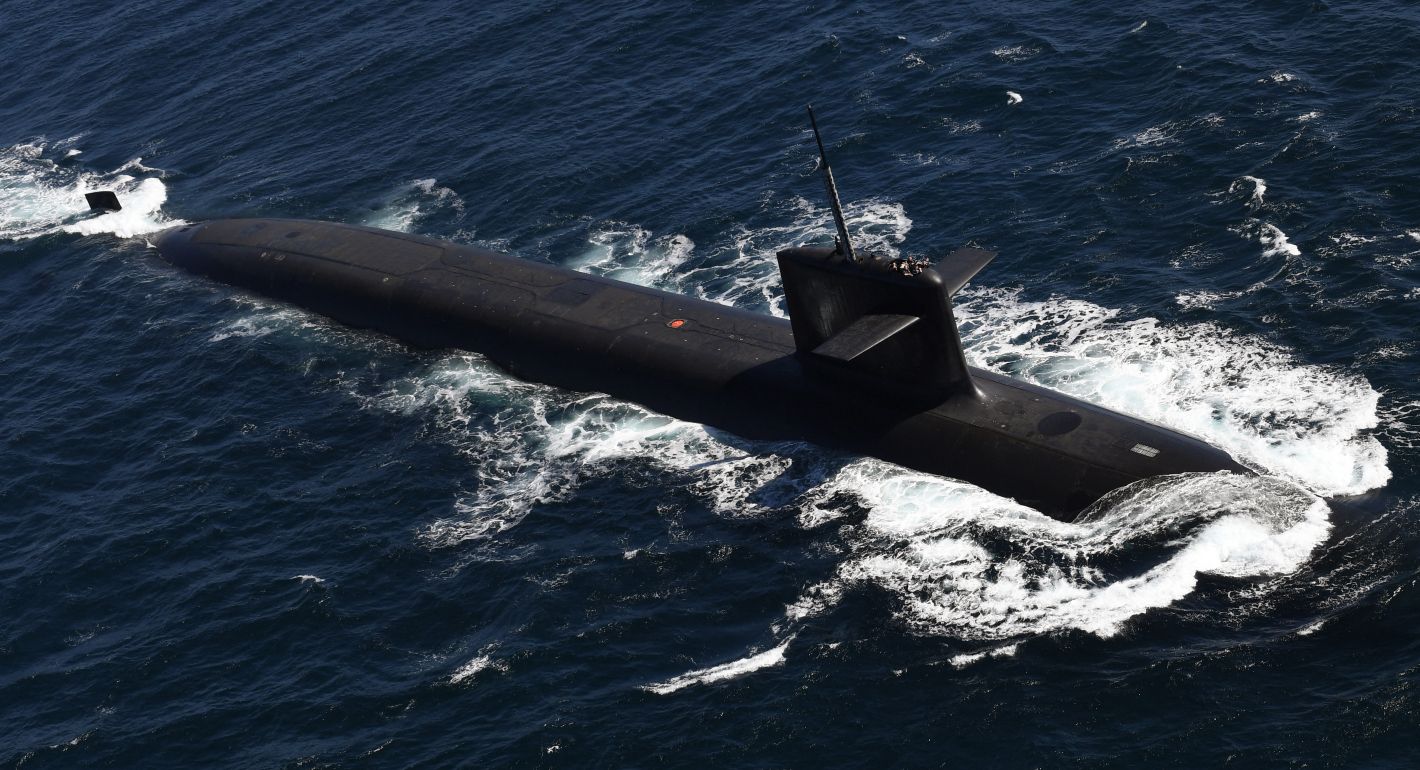
Confronted with a U.S. disengagement and the Russian threat, Europeans are reconsidering their stance on nuclear deterrence. Given the capabilities of the French and British arsenals, can Europe develop an independent nuclear deterrent?
Rym Momtaz
For too long, the EU focused on Iran’s nuclear program while mostly ignoring its malign regional activities and missile program. As the consequences of both hit closer to home, the union must pursue a new strategy focused on containing Iran’s regime, supporting Iranian civil society, and engaging with Gulf states.

Cornelius Adebahr