Inter-religious and interethnic relations are rapidly deteriorating in Russia, but the authorities lack the programs to cope with them, the mechanisms to create new programs, and the realization that both are urgently needed.
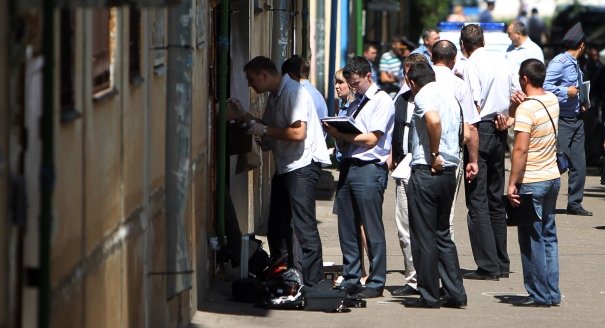
Last week's murder of a respected spiritual leader in Dagestan, a recent terrorist attack in Kazan and overall tensions in Muslim-dominated regions point to what could become an avalanche of problems. The Kazan attack alone prompted a campaign against suspected adherents of Wahhabism and possible plans for the Federal Security Service to closely monitor Muslims in general. But the bureaucratic zeal of the reformed police force might wreak more havoc than a host of terrorists.
Vigilantes may join the fray, escalating the potential for conflict. Dagestani leader Magomedsalam Magomedov has called for the organization of self-defense squads, "teams of young people who are ready to work under the guidance of the Interior Ministry to provide domestic security." The Dagestani Interior Ministry has welcomed the idea. Local authorities have suggested that the groups be composed of Murids, disciples of the late sheik Said Atsayev. Such a move could unleash a low-intensity civil war in Dagestan.
This summer, Krasnodar Governor Alexander Tkachyov suggested organizing armed groups — composed of Cossacks. In fact, his initiative was not the first; other regions have revived the idea of using Cossack units to maintain order. Calls have also recently been made to form "Orthodox squads" in response to vandalized crosses and the desecration of Russian Orthodox churches.
The Kremlin, meanwhile, has used the Pussy Riot case as an ideological tool, defending traditional and Russian Orthodox values in a bid to consolidate its conservative electorate. But in doing so, it has polarized society and provoked the radicalization of opposing camps. That polarization is only heightened by the church's increasingly anti-modernist stance.
The Dagestan tragedy occurred almost simultaneously with a meeting of the new presidential council for interethnic relations, a blatantly ineffectual and ceremonial body that issues lofty statements about key problems even as the government cuts funding to the few programs intended to address them. And in true Soviet style, the council is not composed of specialists on interethnic relations but of leaders of the largest ethnic minorities and various officials.
Thus, as interethnic and inter-religious relations rapidly deteriorate, the authorities lack programs to cope with them, mechanisms to create new programs, and the realization that both are urgently needed. This leaves the police powerless. What's more, the reactionary measures being proposed on the regional level are likely to fan the flames.
Carnegie does not take institutional positions on public policy issues; the views represented herein are those of the author(s) and do not necessarily reflect the views of Carnegie, its staff, or its trustees.
2026 has started in crisis, as the actions of unpredictable leaders shape an increasingly volatile global environment. To shift from crisis response to strategic foresight, what under-the-radar issues should the EU prepare for in the coming year?
Europe is designing a new model of collective security that no longer relies on the United States. For this effort to succeed, solidarity between member states that have different threat perceptions is vital.
Beset by an increasingly hostile United States, internal divisions, and the threat of Russian aggression, the EU finds itself in a make-or-break moment. U.S. President Donald Trump calls it a decaying group of nations headed by weak leaders. Is Europe able to prove him wrong?
U.S. President Donald Trump’s claims to have ended eight wars may be debatable, but his peace efforts raise valid questions. Europe can learn lessons from Washington on how to break the deadlock in protracted conflicts.
The debate on the future of European deterrence has intensified, as NATO allies seek to balance three key aims. Going forward, they will need to cooperate more deeply to craft a coherent strategy for confronting new threats.