

Commentary
The war in Ukraine is costing Russia its leverage overseas. Across the South Caucasus and Middle East, this presents an opportunity for Europe to pick up the pieces and claim its own sphere of influence.
William Dixon, Maksym Beznosiuk
{
  "authors": [
    "Vikram Nehru",
    "Nadia Bulkin"
  ],
  "type": "legacyinthemedia",
  "centerAffiliationAll": "dc",
  "centers": [
    "Carnegie Endowment for International Peace"
  ],
  "collections": [],
  "englishNewsletterAll": "asia",
  "nonEnglishNewsletterAll": "",
  "primaryCenter": "Carnegie Endowment for International Peace",
  "programAffiliation": "AP",
  "programs": [
    "Asia"
  ],
  "projects": [],
  "regions": [
    "Southeast Asia",
    "Indonesia"
  ],
  "topics": [
    "Foreign Policy"
  ]
}
Source: Getty
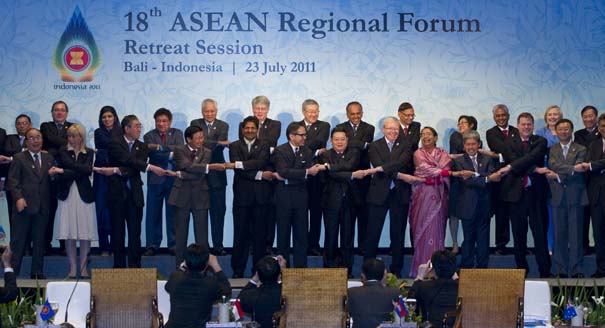
Indonesia’s future rests with Southeast Asia, and ASEAN is at the heart of the region’s institutional architecture. If Indonesia is to shape its own geostrategic environment, then it must work with its neighbors to strengthen ASEAN.
Source: Nikkei Asian Review
The Association of Southeast Asian Nations is at the heart of the region's institutional architecture. Having driven economic integration and four decades of rapid growth, Asean has enabled its 10 member states to punch above their weight in Asian and global affairs.
But amid rapidly evolving challenges, the institution must adapt equally swiftly in order to remain effective. The rise of China is creating momentous shifts in the global balance of power. Along with the poorly named U.S. "pivot" towards Asia, these shifts are triggering new vortices of instability in Asia.
In times of crisis, Asean has often looked to Indonesia for leadership. The country's size, vibrant democracy, economic performance and relative military strength make it primus inter pares in the Asean community. Beyond the region, Indonesia's clout is enhanced by growing international prominence through its roles in the G-20, the Asia-Pacific Economic Cooperation forum, the World Trade Organization and in climate change diplomacy. There has even been talk of Indonesia "outgrowing" Asean as its outlook becomes more global.That does not mean Indonesia always gets its way in the region. For example, it failed in its 2004 bid to build a genuine regional security framework as envisioned in the Asean Charter. Asean instead chose "soft cooperation" that stopped well short of the robust security arrangements Jakarta wanted.
Now, however, a new security risk confronts Southeast Asia. It stems from the rise of China as a military superpower and the challenge it poses to a weakened, distracted United States.
China has used its expanding military capabilities to advance its interests in the East China and South China seas. Recently Beijing announced an air defense identification zone covering most of the East China Sea, including areas claimed by Japan and South Korea. Just six days later, the Chinese province of Hainan issued fishing regulations covering 2 million sq. km of the South China Sea -- overlapping with areas claimed by the Philippines and Vietnam.
Both announcements reinforced concerns in the Asia-Pacific about China's strategic intentions. The ADIZ announcement, in particular, raised tensions in the East China Sea to the point where the slightest miscalculation by either Japanese or Chinese patrolling vessels around the disputed the Senkaku Islands -- known as the Diaoyu in China -- could lead to conflict. China has every intention of extending its ADIZ to cover the South China Sea. This will constrain sea and air lines of communication, with possibly severe repercussions for Southeast Asia. Southeast Asia's strategic location astride the Strait of Malacca has generated enormous benefits. The region cannot afford to have its transport links constrained by any country's decision to change the status quo in violation of international law.
In defending its interests, Southeast Asia cannot rely solely on strategic partners for support. It must build its own capabilities. Unsurprisingly, growth in Southeast Asia's defense spending is now among the world's highest. Yet no Southeast Asian country is capable of going toe-to-toe with China. Asean's only route forward is to strengthen security relationships among its members and build security ties with strategic partners. In the process, Asean and its various security forums must graduate from information-sharing to defense cooperation, conflict resolution and conflict prevention.
Furthermore, if Asean is to build a security framework for the 21st century, then it needs a capable secretariat. Unfortunately, the Asean Secretariat (ASEC) is too small for its current mandate, let alone an expanded one. Financial contribution to ASEC, set at $1.5 million per member per year, gives it an annual budget of about $15 million, which, for Asean's 600 million inhabitants, comes to 2.5 U.S. cents per person. That is a pittance for an organization with a mandate as broad as Asean's. In contrast, the European Commission managed over $200 billion in contributions from EU member states in 2012, the equivalent of $400 per person -- 16,000 times Asean's budget.
ASEC is not just short on money. Its staff of 260 cannot possibly manage its many responsibilities. It does not help that two-thirds of its staff is assigned from the bureaucratic ranks of member states instead of being selected through competitive processes offering market-based salaries.
Asean has formed a task force to bolster ASEC. Indonesia should urge the task force to be innovative and propose fundamental changes to make the secretariat capable of coordinating effectively across its many functions. Then it should urge fellow member states to back ASEC with additional funding.
Indonesia's future rests with Southeast Asia. If the country is to shape its own geostrategic environment, then it must work with its neighbors to strengthen the region's institutional architecture. Asean needs to build a security framework capable of protecting the region's vital interests and its members' national sovereignty. In the past, when the organization has needed bold leadership, Indonesia has provided it. Indonesia must rise to the challenge again.
This article was originally published in the Nikkei Asian Review.

Former Nonresident Senior Fellow, Asia Program
Nehru was a nonresident senior fellow in the Carnegie Asia Program. An expert on development economics, growth, poverty reduction, debt sustainability, governance, and the performance and prospects of East Asia, his research focuses on the economic, political, and strategic issues confronting Asia, particularly Southeast Asia.
Nadia Bulkin
Former Research Assistant, Asia Program
Carnegie does not take institutional positions on public policy issues; the views represented herein are those of the author(s) and do not necessarily reflect the views of Carnegie, its staff, or its trustees.
The war in Ukraine is costing Russia its leverage overseas. Across the South Caucasus and Middle East, this presents an opportunity for Europe to pick up the pieces and claim its own sphere of influence.


William Dixon, Maksym Beznosiuk
The war in Iran proves the United States is now a destabilizing actor for Europe and the Arab Gulf. From protect their economies and energy supplies to safeguarding their territorial integrity, both regions have much to gain from forming a new kind of partnership together.

Rym Momtaz

French President Emmanuel Macron has unveiled his country’s new nuclear doctrine. Are the changes he has made enough to reassure France’s European partners in the current geopolitical context?
Rym Momtaz, ed.
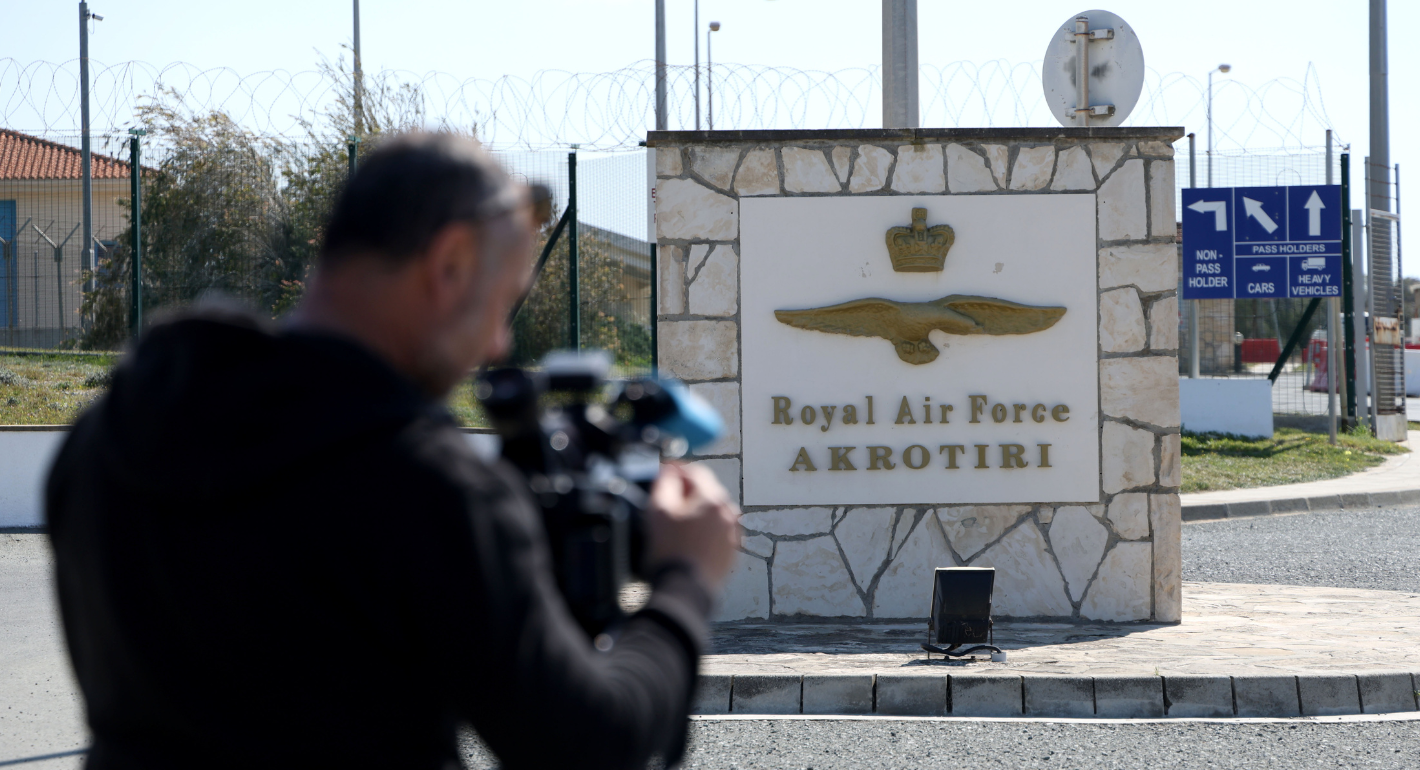
The drone strike on the British air base in Akrotiri brings Europe’s proximity to the conflict in Iran into sharp relief. In the fog of war, old tensions in the Eastern Mediterranean risk being reignited, and regional stakeholders must avoid escalation.

Marc Pierini
For years, the United States anchored global cyber diplomacy. As Washington rethinks its leadership role, the launch of the UN’s Cyber Global Mechanism may test how allies adjust their engagement.


Patryk Pawlak, Chris Painter