

Commentary
Baku may allow radical nationalists to publicly discuss “reunification” with Azeri Iranians, but the president and key officials prefer not to comment publicly on the protests in Iran.
Bashir Kitachaev
{
  "authors": [
    "Rudra Chaudhuri",
    "Shibani Mehta"
  ],
  "type": "commentary",
  "centerAffiliationAll": "",
  "centers": [
    "Carnegie Endowment for International Peace",
    "Carnegie India"
  ],
  "collections": [],
  "englishNewsletterAll": "",
  "nonEnglishNewsletterAll": "",
  "primaryCenter": "Carnegie India",
  "programAffiliation": "",
  "programs": [
    "South Asia"
  ],
  "projects": [
    "Security Studies",
    "Indian Ocean Initiative"
  ],
  "regions": [
    "South Asia",
    "India",
    "Europe",
    "Oceania",
    "France",
    "Western Europe"
  ],
  "topics": [
    "Foreign Policy"
  ]
}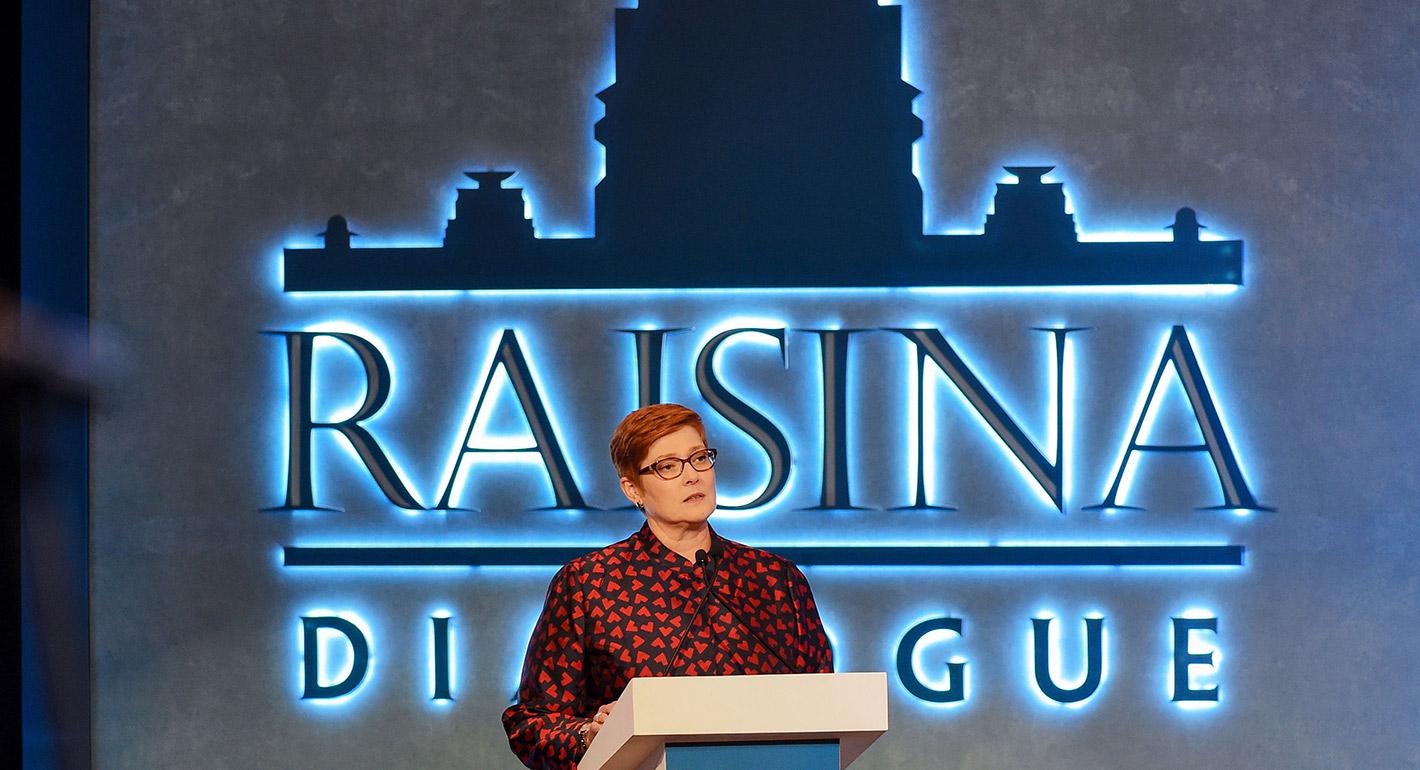
Foreign ministers from India, France, and Australia recently met (virtually) at the Raisina Dialogue, India’s flagship annual conference on geopolitics and geoeconomics. What can they get done if they work together?
“We need plurilateralism,” argued Indian External Affairs Minister S. Jaishankar. “Multilateralism is not delivering.” The minister was speaking about the benefits of small groups of countries working together at a panel at the recently completed Raisina Dialogue alongside the French and Australian foreign ministers. All told, the message was clear. These were three countries that were dedicated to strategic cooperation in the Indo-Pacific—and they felt they could achieve more as a trio than in a bigger cohort.
Working in concert on a range of issues, from developing norms to limit illegal fishing to creating vaccine supply chains in the Indo-Pacific, the three countries “share the same willingness,” the French Minister for Europe and Foreign Affairs Jean Yves Le Drian explained. The key, he underlined, was that these countries “get along well.” This was not only about coinciding interests. As Jaishankar put it, this was an example of what might be considered as the “coalition of the enthusiastic.”
The loose yet determined trilateral arrangement between India, France, and Australia represents one of the most promising models for plurilateralism in a changing world. An argument often levelled against plurilateral arrangements is they fragment global cooperation by influencing nations to choose sides based on political positions instead of taking an interest-based, solution-oriented approach. But plurilateralism is not in competition with multilateralism, but an intermediate step to more effective global governance. Transparency in goal setting and blinkered attention to solutions makes this form of diplomacy feasible, flexible, and swift, and ideally placed to compensate where multilateralism falls short.
The idea of a track 1.5 trilateral designed to deal with practical matters of shared concern in the Indo-Pacific dates back to 2018. It is an exceptional example of how the inventiveness of four think tanks in these three countries provided the intellectual force for an idea that soon became reality. Much has happened since the first dialogue three years ago. Meetings between officials are now more common, with the ministers’ meeting at Raisina 2021 providing a top-level endorsement. The premiers from the three countries can be expected to meet soon, too.
There is much to be accomplished, from setting norms for the purchase of undersea cables, thereby ensuring secure and trusted connectivity, to working more effectively with member states of the Association of Southeast Asian Nations. France’s deep involvement in the trilateral, which French President Emmanuel Macron has referred to as the “new Paris-Delhi-Canberra axis,” could, in time, push the door open for the Quad-Plus.
A trilateral such as this could also set clearer rules for illegal fishing in the Indo-Pacific, limiting nations’ abilities to use fishing as a front for expanding spheres of influence and geopolitical activity. The three countries could set the standard by working together to train coast guards or to try to eradicate human trafficking in the Indo-Pacific.
Further, the most promising but understudied area of collaboration lies in the future of shared technologies. The countries could discuss a common and real-time framework for sharing information in cybersecurity, norm-setting through the International Telecom Union (which will soon open an office in India), and the creation of a semiconductor foundry in one of these three countries, which would provide a crucial supply chain. They could also coordinate on aggressively securing vaccine supply chains, for the next few years at least.
At the recently concluded G7 Foreign Ministers’ Meeting in London, the three ministers met at the sidelines for the first India-France-Australia Trilateral Ministerial Dialogue. They recognized the role played by think tanks and affirmed their dedication to advance relevant suggestions that emerged in the closed-door conversations. The key will be the ability of the trilateral to focus on a concrete set of deliverables in the near future. Ordinarily, policy suggestions such as the ones mentioned above could well be considered as the decorative products of think tank conversations. There are just too many such exchanges and recommendations that pepper insipid documents and policy papers. Yet, in this case, the proof of the concept lies in its realization. The trilateral is in the works. Technocrats, diplomats, and civil servants are in the process of turning this diplomacy into observable outcomes in the Indo-Pacific.
For those less convinced of the prospects of such plurilateral politicking, officials from the three countries ought to set out a timeline publicly of what they seek to achieve, from fishing regulations to cybersecurity. For this form of diplomacy to succeed, they ought to be able to show progress. That will make it clear that arrangements such as these can truly replace, or at least, partially substitute for the deficits in multilateralism.
The views expressed here are personal and do not reflect any institutional policy.
Carnegie does not take institutional positions on public policy issues; the views represented herein are those of the author(s) and do not necessarily reflect the views of Carnegie, its staff, or its trustees.
Baku may allow radical nationalists to publicly discuss “reunification” with Azeri Iranians, but the president and key officials prefer not to comment publicly on the protests in Iran.

Bashir Kitachaev

The country’s leadership is increasingly uneasy about multiple challenges from the Levant to the South Caucasus.

Armenak Tokmajyan
The countries of the region have engaged in sustained competition that has tested their capacities and limitations, while resisting domination by rivals. Can a more stable order emerge from this maelstrom, and what would it require?

Hamza Meddeb, Mohamed Ali Adraoui

As Washington reduces its presence in the country, the success of its withdrawal and continued containment of the Islamic State will hinge on adopting an approach of flexible oversight built around three priorities, as well as balancing Turkish and Israeli red lines.

Kheder Khaddour, Issam Kayssi
Largely characterized thus far by a single-minded focus on extractivism, Riyadh must commit to greater equitability in its approach to investment and development deals with Sudan, Ethiopia, and Eritrea.

Hesham Alghannam