

In The Media
Michele Dunne, Robert Kagan
{
  "authors": [
    "Robert Kagan"
  ],
  "type": "legacyinthemedia",
  "centerAffiliationAll": "",
  "centers": [
    "Carnegie Endowment for International Peace"
  ],
  "collections": [],
  "englishNewsletterAll": "",
  "nonEnglishNewsletterAll": "",
  "primaryCenter": "Carnegie Endowment for International Peace",
  "programAffiliation": "",
  "programs": [],
  "projects": [],
  "regions": [
    "United States",
    "Iraq",
    "China"
  ],
  "topics": [
    "Foreign Policy"
  ]
}
REQUIRED IMAGE
People who think Bill Clinton will go down in history as a poor foreign policy president are wrong. In the tradition of Eisenhower and George H. W. Bush, he has left ticking time bombs all over the place, any or all of which are likely to go off within the next four years. This will do wonders for his own reputation and provide an escape from chumphood.
Source: Carnegie
Reprinted from the Washington Post, November 5, 2000
We judge our presidents by what happens on their watch, from inaugural day to the final farewell. But that's not entirely fair. When someone new steps into the Oval Office, at least part of his legacy has already been determined for him by the person who just stepped out. And as the winner of Tuesday's presidential election will soon discover, some presidents have a sneaky way of leaving serious foreign unresolved policy problems and some hidden disasters that conveniently erupt after they leave the scene.
The master of leaving bombs to blow up in his successor's face was Dwight D. Eisenhower. His gifts to John Kennedy? Fidel Castro, the Bay of Pigs operation and a pledge to defend Ngo Dinh Diem's South Vietnam against the Communists in the North. Kennedy took the fall for Ike in Cuba; Lyndon Johnson took the fall for both Eisenhower and Kennedy in Vietnam. And today Ike is revered by Republicans and even by many historians as a superior statesman.
The problems the elder George Bush left behind practically defined the Clinton presidency in foreign affairs, and not in a good way. Republicans have spent the past few years attacking Clinton for his handling of Iraq, the Balkans, Haiti and Somalia. Yet every one of these was an unexploded Bush bomblet. Bush left Saddam Hussein in power at the end of the Gulf War. He let Slobodan Milosevic loose on his Balkan rampage. In Haiti, after rightly demanding the restoration of the toppled president, Jean-Bertrand Aristide, Bush left a stalemate from which the next American president either had to escalate or back down in humiliation. He sent American troops into Somalia--the original "humanitarian" mission--and left Clinton the task of finding the way out. Today Bush is known as the quintessential "foreign policy president," and Bill is a chump.
Sometimes, though rarely, a president actually does his successor a favor. This is a mistake. Ronald Reagan won the Cold War, but the final victory came on George Bush's watch. Reagan's gift helped make Bush's reputation as a foreign policy wizard, but his thanks for giving Bush the ball as they crossed the goal line was a quiet campaign by the Bush team to portray the old man as an amiable goof. In order to get a full share of the credit for the Cold War triumph, Bush and his team had to diminish Reagan's role and magnify their own. For presidents seeking a legacy, the lesson is obvious: Never leave the place in better shape than you found it.
That's why people who think Bill Clinton will go down in history as a poor foreign policy president are wrong. In the tradition of Eisenhower and Bush, he has left ticking time bombs all over the place, any or all of which are likely to go off within the next four years. This will do wonders for his own reputation and provide an escape from chumphood.
There is, of course, Iraq, where the international sanctions regime is collapsing, Saddam is making a fortune on oil sales and weapons systems blossom. During the next administration, Iraq will get a missile and mount something deadly on it, which will have a cataclysmic effect on an already unstable Middle East. But it won't be Clinton's problem--by design. Anonymous Clinton officials admit that their policy for more than a year has been to keep Iraq off the front pages, kick the can down the road and pray nothing happens before Election Day.
In the Middle East peace process, Clinton's supreme egotism forced Israel and the Palestinians toward a deal that at least one of them was not even remotely ready to consummate. But from the standpoint of Clinton's legacy, this was a smart move. If against all odds he had succeeded, Clinton would be toting around his Nobel Prize right now. But his failure will do Clinton no damage, not even in the short run. Reporters for this and every other major American newspaper will always give him credit for having tried, because it's never wrong to try for peace. Meanwhile, the poor stooge who wins on Tuesday will be left to deal with all the dreadful consequences of Clinton's ego trip, including a new wave of anti-American terrorism. When the next president mishandles the inevitable next crisis, as he inevitably will, the Middle East will become his albatross and his alone. Clinton will be remembered simply as the man who tried.
One could go on. There is the growing nuclear confrontation between India and Pakistan, and the increasing chances of a war between China and Taiwan. There is Clinton's masterful bungling of the missile defense issue, which leaves the next president without a workable program but with plenty of anger and resentment from America's European allies. There is the depletion of the American military, which, if it does confront wars in the Taiwan Strait and the Persian Gulf, will have to give one of them a pass. All these problems, and others, could make the next president's term in office a misery.
And for Clinton, that works out fine. Apres moi le deluge. Compared to what probably comes next, the Clinton years could be remembered as a time of relative calm and unprecedented prosperity--just like the Eisenhower years. It will be the next guy who has to navigate through the turmoil that Clinton leaves behind.
There will be a certain historical irony if that person happens to be George W. Bush. Clinton's recent Middle East peace moves, after all, are only the culmination of the process begun under Papa Bush in Madrid in 1992, as former Bush officials until very recently liked to point out. Dennis Ross, the mastermind behind Clinton's Middle East policy, was also the mastermind behind Bush's Middle East policy. As for Iraq, Bush the father gave Saddam Hussein to Clinton; now maybe Clinton can regift Saddam right back to Bush the son. Dick Cheney to this day insists that leaving Saddam in power at the end of the Gulf War was the right thing to do. Well, great. If W. is elected, Cheney and the gang can enjoy their decision all over again. Sometimes history delivers a kind of perverse justice.
But maybe Al Gore will be the lucky guy who gets saddled with the accumulated mess of the Bush-Clinton years. If Iraq goes south (literally), if Taiwan or South Asia or the Middle East explodes, Gore gets to play Lyndon Johnson. Some future Oliver Stone will make a movie portraying Clinton as the Prince of Camelot and the evil or incompetent or simply tragic Gore as the handmaiden of the disaster that followed.
Thank you very much, Mr. President. My pleasure, Mr. President.
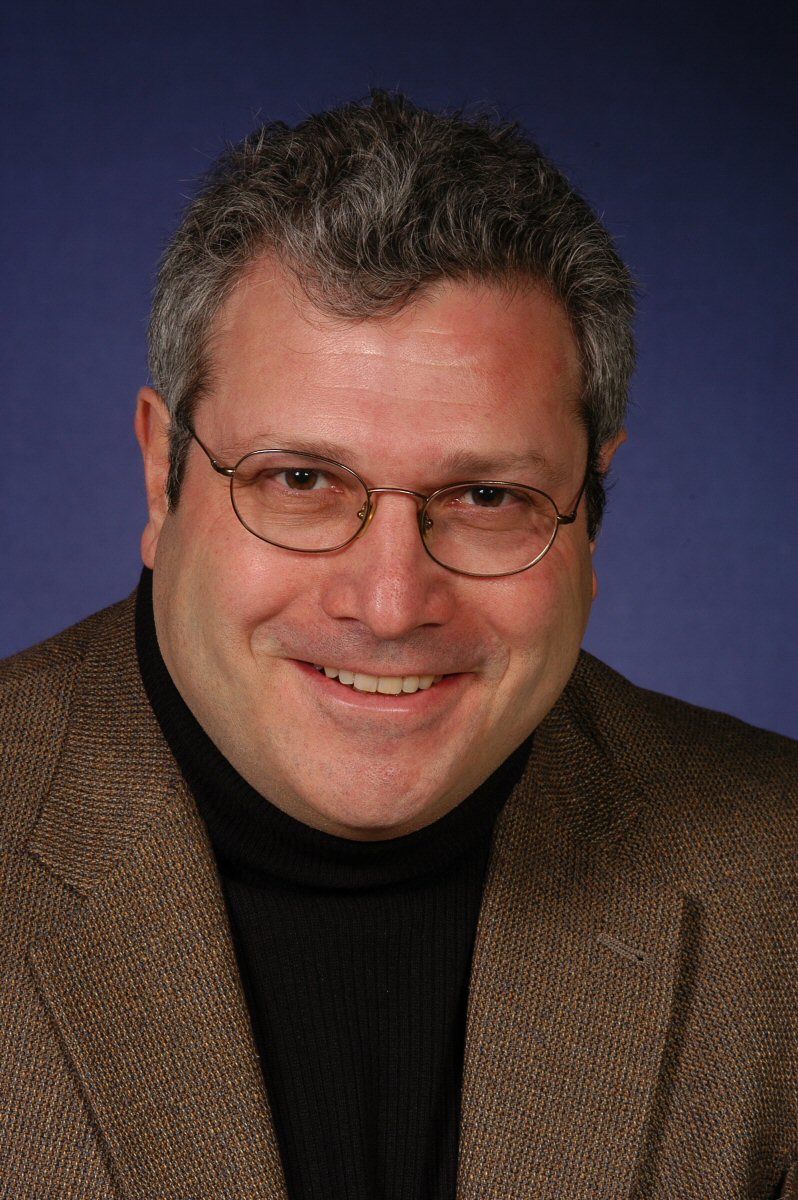
Former Senior Associate
Kagan, author of the recent book, The Return of History and the End of Dreams (Knopf 2008), writes a monthly column on world affairs for the Washington Post and is a contributing editor at both the Weekly Standard and the New Republic.
Recent Work

Michele Dunne, Robert Kagan
Robert Kagan, Michele Dunne
Carnegie does not take institutional positions on public policy issues; the views represented herein are those of the author(s) and do not necessarily reflect the views of Carnegie, its staff, or its trustees.

The European Commissioner for Trade is headed to China. But after President Xi’s bridge-building visit to Washington, can a more isolated EU overcome Beijing’s stranglehold on critical raw materials? Who will blink first?

Rym Momtaz, ed.

European NATO countries are wrestling with the possibility of U.S. disengagement from the alliance. With the continent’s security increasingly uncertain, governments must restore the credibility of their collective defense.



Hans-Dieter Lucas, Adam Thomson, Pierre Vimont

The new U.S.–Denmark–Greenland agreement will help Washington exert political, economic, and financial dominance under the guise of security. Yet, it acknowledged Copenhagen’s and Nuuk’s sovereignty on the island.

Marc Pierini

A summer of escalation in the Black Sea has hurt Ukraine economically and is exacerbating world food security. A truce is needed—as is a broader reframing of Europe’s Ukraine strategy.

Thomas de Waal

Are Germany’s economic, industrial, and political struggles becoming a liability for the EU’s ability to rise to the geopolitical moment?
Rym Momtaz, ed.