

Commentary
Europe isn’t as weak in the new geopolitics of power as many would believe. But to leverage its assets and claim a sphere of influence, Brussels must stop undercutting itself.
Dimitar Bechev
{
  "authors": [
    "Robert Kagan",
    "William Kristol"
  ],
  "type": "legacyinthemedia",
  "centerAffiliationAll": "",
  "centers": [
    "Carnegie Endowment for International Peace"
  ],
  "collections": [],
  "englishNewsletterAll": "",
  "nonEnglishNewsletterAll": "",
  "primaryCenter": "Carnegie Endowment for International Peace",
  "programAffiliation": "",
  "programs": [],
  "projects": [],
  "regions": [
    "Israel",
    "Egypt"
  ],
  "topics": [
    "Foreign Policy"
  ]
}
REQUIRED IMAGE
Source: Carnegie
Reprinted with permission from the Weekly Standard September 3, 2001
Is the United States a reliable ally, one that can be counted on in time of crisis to assist close friends it has promised to defend? If the answer is yes, then it is now time for the United States to stand unequivocally with Israel. President Bush deserves credit for resisting calls for more "active" U.S. "engagement" in the conflict between Israel and the Palestinian Authority. Such engagement would mean, in practice, putting pressure on Israel not to fight back against terror. At best, this would imply U.S. evenhandedness between terror and its victims, and between democracy and dictatorship. At worst, it would mean rewarding the perpetrators of terror. Glib proponents of a more "active" U.S. role in the conflict should not be allowed to get away with sounding like they are advocating American world leadership. They are rather advocating an abdication by the United States of both moral judgment and political leadership.
But the president should do more than resist foolish counsel. He should assert true American leadership by suspending our role as the Middle East?s honest broker, on the grounds that the peace process in which such a role might conceivably make sense has given way to a condition of war. He should make clear that for the duration of this war, which has been thrust upon Israel by Yasser Arafat and his Palestinian Authority, the United States is morally and strategically compelled to support its ally. He should let it be known to the Israelis, the Palestinians, and to the Arab world that Israel will be allowed to fight the war by the means it deems necessary, without American carping and with whatever American material and financial support may be required. Strange as it may seem to our foreign policy establishment and to the international club of peacemaking professionals, an American green light to Israel could actually create the conditions for stability and peace in the region. But even if it didn?t, there is no alternative consistent with American interests and moral obligations.
Right now, Yasser Arafat believes he can let the terrorists loose and keep the intifada brewing without paying a real price. And he believes this because the world, and more importantly the United States, encourages him to believe it. Every time a terrorist kills innocent Israelis, and the Israelis respond in even the most limited fashion, Colin Powell?s State Department evenhandedly condemns the "cycle of violence." When Israel peacefully occupies a Palestinian political headquarters in East Jerusalem in response to a vicious terrorist murder, Powell?s State Department accuses Israel of "escalating" the conflict. The famous report by George Mitchell, the mediation efforts of CIA director George Tenet, the daily statements by the State Department spokesman, all declare the United States morally and politically neutral as between its Israeli allies and the Palestinians who war against them. Under these circumstances, Arafat feels no need to halt the violence. Under these circumstances, Israel has no confidence that if it moved against Arafat and his dictatorship?an action which really could lay the groundwork for reducing both Israeli and Palestinian bloodshed?it would receive American backing. And Arab leaders, such as Egypt?s pusillanimous and cynical Hosni Mubarak, have no incentive to put pressure on Arafat to stop the violence.
Indeed, the Egyptian government?s recent calls for a "more active and engaged role" by the United States in the Israeli-Palestinian conflict would be merely amusing were they not so profoundly offensive. It was Mubarak, after all, who helped torpedo the peace process last year, when he urged Arafat to reject the unbelievably generous offer of Israeli prime minister Ehud Barak at Camp David. Mubarak is now desperate for the United States to pull his chestnuts out of the fire. For as the New York Times?s Thomas Friedman has noted, Mubarak lives in constant fear that pro-Palestinian protests in Egypt stirred up by Arafat could fly out of control and metamorphose into attacks on the Mubarak dictatorship itself. This past week, panicky Egyptian officials were in Washington begging the Bush administration to put more pressure on Israel, warning of "enormous instability in the region," i.e., in Egypt, if something isn?t done to stop Sharon. Such appeals from a "moderate" Arab leader like Mubarak strike terror in the hearts of State Department Middle East hands, who insist we must sit on the Israelis or lose Mubarak to the Muslim crazies. The foreign policy establishment nods sagely, and Mubarak gets what he wants without having to use any of his own enormous influence with Arafat.
The reality is, so long as the United States sticks to the neutral banalities of the Mitchell report, Mubarak has no incentive to act. But what if, instead of falling for Mubarak?s con job, we turned up the heat and raised the stakes? What if we made it clear that, far from pressuring Israel, we planned to back its right to defend itself, and trusted our ally to do the right thing in the very difficult situation in which it finds itself? If Mubarak is so afraid of his own people?s fury getting out of control, then let him pressure Arafat to clamp down on the terrorists immediately. Until he does, we should support Israel and let Mubarak stew in his own juices.
The basic fact is this: Only when confronted by the prospect of a United States firmly behind Israel will Palestinian and Arab leaders, and the Palestinian and Arab peoples, take seriously their own interest in and obligation for restoring peace. At the present time, the best hope for a "peace process"?and certainly for peace?in the Middle East is for the United States to give Israel a green light.
Former Senior Associate
Kagan, author of the recent book, The Return of History and the End of Dreams (Knopf 2008), writes a monthly column on world affairs for the Washington Post and is a contributing editor at both the Weekly Standard and the New Republic.
William Kristol
Carnegie does not take institutional positions on public policy issues; the views represented herein are those of the author(s) and do not necessarily reflect the views of Carnegie, its staff, or its trustees.
Europe isn’t as weak in the new geopolitics of power as many would believe. But to leverage its assets and claim a sphere of influence, Brussels must stop undercutting itself.

Dimitar Bechev
Europe’s reaction to the war in Iran has been disunited and meek, a far cry from its previously leading role in diplomacy with Tehran. To avoid being condemned to the sidelines while escalation continues, Brussels needs to stand up for international law.

Pierre Vimont
France and Germany’s failure to agree on the Future Combat Air System (FCAS) raises questions about European defense. Amid industrial rivalries and competing strategic cultures, what does the future of European military industrial projects look like?

Rym Momtaz, ed.
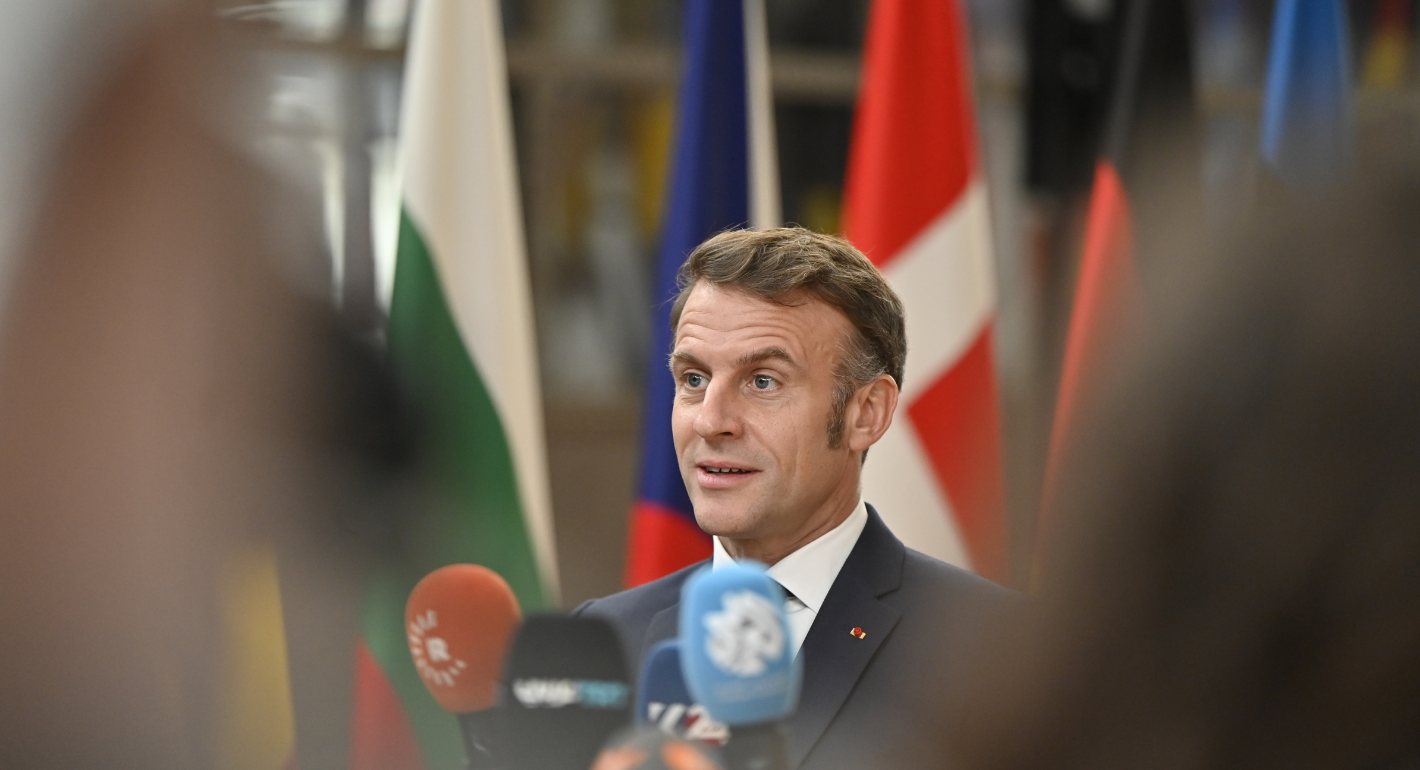
France has stopped clinging to notions of being a great power and is embracing the middle power moment. But Emmanuel Macron has his work cut out if he is to secure his country’s global standing before his term in office ends.
Rym Momtaz

Despite offering security benefits to candidates and the EU alike, the enlargement agenda appears stalled. Why is progress not being made, and is it time for Europe to rethink its approach?

Sylvie Goulard, Gerald Knaus