

Article
Marina Ottaway, Omar Hossino
{
  "authors": [
    "Marina Ottaway"
  ],
  "type": "legacyinthemedia",
  "centerAffiliationAll": "dc",
  "centers": [
    "Carnegie Endowment for International Peace"
  ],
  "collections": [],
  "englishNewsletterAll": "democracy",
  "nonEnglishNewsletterAll": "",
  "primaryCenter": "Carnegie Endowment for International Peace",
  "programAffiliation": "DCG",
  "programs": [
    "Democracy, Conflict, and Governance"
  ],
  "projects": [],
  "regions": [],
  "topics": [
    "Security"
  ]
}
REQUIRED IMAGE
Source: Carnegie
Remaking Afghanistan: Learn from failures
This article first appeared in The Christian Science Monitor on November 6, 2001. All rights reserved.
WASHINGTON — It is possible the United States and its allies will win the war to oust the Taliban only to lose the political campaign to reconstruct Afghanistan. There are no successful examples of reconstruction of such a faction-ridden, devastated country.
But there are many cases of failure from which to learn. Bosnia and Somalia are two contrasting examples.
Bosnia represents the maximalist model. The international community has devised a comprehensive solution, trying to overcome ethnic divisions and the legacy of authoritarianism by building a democracy, albeit a convoluted one. It has organized elections, tried to build institutions, and fostered reconciliation. Six years and well over $50 billion later, it is clear that this solution requires enormous outside resources and a very long-term commitment.
Progress in Bosnia has been painfully slow because the idea of a united Bosnia is more attractive to the international community than to Bosnian citizens.
Somalia represents the other extreme: neglect. Originally, the international community tried to engineer a grand solution in Somalia, but it never devoted sufficient resources, then withdrew when the political cost of intervention increased.
The first steps were similar to present efforts in Afghanistan. The international community tried to forge a broad coalition among the warlords. Under pressure from international nongovernmental organizations, which worried that this approach excluded other and more legitimate participants, the process was enlarged to include clan elders, women, and in general, members of civil society.
Nothing came of these meetings, and then the humanitarian intervention was marred by violence. First, the United States - and eventually the United Nations - withdrew. Left on their own, Somalis worked out piecemeal solutions. Villages and clans fell back on old methods of solving problems. Somalis did not prosper, but survived much better than they had at the height of the conflict. For several years this appeared to be a pretty good solution, but we are now discovering that Al Ittihad, a terrorist group with ties to Al Qaeda, functioned with impunity in the interstices of this loose system.
Neither country offers a model for the international community to follow in Afghanistan. Overthrowing the Taliban and then leaving the country in the hands of a tenuous coalition of warlords would be extremely dangerous. There would be more fighting, but even worse, there would be too much uncontrolled and uncontrollable space in which new and old problems, from terrorist groups to the heroin trade, would continue to fester.
The anti-Taliban forces are not intrinsically better than the Taliban, although right now it is in their interests to cooperate with the US and the international community. Trying to rebuild Afghanistan into a modern state would require a massive intervention and indefinite occupation. Even if resources were available, a long Western occupation of a Muslim country would create a dangerous backlash throughout the Muslim world.
The international community needs to steer a course between imposing a solution and neglect. The initial goals must be modest: to maintain sufficient international presence and supervision in the country to ensure that it will not again become a free staging ground for international terrorism, or at least to know whether this is happening; and to work with the groups that have some control in each area to restore enough security to make daily life possible.
Setting up a framework for a new Afghan state must wait. Making it democratic will have to wait even longer, particularly at a time when anger against the US and the West is likely to translate into mistrust of democracy.
There is a role for the UN; no other organization can provide a modicum of supervision. But this must not be a typical UN mission, heavy with international peacekeepers and bureaucrats trying to run the country. The UN must establish a much lighter presence to help the members of the new coalition continue the dialogue among themselves, discuss the grievances of those who are excluded, and coordinate the work of agencies and groups trying to restore normal life.
This is enough of a task for the next several years, and it is probably the most that can be attempted without causing even more anger and hatred. More ambitious projects can wait.
Marina Ottaway is a senior associate and co-director of the Democracy and Rule of Law Project at the Carnegie Endowment for International Peace.
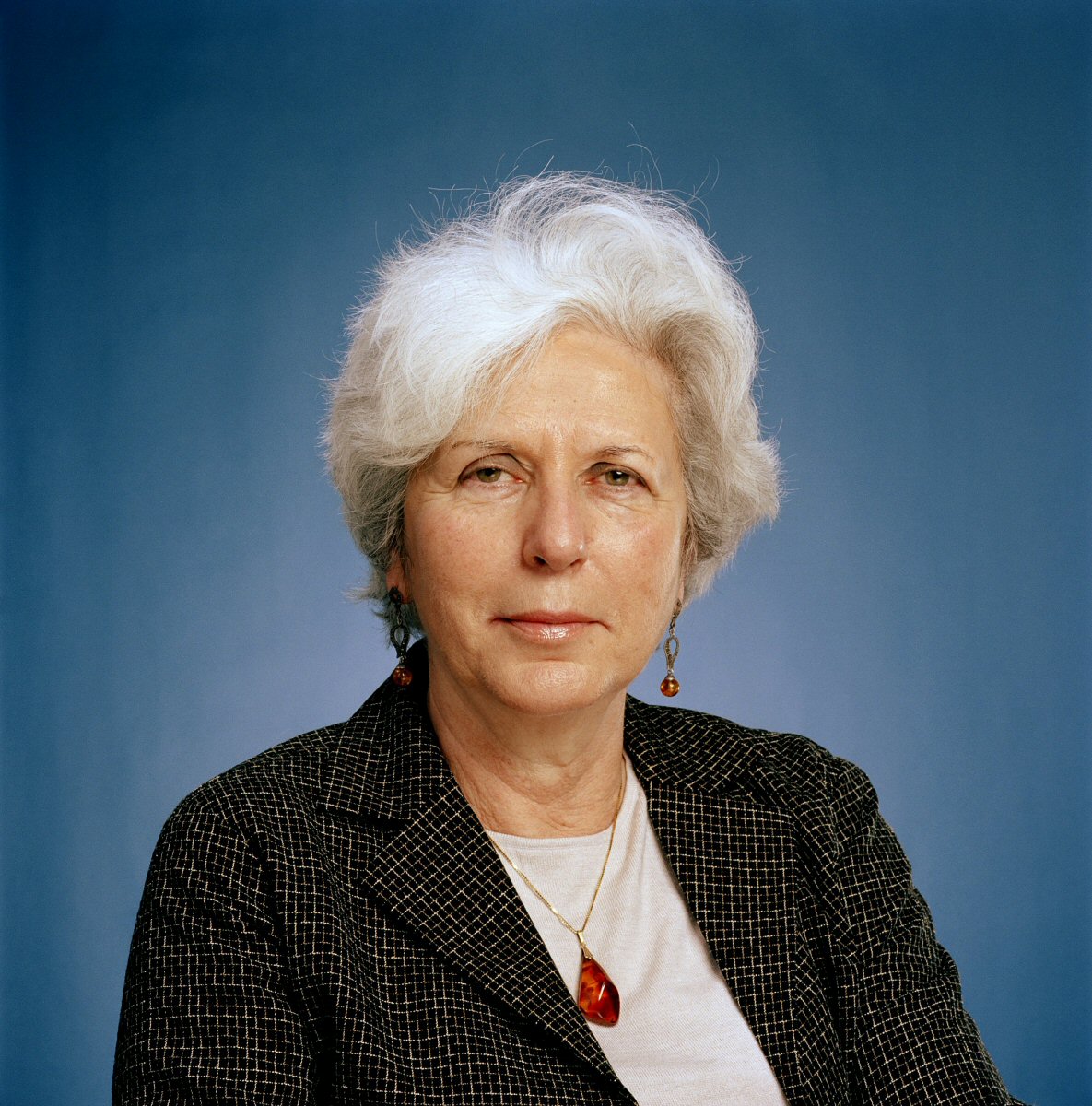
Former Senior Associate, Middle East Program
Before joining the Endowment, Ottaway carried out research in Africa and in the Middle East for many years and taught at the University of Addis Ababa, the University of Zambia, the American University in Cairo, and the University of the Witwatersrand in South Africa.
Recent Work
Marina Ottaway, Omar Hossino
Marina Ottaway
Carnegie does not take institutional positions on public policy issues; the views represented herein are those of the author(s) and do not necessarily reflect the views of Carnegie, its staff, or its trustees.

Europe is facing rising populism internally as well as external pressures from Russia, China, Turkey, and the United States.

Dimitar Bechev

The new U.S.–Denmark–Greenland agreement will help Washington exert political, economic, and financial dominance under the guise of security. Yet, it acknowledged Copenhagen’s and Nuuk’s sovereignty on the island.

Marc Pierini

A summer of escalation in the Black Sea has hurt Ukraine economically and is exacerbating world food security. A truce is needed—as is a broader reframing of Europe’s Ukraine strategy.

Thomas de Waal

Are Germany’s economic, industrial, and political struggles becoming a liability for the EU’s ability to rise to the geopolitical moment?

Rym Momtaz, ed.

European states control several Overseas Countries and Territories around the world that carry strategic, economic, and environmental weight. As great powers challenge the rules-based order, defending them is a geopolitical imperative for Europe.
Marc Pierini