

Commentary
European Commission President Ursula von der Leyen is about to give her annual address on the state of the EU. Here’s what she won’t—but should—say.
Rym Momtaz
{
  "authors": [
    "Robert Kagan",
    "William Kristol"
  ],
  "type": "legacyinthemedia",
  "centerAffiliationAll": "",
  "centers": [
    "Carnegie Endowment for International Peace"
  ],
  "collections": [],
  "englishNewsletterAll": "",
  "nonEnglishNewsletterAll": "",
  "primaryCenter": "Carnegie Endowment for International Peace",
  "programAffiliation": "",
  "programs": [],
  "projects": [],
  "regions": [
    "United States"
  ],
  "topics": [
    "Security",
    "Military"
  ]
}
REQUIRED IMAGE
Source: Carnegie
Reprinted with permission from The Weekly Standard, June 10, 2002
NOW WOULD PRESIDENT BUSH please appoint an independent blue-ribbon commission to investigate the government's failure to anticipate or adequately prepare for the terrorist attacks on September 11? When we offered this suggestion two weeks ago, the Bush administration, led by Vice President Dick Cheney, was in high dudgeon. Any notion that the administration could have acted in any way that might have prevented or mitigated the attacks, Cheney suggested, was ludicrous and "irresponsible . . . in a time of war."
But now the Bush administration has openly acknowledged that, indeed yes, the September 11 attacks might conceivably have been prevented had the administration responded more effectively to information it had in its possession. This past week FBI director Robert S. Mueller III said: "I cannot say for sure that there wasn't a possibility we could have come across some lead that would have led us to the hijackers. . . ." Although there was no specific warning, Mueller admitted, "that doesn't mean that there weren't red flags out there, that there weren't dots that should have been connected to the extent possible."
Put it this way: Had the FBI examined Zacarias Moussaoui's laptop computer, as the FBI office in Minneapolis requested, it would have found the telephone number of the roommate of the September 11 attack's ringleader, Mohamed Atta. Had the FBI put this information together with a warning from an agent in Phoenix, Arizona, that members of al Qaeda were enrolled in American flight-training schools, it might have begun to piece a difficult puzzle together, inasmuch as Atta himself had enrolled in an American flight-training school. Would this knowledge have necessarily prevented the attack from being carried out? No, not necessarily, but possibly--as Mueller now admits.
What other lapses might there have been before September 11? The simple answer is: No one knows. Robert Mueller doesn't know. Dick Cheney doesn't know. President Bush doesn't know. And, last but not least, the American people don't know.
We might not know about the FBI's lapses had it not been for a few leaks and Coleen Rowley's open letter to Mueller. A few weeks ago, after all, Mueller's position, like Cheney's, was that nothing the administration could have done before September 11 would have made a difference. At a September 14 press conference, Mueller insisted, "The fact that there were a number of individuals that happened to have received training at flight schools here is news, quite obviously. If we had understood that to be the case, we would have--perhaps one could have averted this." On September 17, asked if there were any "warning signs" at all, Mueller said no. Now we know those statements were inaccurate, mostly because Rowley did something unusual--she called her superiors to account.
Do we have to wait for more whistle-blowers to get more parts of the story? A whistle-blower to tell us what might have gone wrong at the CIA? A whistle-blower to tell us what may or may not have happened at the White House? It's not in the nation's interest, and it's not in President Bush's interest, for the truth to come out this way.
That is why we need an independent commission. The Bush administration cannot investigate itself, review itself, and then change the way it does business without some outside prodding. No administration can. Would Mueller's recent shakeup of the FBI have occurred with such dispatch in the absence of leaks and the Rowley letter? We don't know. And even if the FBI is now repairing itself, what about other agencies? Already, FBI officials are suggesting, on background, that the CIA has been working hard to shift all the blame onto the FBI so as to avoid scrutiny of its own errors.
And what about the CIA? As our colleague Reuel Marc Gerecht, a former CIA officer, points out in the New York Times, the war on terrorism must ultimately be fought and won overseas. But September 11 revealed, as did the attacks on the U.S. embassies in Africa and the bombing of the destroyer Cole, that the agency has been unable to penetrate Osama bin Laden's network. Should the CIA have reoriented itself to deal better with the rising threat of al Qaeda before September 11? Is it reorienting itself to do the job better now? CIA director George Tenet assures us that he's got things in hand, and we're in no position to say whether he does or not. But that's what Robert Mueller was saying, too, a few weeks ago. It turns out he was wrong.
If the president and his advisers would stop circling the wagons for a moment, they would realize that an independent commission is in their interest. Congressional investigations are unlikely to be the solution: Given the level of partisanship on both sides, no one can have any confidence in a report produced by Congress. Vice President Cheney claims to be worried that an independent commission would leak classified information. Our guess is that a blue-ribbon commission would be a good deal more careful with sensitive information than members of Congress generally are. An independent commission is also more likely to come up with constructive criticism and useful recommendations for change, rather than simply engage in finger-pointing. Done right, such a commission could give the public something it now lacks: confidence that somebody is taking an honest look at what went wrong, and confidence that the administration will be put under pressure to change the ways its agencies operate. How could that be bad?
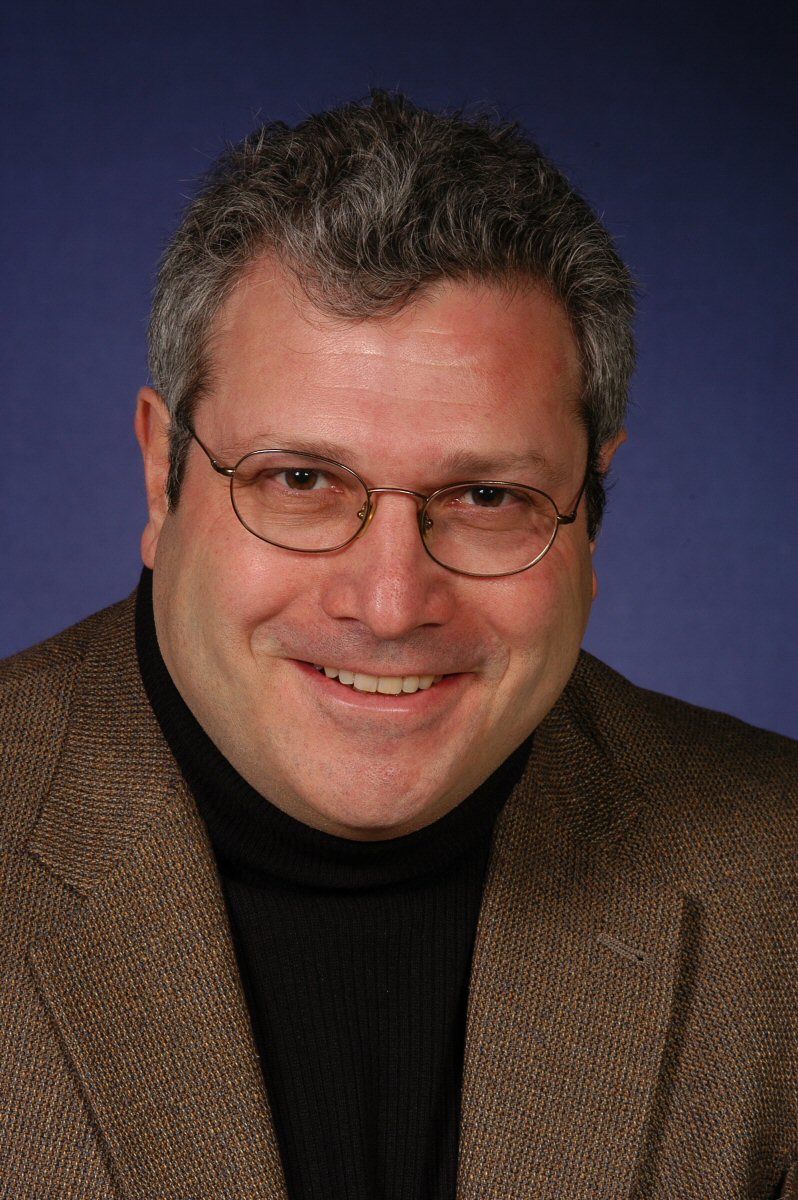
Former Senior Associate
Kagan, author of the recent book, The Return of History and the End of Dreams (Knopf 2008), writes a monthly column on world affairs for the Washington Post and is a contributing editor at both the Weekly Standard and the New Republic.
William Kristol
Carnegie does not take institutional positions on public policy issues; the views represented herein are those of the author(s) and do not necessarily reflect the views of Carnegie, its staff, or its trustees.

European Commission President Ursula von der Leyen is about to give her annual address on the state of the EU. Here’s what she won’t—but should—say.

Rym Momtaz

Radical-right parties are expected to do well in upcoming elections in four of the EU's biggest member states. If successful, they could prevent the union from addressing key challenges ahead.

Stefan Lehne

Canadian Prime Minister Mark Carney has twice inspired praise for standing up to U.S. President Donald Trump: at the 2026 World Economic Forum in Davos and on Canada-U.S. trade negotiations. Is Carney showing a third way better than the EU has in dealing with the Trump administration?
Rym Momtaz, ed.

European states control several Overseas Countries and Territories around the world that carry strategic, economic, and environmental weight. As great powers challenge the rules-based order, defending them is a geopolitical imperative for Europe.

Marc Pierini
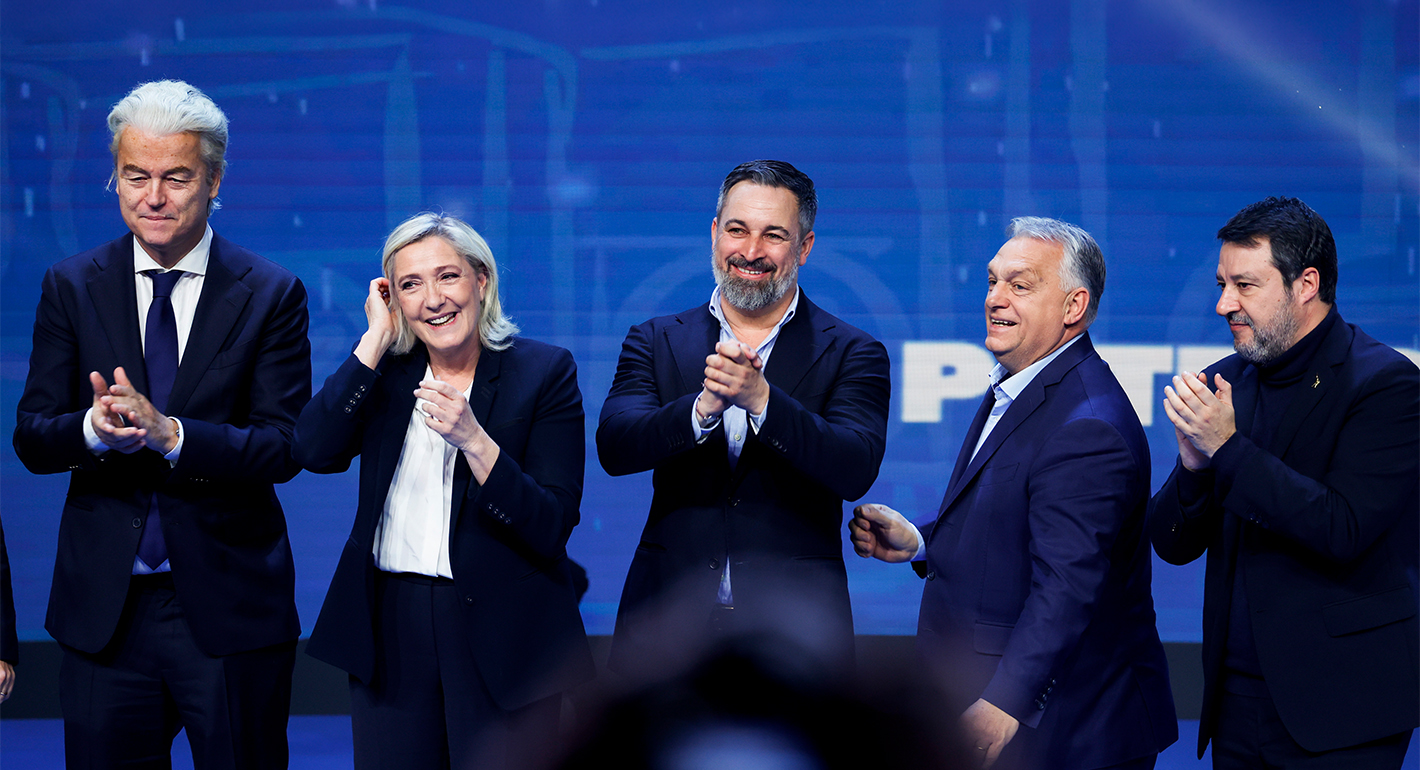
In supporting Europe’s far-right, MAGA and Russia both want the same thing: a weaker EU. Europe must defend itself without abandoning the openness these forces exploit.
Armida van Rij