

In The Media
Minxin Pei
{
  "authors": [
    "Minxin Pei"
  ],
  "type": "legacyinthemedia",
  "centerAffiliationAll": "dc",
  "centers": [
    "Carnegie Endowment for International Peace"
  ],
  "collections": [],
  "englishNewsletterAll": "asia",
  "nonEnglishNewsletterAll": "",
  "primaryCenter": "Carnegie Endowment for International Peace",
  "programAffiliation": "AP",
  "programs": [
    "Asia"
  ],
  "projects": [],
  "regions": [
    "China"
  ],
  "topics": [
    "Political Reform",
    "Economy"
  ]
}
Source: Getty
Source: International Herald Tribune

Sure, China still has a one-party state, and its National People's Congress, the legislature nominally invested with supreme constitutional power, is packed with Communist Party loyalists rather than freely elected deputies. The annual session of the Congress, however, has evolved into a stage for spirited debate on public policies.
The current session, which will end on March 16, is no exception. Dominating the agenda is how to address the massive social deficits accumulated since the early 1990s.
To the outside world, China is a stunning economic success story. But inside China, a decade and half of double-digit growth has been achieved at horrendous costs: environmental degradation, declining access to health care and education, a deteriorating social safety net and rising inequality.
The cost of pollution to China, in terms of extra health care expenditures, destruction of natural resources, and premature deaths, is at least 8 percent of the gross domestic product. Only one-tenth of the population has health insurance; more than half of the people who get sick cannot afford professional medical care. Roughly 40 to 50 million peasants have lost their land to commercial development.
These social deficits have not slowed China's economic engine, but they are stoking public discontent. In the Chinese media, and in the annual sessions of the Congress in recent years, these issues have become the most contentious ones, demanding the top leadership's attention.
Attuned to such public sentiments, President Hu Jintao and his colleagues have spent the last two years in a three-pronged campaign to address these challenges. Rhetorically, Beijing has called for building a "socialist harmonious society" and launched a propaganda blitz urging government officials to adopt a more balanced growth strategy and a more caring attitude.
Economically, the Chinese government has also taken several minor steps, such as slightly increasing spending on health and education and abolishing the agricultural tax, a minor but extremely regressive levy imposed on the poorest in China. It has vowed to make health care and housing more affordable.
Politically, however, the government has intensified control. New restrictions are imposed on the media, non-governmental organizations and social activists. In part, Chinese leaders acted in the belief that, at this stage China's development process, a firmer hand of the state is needed to maintain stability. They view the country's mounting social problems as the "growing pains" of modernization that can be addressed with more fiscal spending.
What about a more open society and competitive political process? Judging by recent pronouncements from Beijing, it is clear that Chinese leaders treat democratic reform not as a solution to the country's social ills but as a threat to political stability.
This view — and the three-pronged strategy for promoting social harmony — are fundamentally flawed.
What Chinese leaders have ignored is that the most glaring social deficits are being generated mainly by the political system itself, not just the rapid modernization process.
Although the Chinese economy has more than quadrupled in size and the society has become much more diverse and dynamic since the tragedy of Tiananmen in 1989, the political system has hardly changed. Government officials are appointed by the ruling party and have few incentives to respond to public needs. Indeed, opinion polls of officials show that most of them admit that "support of superiors" is the most important factor in their promotion.
Since these officials' performance is measured in terms of GDP growth, they naturally devote all the available resources to building factories, commercial real estate and factories, not to schools or clinics.
Over time, this strategy has paid off handsomely for them. But China's disenfranchised groups, such as peasants, migrant laborers and the disabled, have paid a steep price.
The question now is: can Beijing's new and forward- looking social policies be effectively implemented by the same bureaucratic system? Can China increase social harmony without reforming the governance system that influences the behavior of its ruling elite?
Clearly, neither rhetoric nor money can make China more harmonious without political reforms.
Social disharmony, in most cases, is the symptom of an unresponsive and unaccountable political system. So Chinese leaders must re-think its strategy. Instead of increasing political control, it needs to encourage greater openness and grassroots democracy so that local officials will be judged, by their constituents, on their record in delivering social services, and not their skills to impress their superiors.
Many of the Congress deputies now gathered in Beijing would undoubtedly endorse such a course correction.
Minxin Pei, director of the China program at the Carnegie Endowment for International Peace, is the author of "China's Trapped Transition."
This article was originally published on March 6, 2007, in the International Herald Tribune.
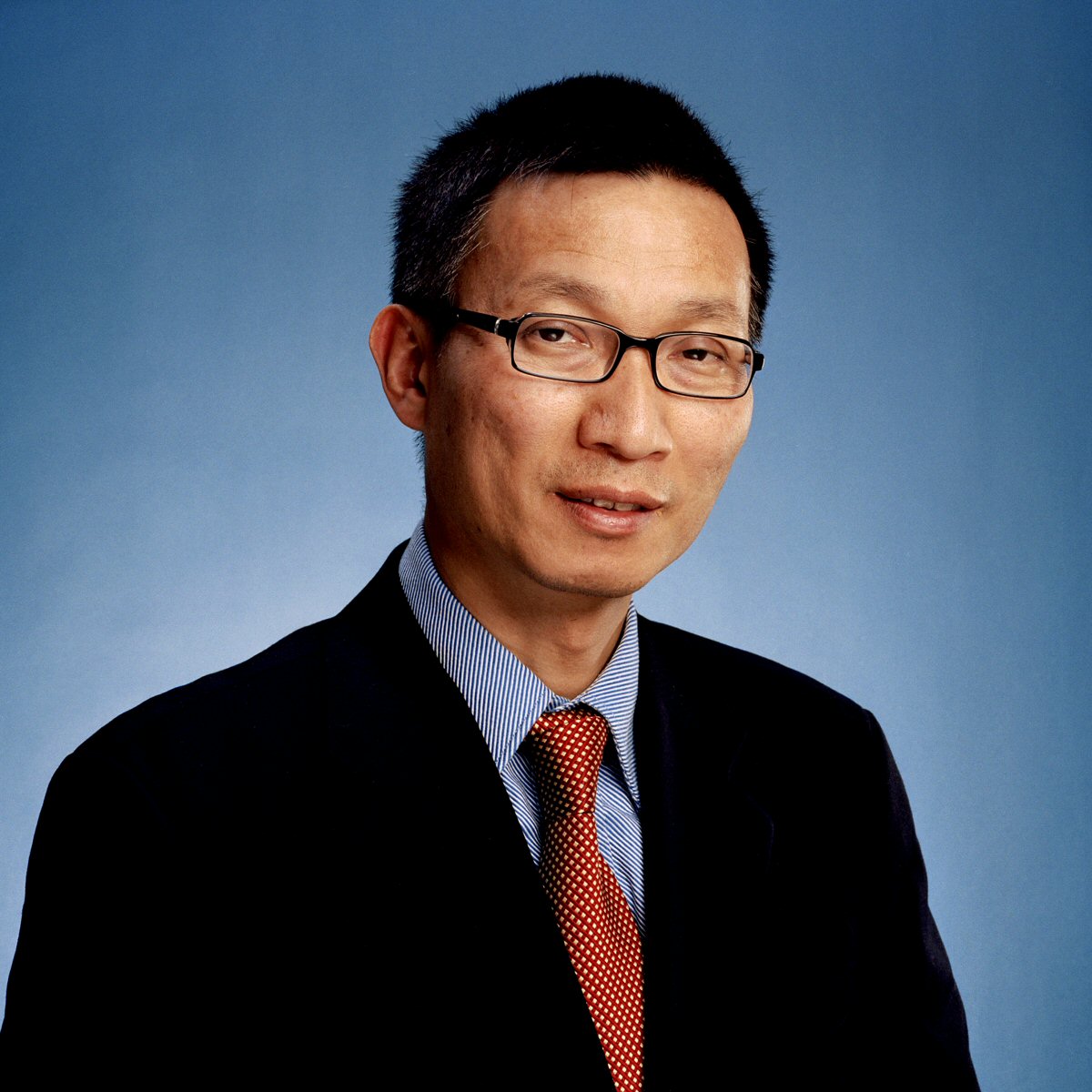
Former Adjunct Senior Associate, Asia Program
Pei is Tom and Margot Pritzker ‘72 Professor of Government and the director of the Keck Center for International and Strategic Studies at Claremont McKenna College.
Recent Work
Minxin Pei
Minxin Pei
Carnegie does not take institutional positions on public policy issues; the views represented herein are those of the author(s) and do not necessarily reflect the views of Carnegie, its staff, or its trustees.

The hybrid warfare landscape is evolving rapidly, leaving policymakers without clear strategies. To better inform their work in addressing emerging challenges, governments must dig deeper into the underlying dynamics at play.


Raluca Csernatoni, Alicia Wanless

As the EU confronts profound challenges, several leaders have called for fundamental reform to the union’s model—but only modest, superficial changes have resulted. What if Europe really could be reimagined from zero today: What should such a redesigned European order look like?

Richard Youngs, ed.

As geopolitical rivalry weaponizes global supply chains, the EU’s true vulnerability lies in emerging-risk imports. For these goods, suppliers are growing more concentrated, substitution more difficult, and political risk is looming.

Sinan Ülgen

The EU is putting together a new security strategy to meet today’s myriad challenges. But for any proposal to be effective, the union needs to grapple with its identity and ambitions.

Pierre Vimont

Amid uncertainty caused by the Iran war, the global drive for nonproliferation has stalled. With Europe diplomatically marginalized and countries reassessing their nuclear options, efforts to curb the spread of nuclear weapons risk becoming irrelevant.

Jane Darby Menton