

In The Media
Michele Dunne, Robert Kagan
{
  "authors": [
    "Robert Kagan"
  ],
  "type": "legacyinthemedia",
  "centerAffiliationAll": "",
  "centers": [
    "Carnegie Endowment for International Peace"
  ],
  "collections": [],
  "englishNewsletterAll": "",
  "nonEnglishNewsletterAll": "",
  "primaryCenter": "Carnegie Endowment for International Peace",
  "programAffiliation": "",
  "programs": [],
  "projects": [],
  "regions": [
    "North America",
    "United States"
  ],
  "topics": [
    "Foreign Policy"
  ]
}
REQUIRED IMAGE
Source: The Washington Post
America must "lead the world in battling immediate evils and promoting the ultimate good." With those words, Barack Obama put an end to the idea that the alleged overexuberant idealism and America-centric hubris of the past six years is about to give way to a new realism, a more limited and modest view of American interests, capabilities and responsibilities.
Obama's speech at the Chicago Council on Global Affairs last week was pure John Kennedy, without a trace of John Mearsheimer. It had a deliberate New Frontier feel, including some Kennedy-era references ("we were Berliners") and even the Cold War-era notion that the United States is the "leader of the free world." No one speaks of the "free world" these days, and Obama's insistence that we not "cede our claim of leadership in world affairs" will sound like an anachronistic conceit to many Europeans, who even in the 1990s complained about the bullying "hyperpower." In Moscow and Beijing it will confirm suspicions about America's inherent hegemonism. But Obama believes the world yearns to follow us, if only we restore our worthiness to lead. Personally, I like it.
All right, you're thinking, but at least he wants us to lead by example, not by meddling everywhere and trying to transform the world in America's image. When he said, "We have heard much over the last six years about how America's larger purpose in the world is to promote the spread of freedom," you probably expected him to distance himself from this allegedly discredited idealism.
Instead, he said, "I agree." His critique is not that we've meddled too much but that we haven't meddled enough. There is more to building democracy than "deposing a dictator and setting up a ballot box." We must build societies with "a strong legislature, an independent judiciary, the rule of law, a vibrant civil society, a free press, and an honest police force." We must build up "the capacity of the world's weakest states" and provide them "what they need to reduce poverty, build healthy and educated communities, develop markets, . . . generate wealth . . . fight terrorism . . . halt the proliferation of deadly weapons" and fight disease. Obama proposes to double annual expenditures on these efforts, to $50 billion, by 2012.
It's not just international do-goodism. To Obama, everything and everyone everywhere is of strategic concern to the United States. "We cannot hope to shape a world where opportunity outweighs danger unless we ensure that every child, everywhere, is taught to build and not to destroy." The "security of the American people is inextricably linked to the security of all people." Realists, call your doctors.
Okay, you say, but at least Obama is proposing all this Peace Corps-like activity as a substitute for military power. Surely he intends to cut or at least cap a defense budget soaring over $500 billion a year. Surely he understands there is no military answer to terrorism.
Actually, Obama wants to increase defense spending. He wants to add 65,000 troops to the Army and recruit 27,000 more Marines. Why? To fight terrorism.
He wants the American military to "stay on the offense, from Djibouti to Kandahar," and he believes that "the ability to put boots on the ground will be critical in eliminating the shadowy terrorist networks we now face." He wants to ensure that we continue to have "the strongest, best-equipped military in the world."
Obama never once says that military force should be used only as a last resort. Rather, he insists that "no president should ever hesitate to use force -- unilaterally if necessary," not only "to protect ourselves . . . when we are attacked," but also to protect "our vital interests" when they are "imminently threatened." That's known as preemptive military action. It won't reassure those around the world who worry about letting an American president decide what a "vital interest" is and when it is "imminently threatened."
Nor will they be comforted to hear that "when we use force in situations other than self-defense, we should make every effort to garner the clear support and participation of others." Make every effort?
Conspicuously absent from Obama's discussion of the use of force are four words: United Nations Security Council.
Obama talks about "rogue nations," "hostile dictators," "muscular alliances" and maintaining "a strong nuclear deterrent." He talks about how we need to "seize" the "American moment." We must "begin the world anew." This is realism? This is a left-liberal foreign policy?
Ask Noam Chomsky the next time you see him.
Of course, it's just a speech. At the Democrats' debate on Thursday, when asked how he would respond to another terrorist attack on the United States, Obama at first did not say a word about military action. So maybe his speech only reflects what he and his advisers think Americans want to hear. But that is revealing, too. When it comes to America's role in the world, apparently they don't think there's much of an argument.
Robert Kagan, a senior associate at the Carnegie Endowment for International Peace and transatlantic fellow at the German Marshall Fund, writes a monthly column for The Post. His latest book is "Dangerous Nation," a history of American foreign policy. He has been advising John McCain's presidential campaign on an informal and unpaid basis.
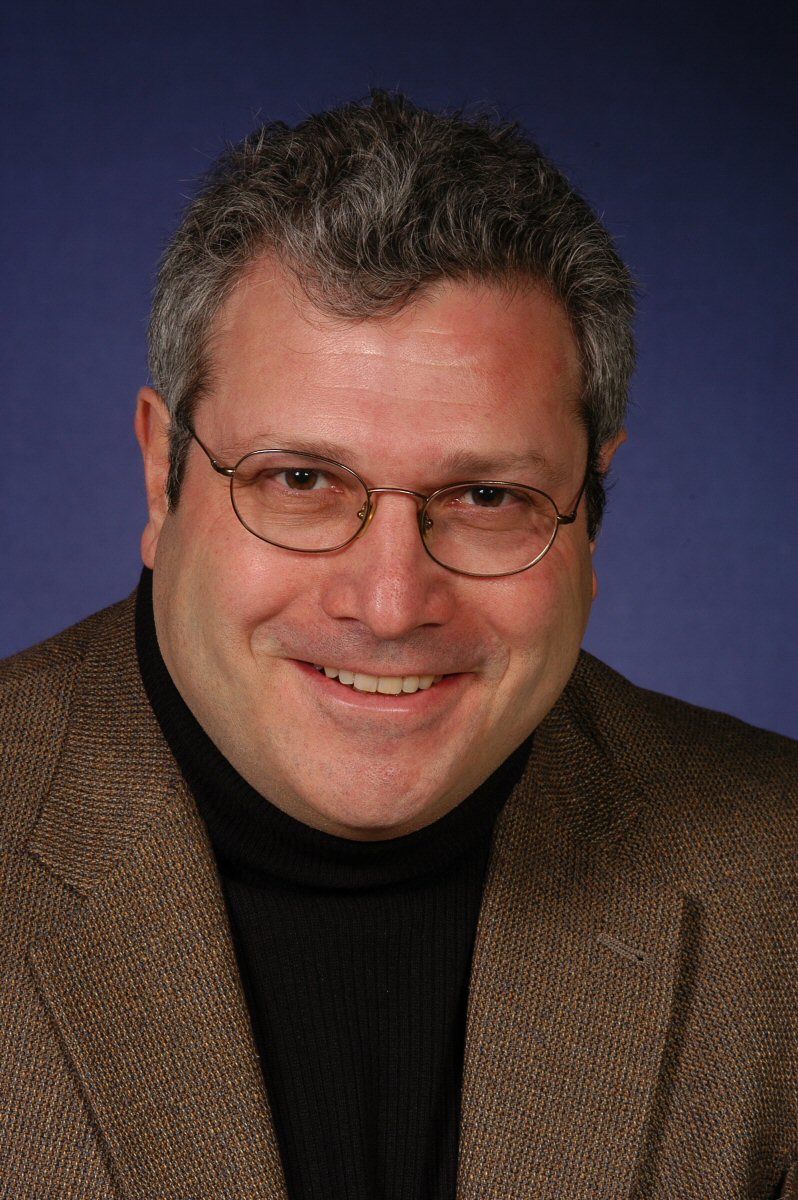
Former Senior Associate
Kagan, author of the recent book, The Return of History and the End of Dreams (Knopf 2008), writes a monthly column on world affairs for the Washington Post and is a contributing editor at both the Weekly Standard and the New Republic.
Recent Work

Michele Dunne, Robert Kagan
Robert Kagan, Michele Dunne
Carnegie does not take institutional positions on public policy issues; the views represented herein are those of the author(s) and do not necessarily reflect the views of Carnegie, its staff, or its trustees.

The European Commissioner for Trade is headed to China. But after President Xi’s bridge-building visit to Washington, can a more isolated EU overcome Beijing’s stranglehold on critical raw materials? Who will blink first?

Rym Momtaz, ed.

European NATO countries are wrestling with the possibility of U.S. disengagement from the alliance. With the continent’s security increasingly uncertain, governments must restore the credibility of their collective defense.



Hans-Dieter Lucas, Adam Thomson, Pierre Vimont

The new U.S.–Denmark–Greenland agreement will help Washington exert political, economic, and financial dominance under the guise of security. Yet, it acknowledged Copenhagen’s and Nuuk’s sovereignty on the island.

Marc Pierini

A summer of escalation in the Black Sea has hurt Ukraine economically and is exacerbating world food security. A truce is needed—as is a broader reframing of Europe’s Ukraine strategy.

Thomas de Waal

Are Germany’s economic, industrial, and political struggles becoming a liability for the EU’s ability to rise to the geopolitical moment?
Rym Momtaz, ed.