

In The Media
Michele Dunne, Robert Kagan
{
  "authors": [
    "Robert Kagan"
  ],
  "type": "legacyinthemedia",
  "centerAffiliationAll": "dc",
  "centers": [
    "Carnegie Endowment for International Peace"
  ],
  "collections": [],
  "englishNewsletterAll": "ctw",
  "nonEnglishNewsletterAll": "",
  "primaryCenter": "Carnegie Endowment for International Peace",
  "programAffiliation": "russia",
  "programs": [
    "Russia and Eurasia"
  ],
  "projects": [],
  "regions": [
    "Caucasus",
    "Russia"
  ],
  "topics": [
    "Foreign Policy"
  ]
}
Source: Getty
Robert Kagan argues that the Russian-Georgian conflict over the South Ossetia marks the official return of history to an almost 19th-century style of great-power competition, where military power is used to obtain geopolitical objectives.
Source: Washington Post

The events of the past week will be remembered that way, too. This war did not begin because of a miscalculation by Georgian President Mikheil Saakashvili. It is a war that Moscow has been attempting to provoke for some time. The man who once called the collapse of the Soviet Union "the greatest geopolitical catastrophe of the [20th] century" has reestablished a virtual czarist rule in Russia and is trying to restore the country to its once-dominant role in Eurasia and the world. Armed with wealth from oil and gas; holding a near-monopoly over the energy supply to Europe; with a million soldiers, thousands of nuclear warheads and the world's third-largest military budget, Vladimir Putin believes that now is the time to make his move.
Georgia's unhappy fate is that it borders a new geopolitical fault line that runs along the western and southwestern frontiers of Russia. From the Baltics in the north through Central Europe and the Balkans to the Caucasus and Central Asia, a geopolitical power struggle has emerged between a resurgent and revanchist Russia on one side and the European Union and the United States on the other.
Putin's aggression against Georgia should not be traced only to its NATO aspirations or his pique at Kosovo's independence. It is primarily a response to the "color revolutions" in Ukraine and Georgia in 2003 and 2004, when pro-Western governments replaced pro-Russian ones. What the West celebrated as a flowering of democracy the autocratic Putin saw as geopolitical and ideological encirclement.
Ever since, Putin has been determined to stop and, if possible, reverse the pro-Western trend on his borders. He seeks not only to prevent Georgia and Ukraine from joining NATO but also to bring them under Russian control. Beyond that, he seeks to carve out a zone of influence within NATO, with a lesser security status for countries along Russia's strategic flanks. That is the primary motive behind Moscow's opposition to U.S. missile defense programs in Poland and the Czech Republic.
His war against Georgia is part of this grand strategy. Putin cares no more about a few thousand South Ossetians than he does about Kosovo's Serbs. Claims of pan-Slavic sympathy are pretexts designed to fan Russian great-power nationalism at home and to expand Russia's power abroad.
Unfortunately, such tactics always seem to work. While Russian bombers attack Georgian ports and bases, Europeans and Americans, including very senior officials in the Bush administration, blame the West for pushing Russia too hard on too many issues.
It is true that many Russians were humiliated by the way the Cold War ended, and Putin has persuaded many to blame Boris Yeltsin and Russian democrats for this surrender to the West. The mood is reminiscent of Germany after World War I, when Germans complained about the "shameful Versailles diktat" imposed on a prostrate Germany by the victorious powers and about the corrupt politicians who stabbed the nation in the back.
Now, as then, these feelings are understandable. Now, as then, however, they are being manipulated to justify autocracy at home and to convince Western powers that accommodation -- or to use the once-respectable term, appeasement -- is the best policy.
But the reality is that on most of these issues it is Russia, not the West or little Georgia, that is doing the pushing. It was Russia that raised a challenge in Kosovo, a place where Moscow had no discernible interests beyond the expressed pan-Slavic solidarity. It was Russia that decided to turn a minor deployment of a few defensive interceptors in Poland, which could not possibly be used against Russia's vast missile arsenal, into a major geopolitical confrontation. And it is Russia that has precipitated a war against Georgia by encouraging South Ossetian rebels to raise the pressure on Tbilisi and make demands that no Georgian leader could accept. If Saakashvili had not fallen into Putin's trap this time, something else would have eventually sparked the conflict.
Diplomats in Europe and Washington believe Saakashvili made a mistake by sending troops to South Ossetia last week. Perhaps. But his truly monumental mistake was to be president of a small, mostly democratic and adamantly pro-Western nation on the border of Putin's Russia.
Historians will come to view Aug. 8, 2008, as a turning point no less significant than Nov. 9, 1989, when the Berlin Wall fell. Russia's attack on sovereign Georgian territory marked the official return of history, indeed to an almost 19th-century style of great-power competition, complete with virulent nationalisms, battles for resources, struggles over spheres of influence and territory, and even -- though it shocks our 21st-century sensibilities -- the use of military power to obtain geopolitical objectives. Yes, we will continue to have globalization, economic interdependence, the European Union and other efforts to build a more perfect international order. But these will compete with and at times be overwhelmed by the harsh realities of international life that have endured since time immemorial. The next president had better be ready.
Robert Kagan, a senior associate at the Carnegie Endowment for International Peace, writes a monthly column for The Post. His most recent book is "The Return of History and the End of Dreams." He served in the State Department in the Reagan administration.
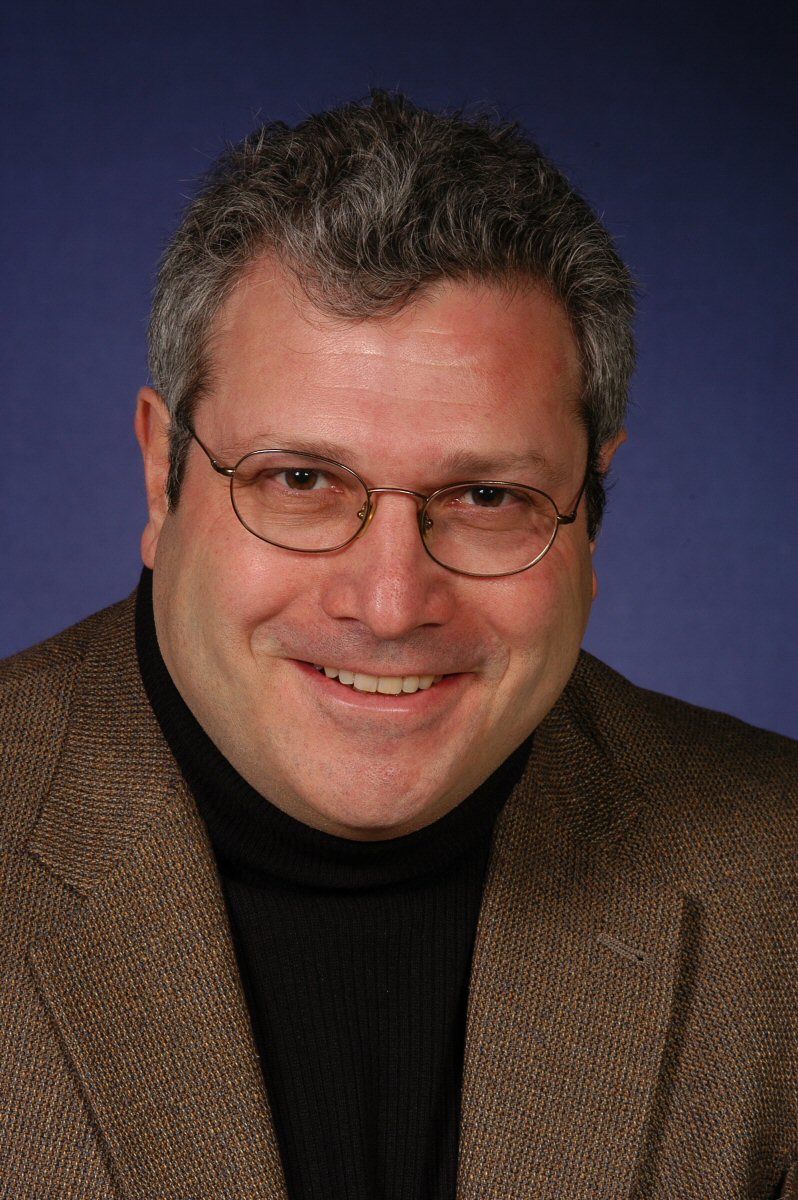
Former Senior Associate
Kagan, author of the recent book, The Return of History and the End of Dreams (Knopf 2008), writes a monthly column on world affairs for the Washington Post and is a contributing editor at both the Weekly Standard and the New Republic.
Recent Work

Michele Dunne, Robert Kagan
Robert Kagan, Michele Dunne
Carnegie does not take institutional positions on public policy issues; the views represented herein are those of the author(s) and do not necessarily reflect the views of Carnegie, its staff, or its trustees.

The aftermath of the Ceuta crisis shows Europe has drawn the wrong lessons. Rather than doubling down on failed migration policies, the EU needs to address the underlying roots of such episodes.

Richard Youngs

Canadian Prime Minister Mark Carney has twice inspired praise for standing up to U.S. President Donald Trump: at the 2026 World Economic Forum in Davos and on Canada-U.S. trade negotiations. Is Carney showing a third way better than the EU has in dealing with the Trump administration?

Rym Momtaz, ed.

The EU’s responses to two recent incidents expose the gulf between European perceptions and capabilities. Unless the union can bridge that gap, it will never become a real geostrategic power.
Rym Momtaz

European states control several Overseas Countries and Territories around the world that carry strategic, economic, and environmental weight. As great powers challenge the rules-based order, defending them is a geopolitical imperative for Europe.

Marc Pierini

In supporting Europe’s far-right, MAGA and Russia both want the same thing: a weaker EU. Europe must defend itself without abandoning the openness these forces exploit.

Armida van Rij