• Research
  • Strategic Europe
  • About
  • Experts
Carnegie Europe logoCarnegie lettermark logo
EUUkraine
  • Donate
{
  "authors": [
    "Minxin Pei"
  ],
  "type": "legacyinthemedia",
  "centerAffiliationAll": "dc",
  "centers": [
    "Carnegie Endowment for International Peace"
  ],
  "collections": [],
  "englishNewsletterAll": "asia",
  "nonEnglishNewsletterAll": "",
  "primaryCenter": "Carnegie Endowment for International Peace",
  "programAffiliation": "AP",
  "programs": [
    "Asia",
    "Democracy, Conflict, and Governance"
  ],
  "projects": [],
  "regions": [
    "East Asia",
    "China"
  ],
  "topics": [
    "Political Reform",
    "Democracy"
  ]
}
Source: Getty

In The Media

Government By Corruption

The most common cause of corruption is a combination of discretionary power and low accountability, both of which are imperative for the political survival of authoritarian regimes.

Link Copied
By Minxin Pei
Published on Jan 22, 2009

Source: Forbes

Corruption is universally viewed as a scourge. It stifles commerce, perverts governments and breeds social injustice. The most common cause of corruption is believed to be a combination of discretion and accountability. Governments with enormous discretionary power and low accountability are more corrupt than those with less discretion and more accountability. This observation has led us to seek institutional reforms that would grant governments less discretionary power, while making them more accountable to the people.

So far, so good. But in our quest to rid the world of corruption, we often forget one elemental truth--corruption may be a scourge for the ordinary people, but it is a vital governing tool for authoritarian regimes.
 
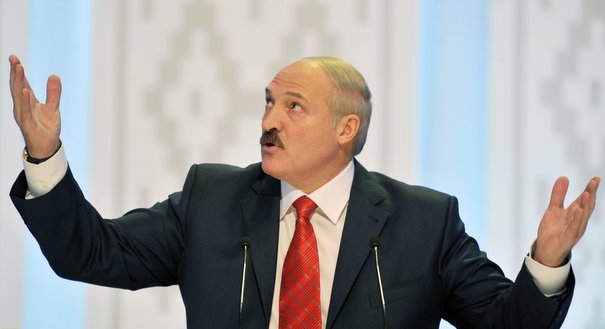
Of course, corruption exists in democracies as well, but such corruption, petty in both nature and sum, is fundamentally different from the massive looting by autocrats in dictatorships. That is why the least corrupt countries, with a few exceptions, all happen to be democracies, and the most corrupt countries are overwhelmingly autocracies. In Transparency International's Corruption Perception Index 2008, which covered 180 societies, 90% of the 60 least corrupt societies in the world are democracies. The remaining six non-democracies are small city-states (Singapore, Hong Kong, United Arab Emirates, Oman, Qatar and Bahrain). In contrast, about 60% of the 60 most corrupt countries are autocracies, including Russia, Iran, Venezuela, Belarus, Syria, Sudan and Burma. Nearly all the 30 most corrupt countries are dictatorships. (China is viewed as among the middle 60 "medium-corrupt" countries.)
 
That corruption is more prevalent in autocracies is no mere coincidence. While democracies derive their legitimacy and popular support through competitive elections and the rule of law, autocracies depend on the support of a small group of political and social elites, the military, the bureaucracy and the secret police. Because these elites and constituencies do not have any core values other than self-serving instincts, their loyalty and support are fickle and must be secured by constant bribes in the form of special privileges. They not only have ostensibly legal perks such as free world-class health care, lavish official residence, and expensive junkets, but also make huge illicit profits by rigging government contracts and looting public wealth in shady privatization deals.
 
 
The rest of this publication can be read here.

About the Author

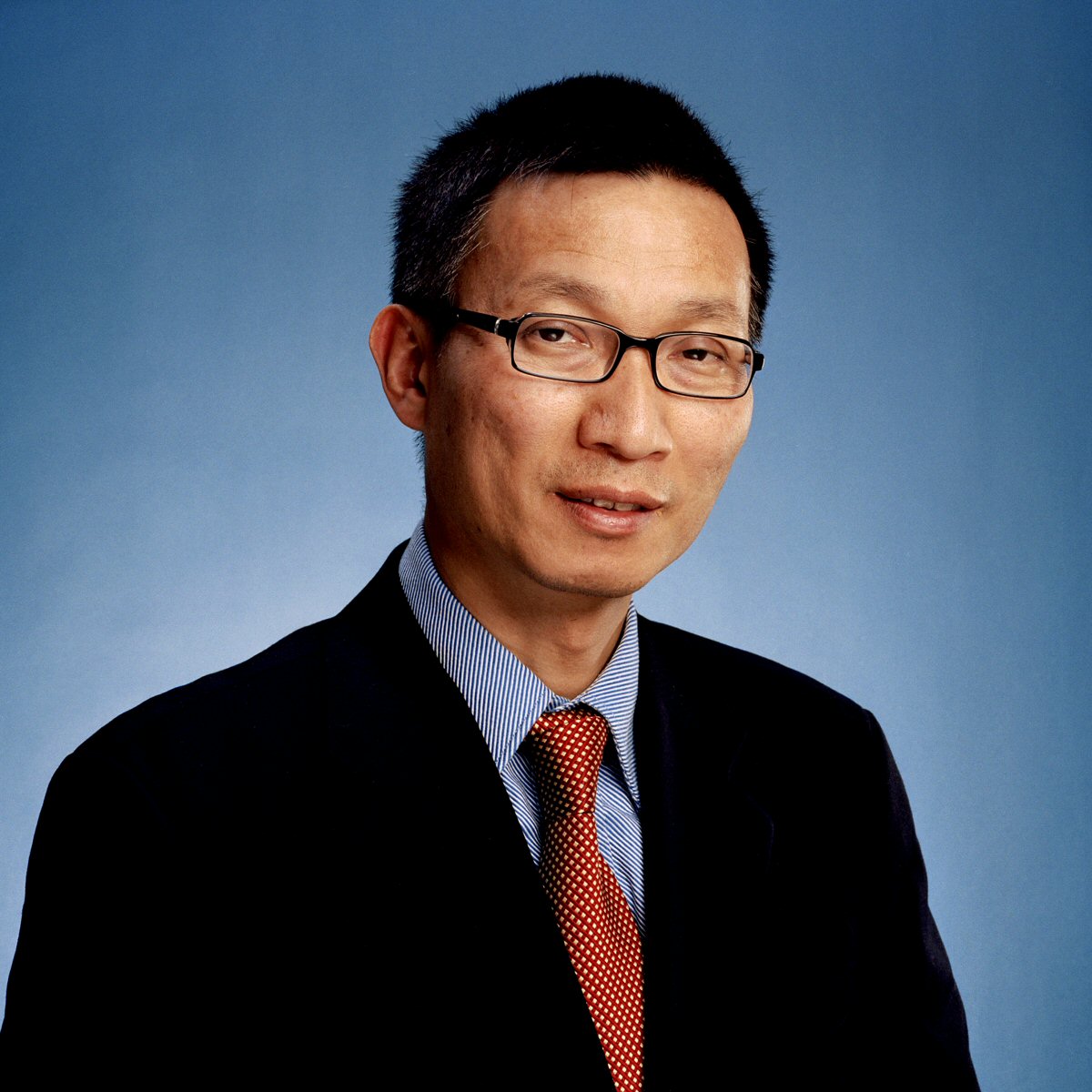
Minxin Pei

Former Adjunct Senior Associate, Asia Program

Pei is Tom and Margot Pritzker ‘72 Professor of Government and the director of the Keck Center for International and Strategic Studies at Claremont McKenna College.

    Recent Work

  • In The Media
    How China Can Avoid the Next Conflict

      Minxin Pei

  • In The Media
    Small Change

      Minxin Pei

Minxin Pei
Former Adjunct Senior Associate, Asia Program
Minxin Pei
Political ReformDemocracyEast AsiaChina

Carnegie does not take institutional positions on public policy issues; the views represented herein are those of the author(s) and do not necessarily reflect the views of Carnegie, its staff, or its trustees.

More Work from Carnegie Europe

  • Commentary
    Is the Radical-Right Threat Existential or Overstated?

    Amid increased polarization and the influence of disinformation, radical-right parties are once again gaining traction across Europe. With landmark elections on the horizon in several countries, are the EU’s geostrategic vision and fundamental values under existential threat?

      Catherine Fieschi, Cas Mudde

  • Commentary
    Strategic Europe
    The EU Needs a Third Way in Iran

    European reactions to the war in Iran have lost sight of wider political dynamics. The EU must position itself for the next phase of the crisis without giving up on its principles.

      Richard Youngs

  • Trump United Nations multilateralism institutions 2236462680
    Article
    Resetting Cyber Relations with the United States

    For years, the United States anchored global cyber diplomacy. As Washington rethinks its leadership role, the launch of the UN’s Cyber Global Mechanism may test how allies adjust their engagement.

      • Christopher Painter

      Patryk Pawlak, Chris Painter

  • Research
    New Approaches to Defending Global Civil Society

    New thinking is needed on how global civil society can be protected. In an era of major-power rivalry, competitive geopolitics, and security primacy, civil society is in danger of getting squeezed – in some countries, almost entirely out of existence.

      Richard Youngs, ed., Elene Panchulidze, ed.

  • Commentary
    Strategic Europe
    How Europe Can Survive the AI Labor Transition

    Integrating AI into the workplace will increase job insecurity, fundamentally reshaping labor markets. To anticipate and manage this transition, the EU must build public trust, provide training infrastructures, and establish social protections.

      Amanda Coakley

Get more news and analysis from
Carnegie Europe
Carnegie Europe logo, white
Rue du Congrès, 151000 Brussels, Belgium
  • Research
  • Strategic Europe
  • About
  • Experts
  • Projects
  • Events
  • Contact
  • Careers
  • Privacy
  • For Media
  • Gender Equality Plan
Get more news and analysis from
Carnegie Europe
© 2026 Carnegie Endowment for International Peace. All rights reserved.