

Other
Wang Yanjia, William Chandler
{
  "authors": [
    "William Chandler"
  ],
  "type": "legacyinthemedia",
  "centerAffiliationAll": "dc",
  "centers": [
    "Carnegie Endowment for International Peace"
  ],
  "collections": [],
  "englishNewsletterAll": "ctw",
  "nonEnglishNewsletterAll": "",
  "primaryCenter": "Carnegie Endowment for International Peace",
  "programAffiliation": "SCP",
  "programs": [
    "Sustainability, Climate, and Geopolitics"
  ],
  "projects": [],
  "regions": [
    "North America",
    "United States"
  ],
  "topics": [
    "Climate Change"
  ]
}
Source: Getty
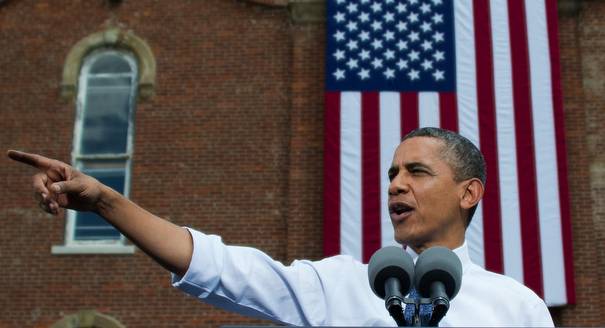
President Obama can avoid being labeled the greatest socialist in American history by selling or completely revamping the Tennessee Valley Authority to make it a force for more-efficient energy use, better jobs, and a low-carbon future.
Source: Christian Science Monitor

By completely revamping or selling the Tennessee Valley Authority.
TVA is the nation’s largest utility. Federally-owned, it is an icon of the New Deal, and yet it has the worst environmental record of any utility in the nation. Three days before Christmas, a sludge dam at its Kingston coal-fired steam plant failed, sending 5 billion gallons of watery ash to inundate houses and hundreds of acres, and filling the Emory River with coal waste and heavy metals.
Congress created the TVA at the nadir of the Great Depression and the start of the New Deal, 75 years ago. President Franklin Roosevelt’s idea – which sounds very familiar today – was to stimulate the economy, create jobs, and conserve natural resources by investing in new energy systems.
TVA didn’t live up to its supposed goals. Both during and after the Great Depression, manufacturing jobs were created faster just outside TVA than in the TVA area. Non-TVA counties in northern Georgia and Alabama and western North Carolina in 1933 were as poor or poorer than TVA counties, but by 1953 they were generally better off. Even rural electrification and the use of household appliances grew faster in the non-TVA south.
To be sure, TVA created jobs for some 13,000 workers, but for at least four decades, Depression-era investments in TVA dams, waterways, and recreation areas have failed to pay for themselves by any economic measure.
In the 1950s and ’60s, under plans enacted by Democratic populist and former chairman David Lilienthal, the agency made its mission to provide electric power, at any environmental or social cost. Within two decades, TVA’s coal-fired plants made it the nation’s largest violator of the Clean Air Act. A coalition of environmentalists sued the agency in the late 1970s and won, forcing it finally to install air pollution controls. But even today, TVA ranks among the nation’s largest sources of greenhouse-gas emissions.
Could Obama turn TVA into an exemplar of the smart power grid he wants to create?
It’s not as simple as it may seem. The agency is owned by the US government, and its management appointed by a nine-member board of directors (currently all Republicans), who are in turn appointed by the president for five-year terms. All power generation costs, however, including investments in new power plants, must be met by the customers of the TVA. The TVA board sets its own power rates. Capital is made cheaper by the implicit financial backing of the US government.
It will be at least 2011 before President Obama could assert majority control over the board by replacing members as their terms expire.
Because customers pay for power, and because TVA policy is to provide power at the lowest possible cost, there is no room to subsidize the creation of a smart grid, new energy systems, greater environmental protection, or even general economic development. Environmental protection comes only when the government requires it, and the fact that the government owns the utility does little to serve the public interest.
If TVA is merely a power company, why shouldn’t it be privatized? Yet historically, proposals to sell TVA elicit howls of outrage. Would the current Republican board consider sale of the agency as an option, or would they defend the status quo?
Obama will have to grapple with the history and the politics of this question as he ponders how to make TVA a force for more-efficient energy use, better jobs, and a low-carbon future.
At the least, Obama could put TVA management on notice of his expectations. He could direct his Department of Energy and Environmental Protection Agency to define steps TVA should take to reform the 75 year-old agency. He could require – and reward – investment in energy efficiency and disincentivize the wasteful use of power. He could require TVA to create the most advanced carbon mitigation measures of any US utility – and then of any utility anywhere in the world. He could inform managers that if by 2011 this plan is not well advanced, they will be replaced, and the agency put up for sale.
None of this is likely to come easily. No lobbying group with any credibility is calling for reforms at the TVA. But as Obama could well note, there’s nothing conservative about propping up a filthy, state-owned utility company, and nothing socialist about expecting it to provide clean energy to meet customers’ demands.
This op-ed first appeared in The Christian Science Monitor on February 24, 2009. All rights reserved.
Former Adjunct Senior Associate, Energy and Climate Program
Chandler is a leading expert on energy and climate. As an adjunct senior associate in the Energy and Climate Program he supports Carnegie’s work in these fields, collaborating closely on projects with Carnegie’s offices in Moscow, Beijing, Brussels, and Beirut.
Recent Work
Wang Yanjia, William Chandler

William Chandler, Taiya M. Smith
Carnegie does not take institutional positions on public policy issues; the views represented herein are those of the author(s) and do not necessarily reflect the views of Carnegie, its staff, or its trustees.

European Commission President Ursula von der Leyen is about to give her annual address on the state of the EU. Here’s what she won’t—but should—say.

Rym Momtaz

Radical-right parties are expected to do well in upcoming elections in four of the EU's biggest member states. If successful, they could prevent the union from addressing key challenges ahead.

Stefan Lehne

Canadian Prime Minister Mark Carney has twice inspired praise for standing up to U.S. President Donald Trump: at the 2026 World Economic Forum in Davos and on Canada-U.S. trade negotiations. Is Carney showing a third way better than the EU has in dealing with the Trump administration?
Rym Momtaz, ed.

European states control several Overseas Countries and Territories around the world that carry strategic, economic, and environmental weight. As great powers challenge the rules-based order, defending them is a geopolitical imperative for Europe.

Marc Pierini

In supporting Europe’s far-right, MAGA and Russia both want the same thing: a weaker EU. Europe must defend itself without abandoning the openness these forces exploit.

Armida van Rij