

In The Media
Michele Dunne, Robert Kagan
{
  "authors": [
    "Robert Kagan"
  ],
  "type": "legacyinthemedia",
  "centerAffiliationAll": "",
  "centers": [
    "Carnegie Endowment for International Peace",
    "Carnegie Europe"
  ],
  "collections": [],
  "englishNewsletterAll": "",
  "nonEnglishNewsletterAll": "",
  "primaryCenter": "Carnegie Endowment for International Peace",
  "programAffiliation": "",
  "programs": [],
  "projects": [],
  "regions": [
    "North America",
    "United States"
  ],
  "topics": [
    "Foreign Policy"
  ]
}
Source: Getty
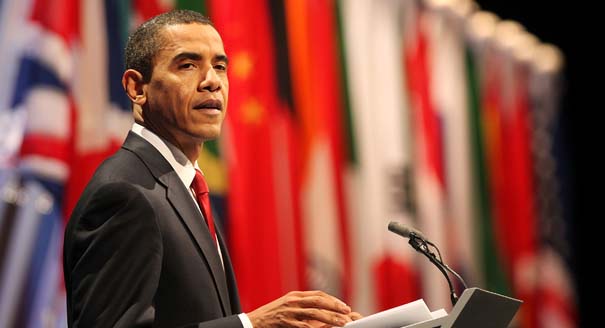
Rather than expending energy solidifying relations with long term allies, the Obama administration has focused its foreign policy efforts on improving relations with its competitors and adversaries.
Source: The Washington Post

Israelis shouldn't feel that they have been singled out. In Britain, people are talking about the end of the "special relationship" with America and worrying that Obama has no great regard for the British, despite their ongoing sacrifices in Afghanistan. In France, President Nicolas Sarkozy has openly criticized Obama for months (and is finally being rewarded with a private dinner, presumably to mend fences). In Eastern and Central Europe, there has been fear since the administration canceled long-planned missile defense installations in Poland and the Czech Republic that the United States may no longer be a reliable guarantor of security. Among top E.U. officials there is consternation that neither the president nor even his Cabinet seems to have time for the European Union's new president, Herman Van Rompuy, who, while less than scintillating, is nevertheless the chosen representative of the post-Lisbon Treaty continent. Europeans in general, while still fond of Obama, have concluded that he is not so fond of them -- despite his six trips to Europe -- and is more of an Asian president.
The Asians, however, are not so sure. Relations with Japan are rocky, mostly because of the actions of the new government in Tokyo but partly because of a perception that the United States can't be counted on for the long term. In India, there are worries that the burgeoning strategic partnership forged in the Bush years has been demoted in the interest of better relations with China. Although the Obama administration promised to demonstrate that the United States "is back" in Asia after the alleged neglect of the Bush years, it has not yet convinced allies that they are the focus of American attention.
U.S. officials have any number of explanations for these concerns: that they are based on misunderstandings, the product of minor errors in execution, simply Bush's fault. By now, however, a moderately self-reflective administration might be asking why so many allies, everywhere, are worried.
Yet it isn't that surprising. Who has attracted attention in the Obama administration? The answer, so far, seems to be not America's allies but its competitors, and in some cases its adversaries. If there were a way to measure administration exertion in foreign policy, the meter would show the greatest concentration of energy, beyond the war in Afghanistan, has been devoted to four endeavors: the failed first-year attempt to improve relations with Iran; the ongoing attempt to improve relations with Russia; the stalled effort to improve cooperation with China; and the effort -- fruitless so far -- to prove to the Arab states that the United States is willing to pressure Israel to further the peace process. Add to these the efforts to improve relations with Syria, engage Burma and everything with Af-Pak, and not much has been left for the concerns of our allies.
This is bad enough, but compounding the problem has been the administration's evident impatience with allies who don't do as they are told. Europeans get spanked for a pallid commitment to NATO defense spending even as they contribute 30,000 troops to a distant war that European publics mostly don't believe in. Japan gets spanked when its new government insists on rethinking some recent agreements. In both cases, the administration has a point, but it's always easier to hammer allies when they misbehave than to hammer tough competitors such as Russia or China.
The president has shown seemingly limitless patience with the Russians as they stall an arms-control deal that could have been done in December. He accepted a year of Iranian insults and refusal to negotiate before hesitantly moving toward sanctions. The administration continues to woo Syria and Burma without much sign of reciprocation in Damascus or Rangoon. Yet Obama angrily orders a near-rupture of relations with Israel for a minor infraction like the recent settlement dispute -- and after the Israeli prime minister publicly apologized.
This may be the one great innovation of Obama foreign policy. While displaying more continuity than discontinuity in his policies toward Afghanistan, Iraq and the war against terrorism, and garnering as a result considerable bipartisan support for those policies, Obama appears to be departing from a 60-year-old American grand strategy when it comes to allies. The old strategy rested on a global network of formal military and political alliances, mostly though not exclusively with fellow democracies. The idea, Averell Harriman explained in 1947, was to create "a balance of power preponderantly in favor of the free countries." Under Bill Clinton, and the two Bushes, relations with Europe and Japan, and later India, were deepened and strengthened.
This administration pays lip-service to "multilateralism," but it is a multilateralism of accommodating autocratic rivals, not of solidifying relations with longtime democratic allies. Rather than strengthening the democratic foundation of the new "international architecture" -- the G-20 world -- the administration's posture is increasingly one of neutrality, at best, between allies and adversaries, and between democrats and autocrats. Israel is not the only unhappy ally, therefore; it's just the most vulnerable.

Former Senior Associate
Kagan, author of the recent book, The Return of History and the End of Dreams (Knopf 2008), writes a monthly column on world affairs for the Washington Post and is a contributing editor at both the Weekly Standard and the New Republic.
Recent Work

Michele Dunne, Robert Kagan
Robert Kagan, Michele Dunne
Carnegie does not take institutional positions on public policy issues; the views represented herein are those of the author(s) and do not necessarily reflect the views of Carnegie, its staff, or its trustees.

As we close out another season of Strategic Europe, it is worth taking stock of the deep shifts underway.

Rym Momtaz

The hybrid warfare landscape is evolving rapidly, leaving policymakers without clear strategies. To better inform their work in addressing emerging challenges, governments must dig deeper into the underlying dynamics at play.


Raluca Csernatoni, Alicia Wanless
The EU had to compromise to adopt a twenty-first sanctions package against Russia, exposing growing cracks in the union’s resolve. Is this latest, weaker round worth it to keep pressure on Moscow?
Rym Momtaz, ed.

Trump is distracted and Ukraine wants Europe to step up. The continent’s leaders must find their voice and assert it in talks with Russia.

Alissa de Carbonnel

Mounting economic strain and battlefield losses will not necessarily make the Kremlin less dangerous. They could instead push Moscow toward a more aggressive hybrid campaign designed to test NATO’s Eastern flank, exploit allied hesitation, and fracture European resolve.

Maksym Beznosiuk