

Commentary
Donald Trump has repeatedly bashed NATO and European allies, threatening to annex Canada and Greenland and deploring their lack of enthusiasm for his war of choice in Iran. Is this latest round of abuse the final straw?
Rym Momtaz, ed.
{
  "authors": [],
  "type": "other",
  "centerAffiliationAll": "dc",
  "centers": [
    "Carnegie Endowment for International Peace"
  ],
  "collections": [],
  "englishNewsletterAll": "menaTransitions",
  "nonEnglishNewsletterAll": "",
  "primaryCenter": "Carnegie Endowment for International Peace",
  "programAffiliation": "MEP",
  "programs": [
    "Middle East"
  ],
  "projects": [],
  "regions": [
    "North America",
    "United States",
    "North Africa",
    "Egypt"
  ],
  "topics": [
    "Political Reform",
    "Democracy"
  ]
}
Source: Getty
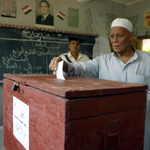
Egypt is at a critical turning point. If the United States does not take a serious interest in promoting democratic reform in the country, Egypt is likely to slide backwards into increased authoritarianism.
Source: April 7

We, the undersigned, a bipartisan group representing a broad range of institutions, write today to urge you to promote democratic reform in Egypt in advance of the upcoming elections. We are concerned that—unless the United States takes a serious interest—Egypt will hold parliamentary elections this year and a presidential election in 2011 that will be less free and fair than those held in 2005. Rather than progressing gradually on a path of desirable reform, Egypt is instead sliding backwards into increased authoritarianism.
Egypt is at a critical turning point. It faces substantial leadership changes in the near future without a fair and transparent political process. With three sets of elections coming up over the next eighteen months, Egypt now has the opportunity to energize a process of political, economic, and social reform. If the government responds to demands for responsible political change, Egypt can face the future as a more democratic nation with greater domestic and international support. If, on the other hand, the opportunity for reform is missed, prospects for stability and prosperity in Egypt will be in doubt.
This would have serious consequences for the United States, Egypt’s neighbors, the U.S.–Egyptian relationship, and regional stability. As a close partner of Egypt and a provider of substantial military and economic assistance, the United States has a stake in the path Egypt takes. American support for authoritarian regimes tarnishes U.S. credentials, contributing to what President Obama has called the “cycle of suspicion and discord” between the United States and Muslim peoples. Such an association also undermines America’s credibility as a champion of universal principles. At a time when the United States is bringing international pressure to bear on Iran, to ignore the need for political reform in an allied nation such as Egypt would be inconsistent. If the United States is to advance its interests across the broader Middle East, then it must uphold its democratic values and urge its allies to hold free and fair elections.
Political reform is also in Egypt’s best interests. Egypt's growing young population will require the creation of hundreds of thousands of new jobs in the near future, and the associated economic, social and political pressures will be some of the Egyptian government's greatest challenges over the next few years. To fulfill expectations and to prevent the onset of frustration and radicalism, Egypt must expand citizens' say in how they are governed. Successful reform would also bolster Egypt’s leadership in the region, for it will inevitably help shape politics in the Middle East and the Arab world in beneficial ways.
The choice is not between a stable and predictable but undemocratic Egypt on the one hand, and dangerous instability and extremism on the other. There is now an opportunity to support gradual, responsible democratic reform. But the longer the United States and the world wait to support democratic institutions and responsible political change in Egypt, the longer the public voice will be stifled and the harder it will be to reverse a dangerous trend. Already there are signs that the Egyptian government plans to restrict opposition candidacies and civil society monitoring of the elections.
Thus, for the upcoming legislative elections in June (upper house of parliament) and November 2010 (lower house), we urge you to consider the following:
Looking toward the 2011 presidential election, the United States should also urge the Egyptian government to undertake legal and constitutional reforms to facilitate much broader voter participation and ease requirements for candidates to get on the ballot. With more than a year to go, there is ample time for such changes.
Madame Secretary, we urge you to take a leadership role on this issue. We believe a more democratic Egypt is in the interest of both the United States and Egypt, as such reforms would contribute to economic development and a safer region. With those goals in mind, we strongly encourage you to advance this agenda.
In the interest of promoting a broader discussion of these issues, we will be posting this letter on our website.
Sincerely,
The Working Group on Egypt
Elliott Abrams
Council on Foreign Relations
Robert Kagan
Carnegie Endowment for International Peace
Scott Carpenter
Washington Institute for Near East Policy
Amb. Edward Walker
Middle East Institute
Tom Malinowski
Human Rights Watch
Ellen Bork
Foreign Policy Initiative
Thomas Carothers
Carnegie Endowment for International Peace
Michele Dunne
Carnegie Endowment for International Peace
Daniel Calingaert
Freedom House
Carnegie does not take institutional positions on public policy issues; the views represented herein are those of the author(s) and do not necessarily reflect the views of Carnegie, its staff, or its trustees.
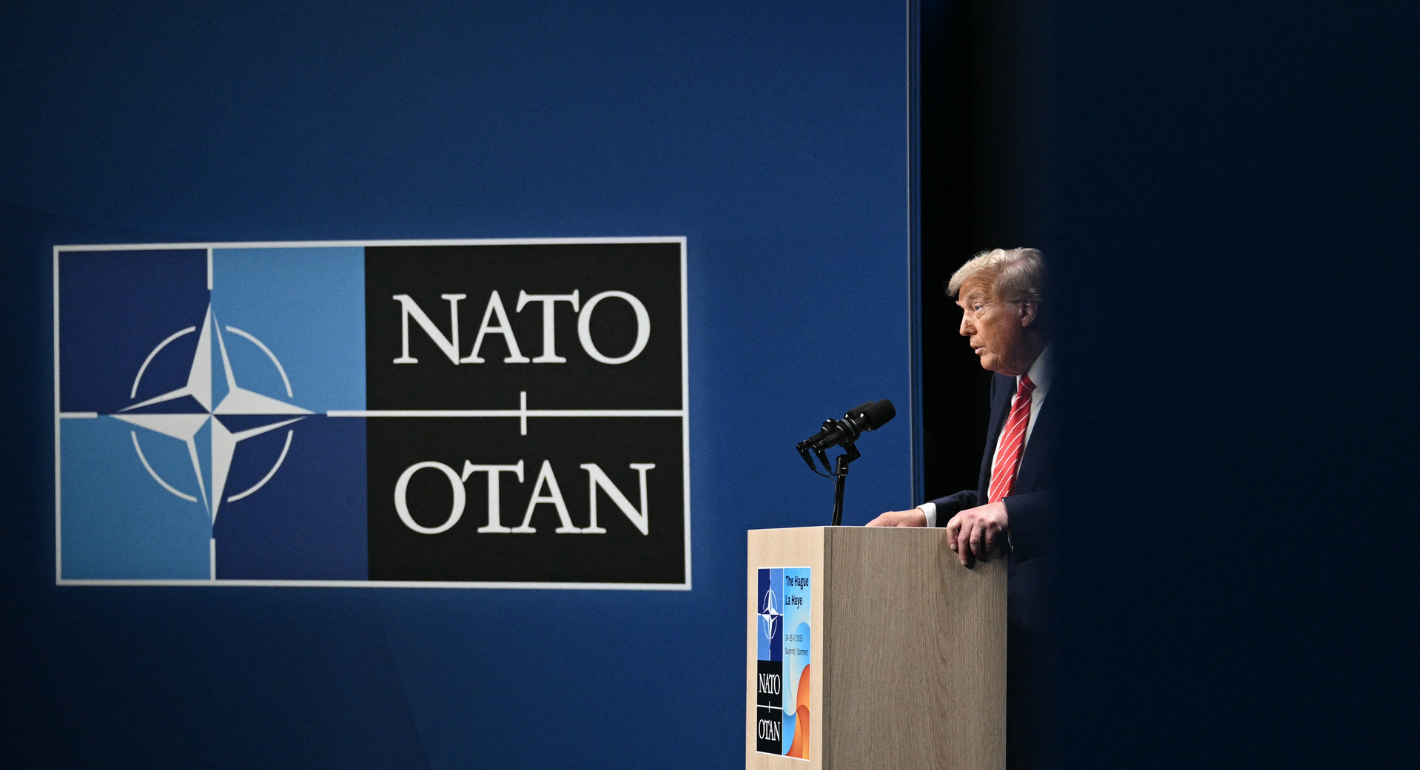
Donald Trump has repeatedly bashed NATO and European allies, threatening to annex Canada and Greenland and deploring their lack of enthusiasm for his war of choice in Iran. Is this latest round of abuse the final straw?

Rym Momtaz, ed.
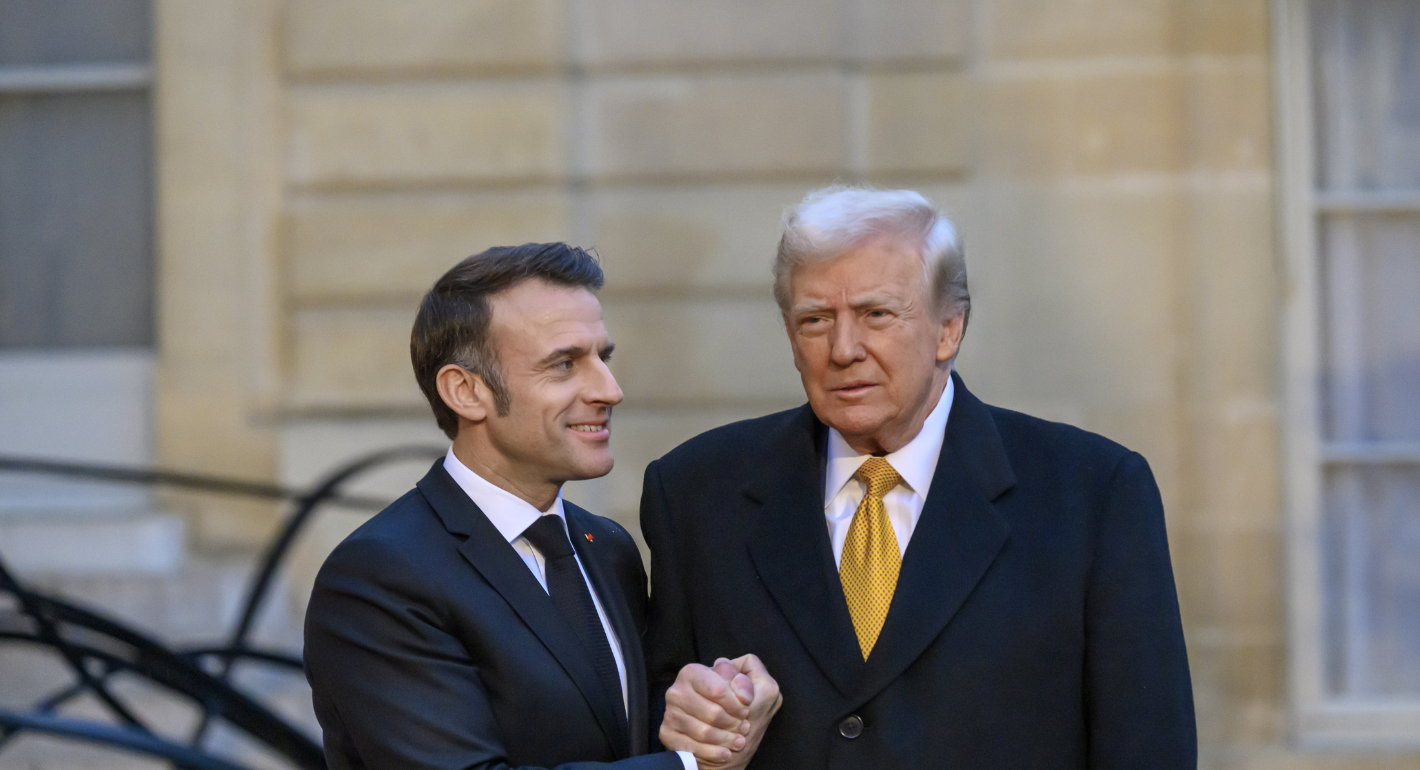
Donald Trump’s repudiation of NATO goes against the Make America Great Again vision of a U.S.-centered foreign policy. If the goal is to preserve the alliance by boosting Europe’s commitments, leaning into France’s vision is the most America First way forward.
Rym Momtaz

The wars in Ukraine and the Middle East are existential threats to Europe as a peace project. Leaders and citizens alike must reaffirm their solidarity to face up to today’s multifaceted challenges.

Marc Pierini

Hungarians head to the polls on April 12 for an election of national and European consequence. Three different outcomes are on the cards, each with their own implications for the EU.

Zsuzsanna Szelényi
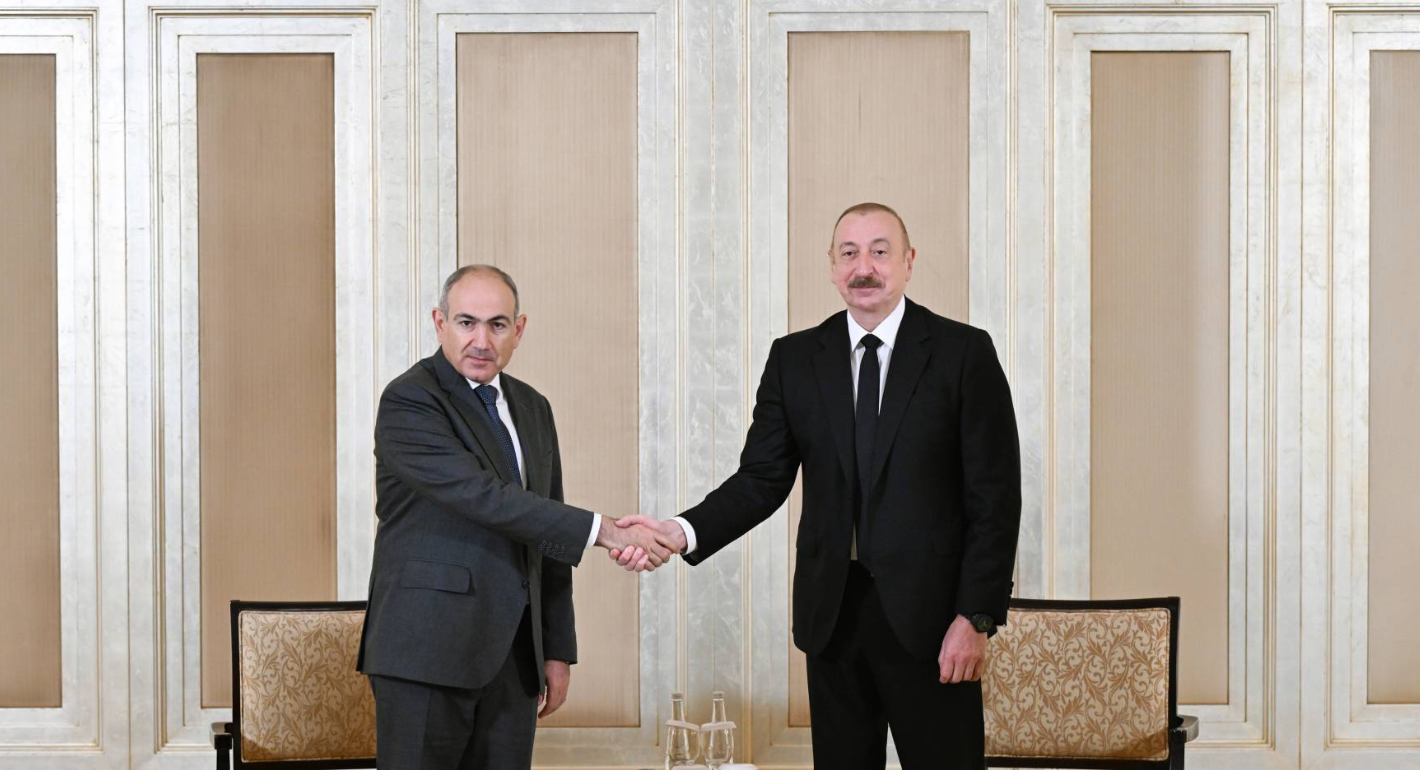
The U.S.-sponsored TRIPP deal is driving the Armenia-Azerbaijan peace process forward. But foreign and domestic hurdles remain before connectivity and economic interdependence can open up the South Caucasus.



Thomas de Waal, Areg Kochinyan, Zaur Shiriyev