

Q&A
- +1
Amr Hamzawy, Andrew Leber, Eric Lob, …
{
  "authors": [
    "Amr Hamzawy"
  ],
  "type": "legacyinthemedia",
  "centerAffiliationAll": "",
  "centers": [
    "Carnegie Endowment for International Peace",
    "Carnegie Europe",
    "Malcolm H. Kerr Carnegie Middle East Center"
  ],
  "collections": [],
  "englishNewsletterAll": "",
  "nonEnglishNewsletterAll": "",
  "primaryCenter": "Carnegie Endowment for International Peace",
  "programAffiliation": "",
  "programs": [],
  "projects": [],
  "regions": [
    "Egypt",
    "Gulf",
    "Levant",
    "Maghreb"
  ],
  "topics": [
    "Political Reform"
  ]
}
Source: Getty
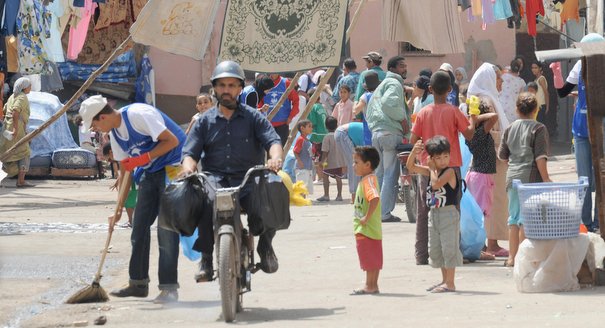
Western NGO strategies for promoting democracy and human rights in the Arab world contain serious flaws. They treat the diverse Arab world as a homogeneous entity and refrain from working with some of the local organizations that have the greatest impact on the ground in Arab societies.
Source: Al-Ahram Weekly

Firstly, in formulating strategies and programmes for the promotion of democratisation and human rights in the Arab world the majority of Western NGOs are captive to their experiences in supporting democratic transition in Eastern and Central Europe and the Balkans. In these former Soviet bloc countries, the NGOs focussed on promoting the political, economic and social tenets of Western liberalism as an alternative to Marxist-Leninism and on backing, financially and otherwise, a liberal, Westward-looking intelligentsia as the alternative to communist intellectual and political elites.
Attempting to apply this approach to the Arab world following the events of 11 September 2001, NGOs overlooked the lack of liberal awareness and social support for liberal elites given the prevalence of traditional ideas and the rise of conservative religious forces. The result was that Western NGOs poured financial resources and energy into supporting Arab intellectual elites, even though they had no chance of performing the role of their counterparts in the former socialist bloc. They spent more time moving between Washington and other Western capitals than they did moving between the urban and rural areas of their own countries.
Regardless of the fact that a decade has passed since governmental and non-governmental circles in the West started to push for democratisation in this region, and in spite of the political and social inefficacy of Arab liberals, most Western organisations cling to the same approach. In their justifications for doing so the ideological component -- they think like we do and they're our only friends -- prevails over rational and pragmatic components based on assessments of the relative weight and influence of existing political forces and their agendas. Political liberalism still offers the Arab world its sole salvation from authoritarianism and an unregulated mixture of politics and religion; however, there is little point in blinding ourselves to political and social facts that are working in the other direction.
Many Western NGOs oversimplify the historically complex and diverse Arab world, treating it as a homogeneous entity to which uniform strategies and programmes can be applied. While many of these NGOs claim that their operations are based on separate case studies, designed to conform to the particular characteristics of whatever country is concerned, one cannot help but be struck by the similarities between the substance of country programmes and the methodologies they apply. Empowering political parties and liberal movements, raising the level of women's representation in the legislature, executive and judiciary, monitoring elections, supporting human rights groups and promoting the autonomy of the courts are high on the agendas for Morocco, Algeria, Egypt, Jordan, Yemen and Kuwait irrespective of the diversity of the histories, legal and institutional frameworks, economic capacities and socio-cultural characteristics of these countries. There is no doubt that judicial autonomy and the political empowerment of women should be prioritised across the board in the Arab world. Yet ways to achieve these aims should vary on a country-by-country basis.
This reductionist tendency means discussions among Western experts and activists on democracy issues in the Arab world are dominated by ideologically loaded terms and concepts that are not only difficult to neutralise but lend themselves to superficial causative relations which distort the complex social and political reality of the Arab world. The terms and categorisations that have a bearing on Islamist political movements and their impact on the possibilities for democratic transition -- terms such as political Islam, the Muslim Brotherhood and "jihadist" and "fundamentalist" trends versus "democratic Islam" or "Islamist democracy", are the most salient examples of the distorting nature of current language. One of the discussion circles I was involved in last week focussed on the differences between various Islamist movements and variation in their ideologies and agendas. Yet by the end of an intensive, two-day long session aimed at reaching a more subtle awareness of the Islamist phenomenon, most of the Western participants were reiterating the clichés with which they arrived. "Islamists are anti-Western and hate Western civilisation," are "prone to violence" and must be countered by supporting "liberal friends".
While NGOs engaged in efforts to promote democracy -- especially those free from the suspicion of connections with their country's government and intelligence agencies -- enjoy a high degree of respect and credibility in many areas of the world, they elicit varying, but generally disapproving, reactions in the Arab world. Many Arab ruling elites eye them with suspicion for fear of the repercussions of their support for democratisation processes, especially in the wake of uprisings in Central Asia and Eastern Europe, and are reluctant to tolerate them for extended periods. Many of the opposition Islamist movements resent their bias for liberals and suspect them of trying to marginalise Islamist agendas. Leftwing forces regard them as an extension of American cultural and political assault. Public opinion tends to home in on the double standards of official and non-governmental democracy advocates in the West when dealing with electoral results in the Arab world that go against Western wishes. More importantly, Arab publics tend to identify Western governments' support for authoritarian regimes with NGO programmes. They translate their opposition to that support into suspicion of the NGO's goals. In general, pro-democratic Western organisations operate in a largely negative social context. They are greeted with caution, doubt and opposition, which places innumerable limitations on the formulation and effective implementation of programmes that invest large amounts of capital, both human and financial, into "winning hearts and minds".
Finally, the US administration and, to a lesser extent, European governments, encumber pro-democratisation NGOs operating in the Arab world with a panoply of legal and political restrictions that sometimes undermines their operations from the outset. Washington, for example, forbids US NGOs from working with political movements or forces that exercise violence or do not explicitly condemn all forms of violence (including acts of resistance in occupied Palestine), or whose internal organisation or agenda does not reflect a commitment to democratic principles and human rights. The problem, the scope of which extends well beyond the cases of Hamas and Hizbullah and the difficulty of their being both political entities and resistance militias, is that political and social realities in many Arab countries, especially as shaped by the distortions created by ruling regimes over the past several decades, make it possible for political movements to combine different identities and perform divergent roles. It is this very ambiguity that helps make some of these movements more effective than those which meet Western governments' conditions. In this part of the world movements that combine political and paramilitary organisation, that tread the grey area between proselytising and politics, blending social work with political advocacy and sometimes operating outside official frameworks, are the most influential forces. To ban NGOs from having any dealings with such groupings is to prevent them from working with the forces that have the greatest impact on the ground in Arab societies.

Director, Middle East Program
Amr Hamzawy is a senior fellow and the director of the Carnegie Middle East Program. His research and writings focus on Egypt’s and other middle powers’ involvement in regional security in the Middle East, particularly through collective diplomacy and multilateral conflict resolution
Recent Work


Amr Hamzawy, Andrew Leber, Eric Lob, …
Sarah Yerkes, Amr Hamzawy
Carnegie does not take institutional positions on public policy issues; the views represented herein are those of the author(s) and do not necessarily reflect the views of Carnegie, its staff, or its trustees.
Montenegro and Albania are frontrunners for EU enlargement in the Western Balkans, but they can’t just sit back and wait. To meet their 2030 accession ambitions, they must make a strong positive case.


Dimitar Bechev, Iliriana Gjoni
Donald Trump has demanded that European allies send ships to the Strait of Hormuz while his war of choice in Iran rages on. He has constantly berated NATO while the alliance’s secretary-general has emphatically supported him.

Rym Momtaz, ed.
The war in Iran proves the United States is now a destabilizing actor for Europe and the Arab Gulf. From protect their economies and energy supplies to safeguarding their territorial integrity, both regions have much to gain from forming a new kind of partnership together.
Rym Momtaz
European reactions to the war in Iran have lost sight of wider political dynamics. The EU must position itself for the next phase of the crisis without giving up on its principles.

Richard Youngs
Europe’s reaction to the war in Iran has been disunited and meek, a far cry from its previously leading role in diplomacy with Tehran. To avoid being condemned to the sidelines while escalation continues, Brussels needs to stand up for international law.

Pierre Vimont