Israel’s raid on a flotilla of humanitarian aid has refocused global attention on Gaza’s isolation. In a new Q&A, Taghreed El-Khodary, visiting scholar on hiatus from reporting in the Gaza Strip for the New York Times, details what’s happening on the ground in Gaza and how the incident will shape politics in the area. El-Khodary says that Israel’s action helps Hamas and the group is now operating from a position of greater strength.
How have people in Gaza reacted to Israel’s raid and how will it impact the situation in Gaza?
After the deadly Israeli raid, there is clearly a widespread surge of anger toward Israel with protests breaking out in Gaza and the West Bank. But the people are also moved by Turkey’s support. They are appreciative of the efforts made by the Turkish activists and are touched that Turkey, as a non-Arab country, would support their cause and challenge Israel.
I’ve witnessed many ships arriving in Gaza with humanitarian aid and the people—both young and old—are impressed and thankful that they have traveled so far to offer help. This moral support, however, is not enough and symbolic support won’t solve Gaza’s problems.
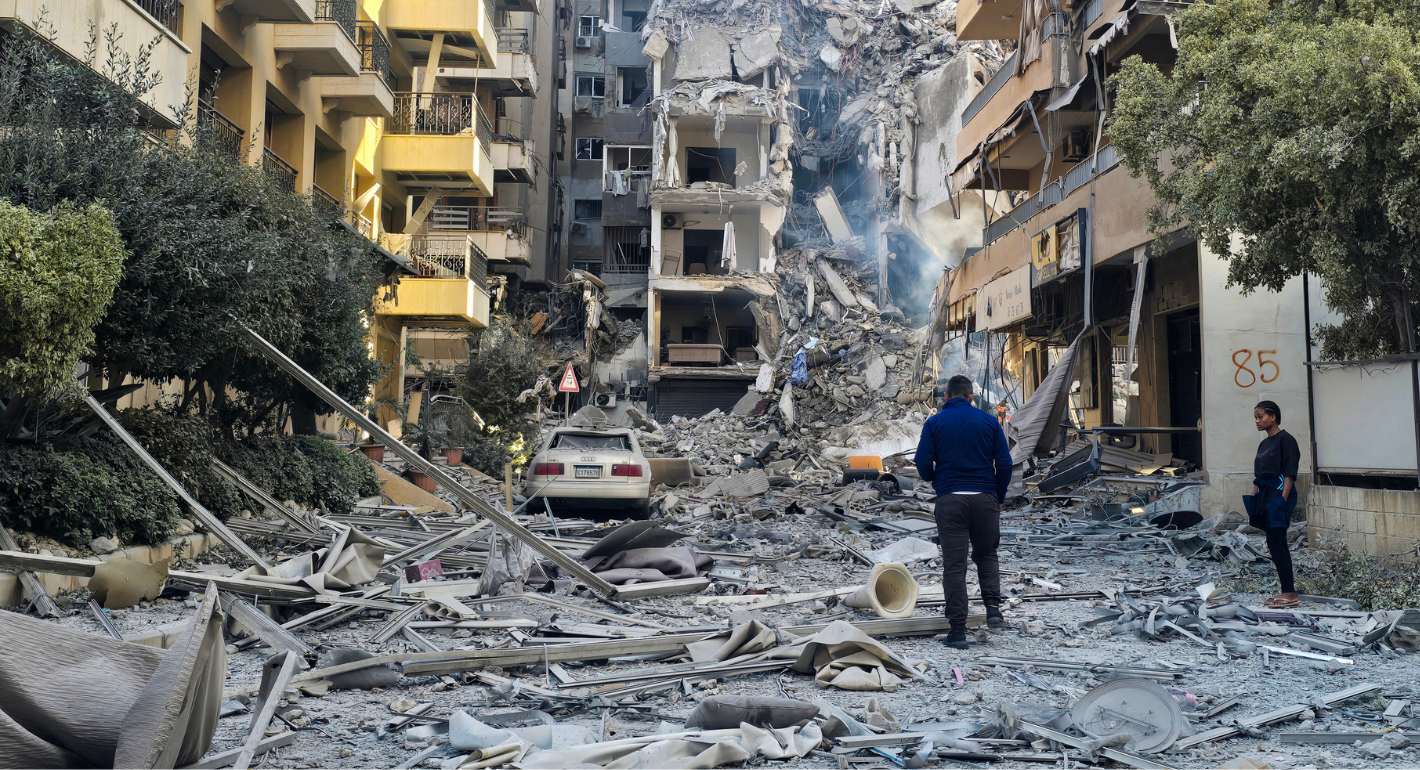
The Israeli siege has wiped out the middle class and created an informal economy that is dominated by smugglers and Hamas. The current policy has turned Gaza into a dependent society. Donors pay the salaries of Palestinian Authority employees, but these employees are asked by the leadership in Ramallah to stay at home in order to put pressure on Hamas. Therefore, Hamas has filled the gap and appointed its supporters to important positions, including teachers.
The people in Gaza are not in need of humanitarian aid. They need the Israeli blockade to end, access and exposure to the outside world, a formal economy, and freedom. Palestinians need to build a positive future for the next generation.
How will the raid influence politics in Gaza?
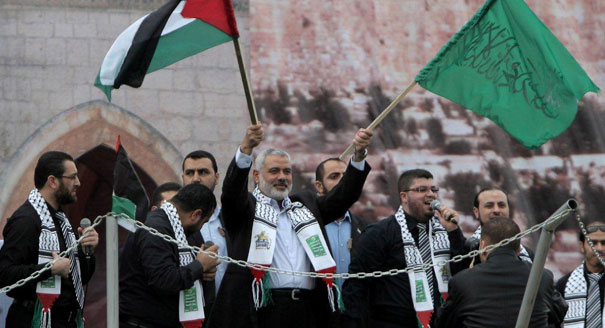
If you look at the situation and the international blowback against Israel, Hamas is the only beneficiary (although Turkey is enjoying tremendous admiration in the region right now). While Hamas has gained strength at this stage, the policies of the United States, Egypt, Israel, and Fatah are all in crisis to a certain extent.
Hamas has essentially been given a present, and the irony is that it came from Israel. For the past couple of years, Hamas has been struggling to control Gaza and maintain internal security, and there has been no governance for the people. Now, Hamas can operate from a position of strength.
The United States believed that the blockade was weakening Hamas and increasing the likelihood that the people in Gaza would revolt against its leadership. Following the Israeli raid, that understanding has been fundamentally shaken for now.
The international community had largely forgotten about the situation in Gaza for the last three years. Now the spotlight is back on the area with widespread demonstrations across the Middle East and condemnation from international leaders against Israel and it’s clear that Gaza will receive international sympathy and attention for some time.
With its strengthened hand, the question becomes how Hamas will use this to its advantage. Hamas will definitely try to push Egypt to keep its border open with Gaza. It will be interesting to observe how Egypt, the U.S. administration, and Fatah and Palestinian Prime Minister Salam Fayyad will deal with their political crises. They’ve been counting on the gradual weakening of Hamas and the eventual failure of the group. Now it’s a different story.
How has Egypt responded to the crisis on its border?
After the incident on Monday Egypt opened its land border with Gaza supposedly for humanitarian purposes. Egypt’s cooperation is essential for Israel to maintain a blockade around Gaza and it is unclear when the border will close again.
Egypt is now in a difficult situation. Hosni Mubarak’s government will face both internal and external pressure to keep the border open. Hamas will press Cairo to keep the crossings open and will try to increase domestic pressure on Egypt. With upcoming parliamentary and presidential elections, Egypt’s ruling regime will not want to give the opposition, particularly the Muslim Brotherhood, an opportunity to use the security situation in Gaza to their advantage.
Still, the border will likely be closed at some point. The question is whether or not the United States will give the green light for Egypt to go ahead with mediating the reconciliation talks between Fatah and Hamas. Egypt and Fatah are not encouraged to go ahead at this point because Hamas is going to be the strong party at the table, but options remain limited.
Will Israel end its blockade of Gaza?
Despite international outrage and intensified pressure to end the blockade of Gaza, Israel is unlikely to significantly ease its restrictions on the area. Israel wants Gilad Shalit, the Israeli soldier captured by Hamas in 2006, to be released and will likely maintain its policies in Gaza until the issue is resolved.
The United States and others will try to push a compromise whereby humanitarian aid to Gaza would be increased, but it will still not be enough to address the suffering in Gaza. Again, humanitarian assistance is not the solution. The U.S. administration is supporting a structure in Gaza that is completely different from the West Bank. The intention is to punish Hamas, but from my observation on the ground, the people of Gaza are the ones suffering and deprived of freedom, education, a formal economy, and a decent future for the young.
Will this impact relations between Hamas and Fatah?
Khaled Meshal, Hamas’ leader-in-exile, promptly called for the resumption of reconciliation talks with Fatah, led on Fatah’s side by Palestinian president Mahmoud Abbas. As the talks are moderated by Egypt, negotiations were complicated by tensions between Hamas and Egypt. But with its rising relative strength, Hamas wants to return to the negotiating table.
Fatah was embarrassed by the Israeli raid as it had just moved forward with indirect talks with Israel and surely Abbas is realizing that there is little hope the negotiations with Israel will lead to breakthrough. It will be interesting to see what position Abbas takes during his visit in Washington.
How will the incident influence indirect talks between Israel and Palestinian leaders?
Israel’s international standing has been severely damaged in the last few years—first by the three-week war in Gaza in 2009, then again by the UN Goldstone report detailing war crimes committed during the conflict by the Israeli army and Palestinian militants, and the assassination of a Hamas operative in Dubai using stolen international passports. Now, the decision to board a Turkish ship in international waters and the subsequent deaths will further erode Israeli support around the world.
With Israel trying to contain the global outcry, Prime Minister Benjamin Netanyahu may be more willing to move forward with talks—indirect or direct—with the Palestinians. But despite greater cooperation, there are strong doubts that Netanyahu has any interest in a Palestinian state.
On the Palestinian side, this will put Abbas in an extremely difficult situation. Abbas does not enjoy widespread popularity on the ground and Israeli policies, including the construction of new settlements, damage his credibility. It would be incredibly embarrassing for him to sit with Netanyahu and the Israelis after the incident, but the United States will continue to put pressure on him to talk indirectly and hopefully transition to direct negotiations.