

In The Media
Minxin Pei
{
  "authors": [
    "Minxin Pei"
  ],
  "type": "legacyinthemedia",
  "centerAffiliationAll": "dc",
  "centers": [
    "Carnegie Endowment for International Peace",
    "Carnegie Europe"
  ],
  "collections": [],
  "englishNewsletterAll": "asia",
  "nonEnglishNewsletterAll": "",
  "primaryCenter": "Carnegie Endowment for International Peace",
  "programAffiliation": "AP",
  "programs": [
    "Asia"
  ],
  "projects": [],
  "regions": [
    "North America",
    "United States",
    "East Asia",
    "China",
    "Asia"
  ],
  "topics": [
    "Political Reform",
    "Foreign Policy"
  ]
}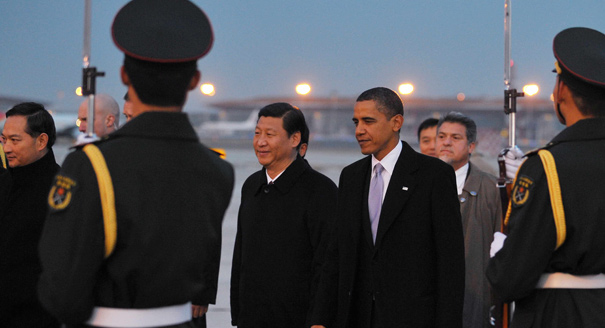
Source: Getty
The Obama administration’s strategy for dealing with China reflects the complex dynamics of economic cooperation and geopolitical competition that underlie Washington’s ties with Beijing.
Source: Financial Times

Instead of pressing China hard on its poor rights record, Mr Obama has put the issue to the back burner. Secretary of State Hillary Clinton confirmed as much on the eve of her visit to China in February 2009. To avoid antagonising Chinese leaders before his own visit to Beijing in November last year, Mr Obama even postponed a private meeting with the Dalai Lama. On the whole, his administration has done precious little on the issue.
The story on trade is much the same. Despite mounting congressional pressure on China’s de facto dollar-peg, Mr Obama has refused to label China a “currency manipulator.” Indeed, except for imposing a few modest anti-dumping penalties, his trade policy is indistinguishable from that of President George W. Bush.
However, on national security, the Obama administration has shown a surprisingly hard edge, particularly in the past few months. Against Beijing’s protestations, Washington dispatched a large naval force to conduct joint military exercises with the South Korean navy in the Sea of Japan, as deterrence against Pyongyang. To counter China’s growing influence in Southeast Asia, the US has also resumed its aid to the Indonesian military, and recently sent a carrier battle group in an unprecedented joint naval exercise with Vietnam.
Washington also announced a controversial plan to sell civilian nuclear technology to Hanoi. In its recent annual report on the strength of the Chinese military, the Pentagon levelled harsh criticisms at China’s military modernisation programme and its impact on Asia’s balance of power.
Perhaps the biggest bombshell was dropped by Mrs Clinton in Hanoi in July. Speaking to the Asean regional forum, she all but declared that the US would not allow China to coerce its smaller neighbours. For the first time, Washington designated the South China Sea as an area where it had a national interest in “freedom of navigation, open access to Asia’s maritime commons and respect for international law”. This might look neutral, but Beijing (which recently signalled that it regards the South China Sea as among its “core interests”) must have felt stunned and stung.
Why has Mr Obama’s China policy taken such a turn? Beijing’s own missteps share part of the blame. Chinese leaders rebuffed early efforts to woo Beijing into a closer relationship. Mr Obama’s China visit last November was viewed as a debacle because Beijing limited his access to the Chinese public. China’s over-the-top reaction to America’s long-scheduled arms sales to Taiwan, and Mr Obama’s (belated) meeting with the Dalai Lama earlier this year, did not help. China also obstructed US attempts to impose sanctions on Iran and condemn North Korea’s sinking of a South Korean warship.
More important, Mr Obama has reverted to long-standing American principles in dealing with a rising great power. For while the US can confidently manage China’s mounting economic prowess, and count on economic progress to liberalise the Chinese political system, the world’s sole superpower can ill-afford to allow its new rival to become Asia’s hegemon.
In many ways, Mr Obama’s evolving China policy is more grounded in reality. By abandoning the touchy-feely rhetoric of “strategic partnership”, Washington’s balanced but hard-nosed new China strategy more accurately reflects the complex dynamics of economic co-operation and geopolitical competition that underlie its ties with Beijing. It is also a policy that should reassure China’s nervous neighbours that America is committed to maintaining Asia’s strategic balance.
In the years ahead, as Washington pursues this policy further, we should expect more frequent eruptions over security issues, even as the two countries keep close economic ties. In its essence, Mr Obama’s revamped China strategy is a continuation of Mr. Bush’s “strategic hedging” – a strategy certain to endure as long as China remains a one-party state, and continues a realpolitik foreign policy that challenges the America-led liberal world order.

Former Adjunct Senior Associate, Asia Program
Pei is Tom and Margot Pritzker ‘72 Professor of Government and the director of the Keck Center for International and Strategic Studies at Claremont McKenna College.
Recent Work
Minxin Pei
Minxin Pei
Carnegie does not take institutional positions on public policy issues; the views represented herein are those of the author(s) and do not necessarily reflect the views of Carnegie, its staff, or its trustees.
Donald Trump has repeatedly bashed NATO and European allies, threatening to annex Canada and Greenland and deploring their lack of enthusiasm for his war of choice in Iran. Is this latest round of abuse the final straw?

Rym Momtaz, ed.
Donald Trump’s repudiation of NATO goes against the Make America Great Again vision of a U.S.-centered foreign policy. If the goal is to preserve the alliance by boosting Europe’s commitments, leaning into France’s vision is the most America First way forward.
Rym Momtaz
The wars in Ukraine and the Middle East are existential threats to Europe as a peace project. Leaders and citizens alike must reaffirm their solidarity to face up to today’s multifaceted challenges.

Marc Pierini

The U.S.-sponsored TRIPP deal is driving the Armenia-Azerbaijan peace process forward. But foreign and domestic hurdles remain before connectivity and economic interdependence can open up the South Caucasus.



Thomas de Waal, Areg Kochinyan, Zaur Shiriyev
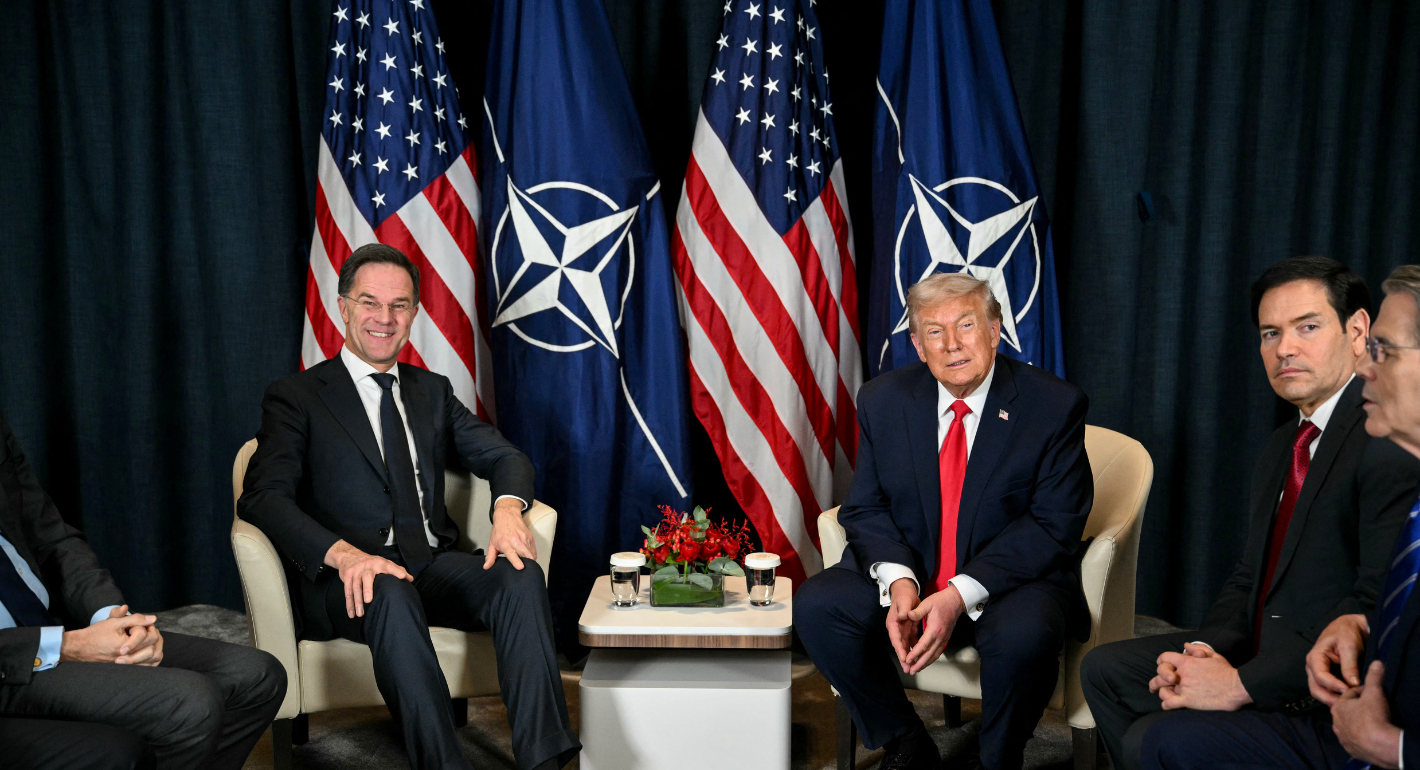
Donald Trump has demanded that European allies send ships to the Strait of Hormuz while his war of choice in Iran rages on. He has constantly berated NATO while the alliance’s secretary-general has emphatically supported him.
Rym Momtaz, ed.