

Paper
David Burwell
{
  "authors": [
    "David Burwell"
  ],
  "type": "legacyinthemedia",
  "centerAffiliationAll": "dc",
  "centers": [
    "Carnegie Endowment for International Peace",
    "Carnegie Russia Eurasia Center"
  ],
  "collections": [],
  "englishNewsletterAll": "ctw",
  "nonEnglishNewsletterAll": "",
  "primaryCenter": "Carnegie Endowment for International Peace",
  "programAffiliation": "russia",
  "programs": [
    "Russia and Eurasia",
    "Sustainability, Climate, and Geopolitics"
  ],
  "projects": [],
  "regions": [
    "Caucasus",
    "Russia",
    "North America"
  ],
  "topics": [
    "Climate Change"
  ]
}
Source: Getty
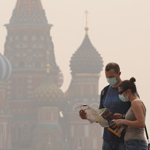
Russia has acted to address climate change, but implementation remains problematic. The ongoing drought and forest fires are a wake-up call to the realities of climate change for both Russia’s public and its government officials.
Source: PRI's The World

“I think this is a wake-up call ... that action is needed," Burwell stated. "This may give the bureaucracy some incentive to move ahead and actually adopt and pursue the targets laid down by President Medvedev. They’re going to have to …modernize and diversify their economy. And if they do that, you can see that they are taking this new evidence and these events seriously.”
Former Nonresident Senior Fellow, Energy and Climate Program
Burwell focused on the intersection between energy, transportation, and climate issues, as well as policies and practice reforms to reduce global dependence on fossil fuels.
Recent Work
David Burwell
David Burwell
Carnegie does not take institutional positions on public policy issues; the views represented herein are those of the author(s) and do not necessarily reflect the views of Carnegie, its staff, or its trustees.

European Commission President Ursula von der Leyen is about to give her annual address on the state of the EU. Here’s what she won’t—but should—say.

Rym Momtaz

The EU’s responses to two recent incidents expose the gulf between European perceptions and capabilities. Unless the union can bridge that gap, it will never become a real geostrategic power.
Rym Momtaz

European states control several Overseas Countries and Territories around the world that carry strategic, economic, and environmental weight. As great powers challenge the rules-based order, defending them is a geopolitical imperative for Europe.

Marc Pierini

In supporting Europe’s far-right, MAGA and Russia both want the same thing: a weaker EU. Europe must defend itself without abandoning the openness these forces exploit.

Armida van Rij

As we close out another season of Strategic Europe, it is worth taking stock of the deep shifts underway.
Rym Momtaz