

Article
Pieter Bottelier
{
  "authors": [
    "Pieter Bottelier"
  ],
  "type": "legacyinthemedia",
  "centerAffiliationAll": "dc",
  "centers": [
    "Carnegie Endowment for International Peace"
  ],
  "collections": [],
  "englishNewsletterAll": "asia",
  "nonEnglishNewsletterAll": "",
  "primaryCenter": "Carnegie Endowment for International Peace",
  "programAffiliation": "AP",
  "programs": [
    "Asia"
  ],
  "projects": [],
  "regions": [
    "East Asia",
    "China",
    "North America"
  ],
  "topics": [
    "Economy",
    "Trade"
  ]
}
Source: Getty
China’s quick recovery from the Great Recession has raised questions about its role in the world economy and its relationship with the United States, where economic growth has been slow to return.
Source: C-SPAN

Bottelier notes that the flare-up between U.S. and Chinese leaders over the value of China’s currency is problematic. Seeking an “adversarial relationship with China on trade is unwarranted and dangerous,” he warns. Tariffs on Chinese goods would make imports from China more expensive and create almost no jobs in the United States, since importers would simply look for new sources of goods rather than moving production to the United States. In short, Bottelier says, “by punishing China, there is very little that the United States can do without punishing itself.”
Rather than blame Beijing, the United States should see China as an opportunity. China and other large emerging markets could become extremely important sources for consumption of U.S. goods. This process will take time, however, as consumption is currently “too low in China, but this only indicates that there is an enormous potential for growth,” concludes Bottelier.

Former Nonresident Scholar, International Economics Program
Bottelier was a nonresident scholar in Carnegie’s International Economics Program and senior adjunct professor of China studies at the School of Advanced International Studies (SAIS), the Johns Hopkins University. His work currently focuses on China’s economic reform and development.
Recent Work
Pieter Bottelier
Pieter Bottelier
Carnegie does not take institutional positions on public policy issues; the views represented herein are those of the author(s) and do not necessarily reflect the views of Carnegie, its staff, or its trustees.

A summer of escalation in the Black Sea has hurt Ukraine economically and is exacerbating world food security. A truce is needed—as is a broader reframing of Europe’s Ukraine strategy.

Thomas de Waal

Canadian Prime Minister Mark Carney has twice inspired praise for standing up to U.S. President Donald Trump: at the 2026 World Economic Forum in Davos and on Canada-U.S. trade negotiations. Is Carney showing a third way better than the EU has in dealing with the Trump administration?

Rym Momtaz, ed.

The hybrid warfare landscape is evolving rapidly, leaving policymakers without clear strategies. To better inform their work in addressing emerging challenges, governments must dig deeper into the underlying dynamics at play.


Raluca Csernatoni, Alicia Wanless

Europe’s industrial supply chains leave it vulnerable to global shocks. The EU needs a pragmatic green industrial strategy that balances durable partnerships and bolsters homegrown clean tech without sacrificing low-carbon ambition.


Milo McBride, Pauline Gerard
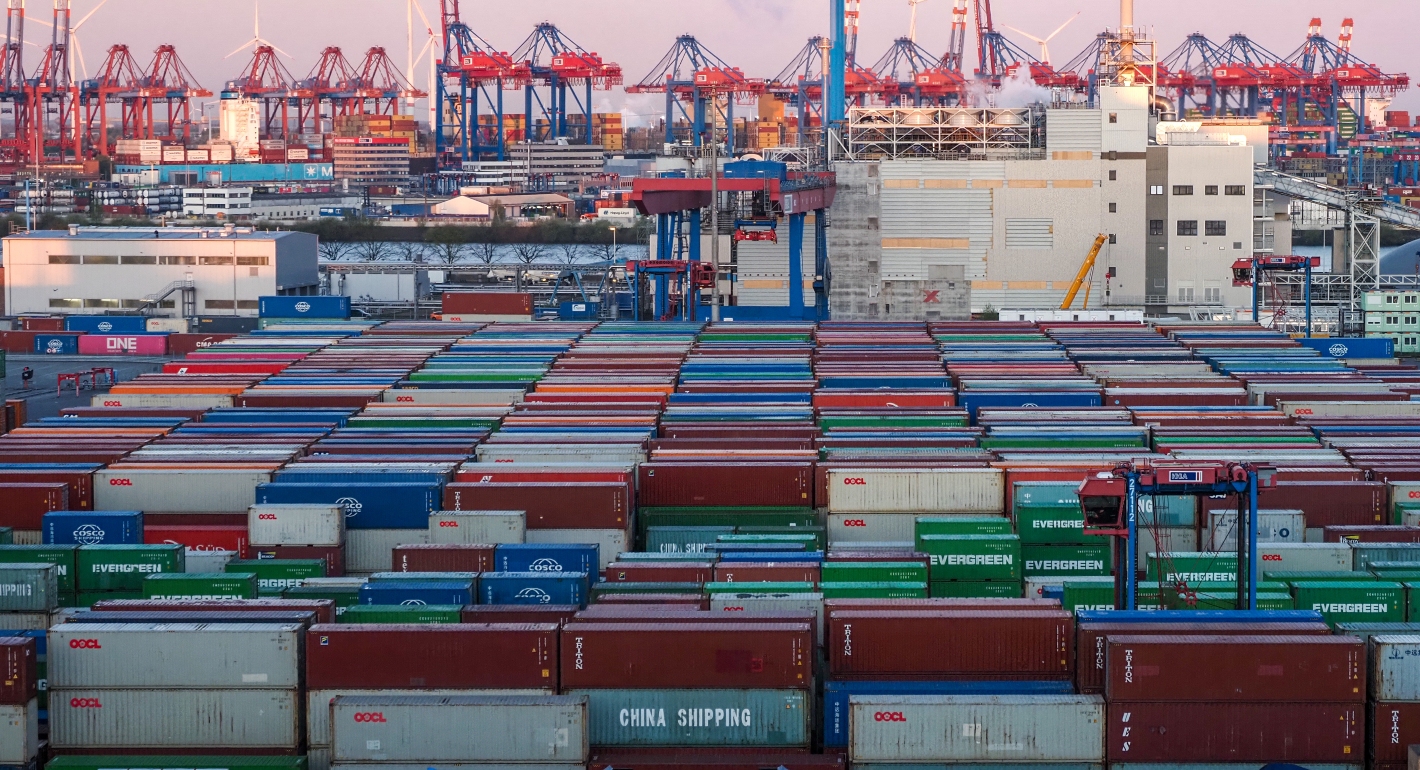
As geopolitical rivalry weaponizes global supply chains, the EU’s true vulnerability lies in emerging-risk imports. For these goods, suppliers are growing more concentrated, substitution more difficult, and political risk is looming.

Sinan Ülgen