• Research
  • Strategic Europe
  • About
  • Experts
Carnegie Europe logoCarnegie lettermark logo
EUUkraine
  • Donate
{
  "authors": [
    "Lilia Shevtsova"
  ],
  "type": "legacyinthemedia",
  "centerAffiliationAll": "",
  "centers": [
    "Carnegie Endowment for International Peace",
    "Carnegie Russia Eurasia Center"
  ],
  "collections": [],
  "englishNewsletterAll": "",
  "nonEnglishNewsletterAll": "",
  "primaryCenter": "Carnegie Russia Eurasia Center",
  "programAffiliation": "",
  "programs": [],
  "projects": [],
  "regions": [],
  "topics": []
}
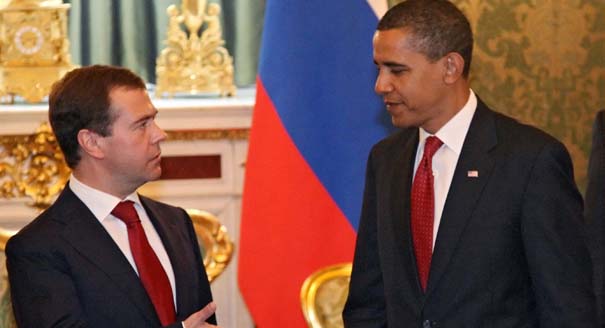
Source: Getty

In The Media
Carnegie Russia Eurasia Center

Resetology

If the “reset” in U.S.-Russia relations does not help achieve a genuine movement towards Russia’s political liberalization, then it risks legitimizing the Kremlin's system of personalized power.

Link Copied
By Lilia Shevtsova
Published on Nov 3, 2010

Source: The American Interest

ResetologyWhen Vice President Joe Biden called for hitting the “reset” button in the U.S.-Russia relationship in February 2009, he sparked criticism in certain circles in Washington that the new Administration was trying to wipe the slate clean too soon after Russia’s August 2008 invasion of Georgia. His plea was received with skepticism in Moscow, too, among those who doubted the Obama team’s sincerity. And yet nearly two years into it, the reset appears to have produced notable successes. Barack Obama and Dmitry Medvedev have signed the New START treaty; reached an agreement on cooperation on Afghanistan; bridged positions in addressing the Iranian nuclear program, with Russia supporting the latest UN Security Council sanctions resolution; and created an infrastructure for bilateral cooperation—the Presidential Bilateral Commission, consisting of 16 working groups on issues as diverse as nuclear cooperation, space, health, military-to-military, cultural and sports exchange, and civil society. In addition, neither leader let the summer’s somewhat surreal spy scandal spoil relations. This certainly looks like progress compared to the summer of 2008 when, at the moment of the Russian-Georgian conflict, Russian-U.S. relations came close to a confrontation.

Today, as Obama calls Medvedev his “friend and partner” and Medvedev declares that “Russian-American relations have immense potential”, there is, at the very least, a change in the air. Russian anti-Americanism, for example, is way down: In 2007 only 43 percent of respondents viewed the United States positively, while 47 percent took a negative view; now 60 percent express a positive opinion and only 27 percent have a negative view. This turnabout has suggested to some that, after two failed post-Cold War attempts to build a stable relationship of cooperation (between Bill Clinton and Boris Yeltsin in the 1990s and between Vladimir Putin and George Bush during their first terms, 2000–04), a real breakthrough in U.S.-Russian relations has finally come about. Many Americans and some Europeans, furthermore, believe that the Obama Administration deserves credit for it. ...

Full text of the article

About the Author

Lilia Shevtsova

Former Senior Associate, Russian Domestic Politics and Political Institutions Program, Moscow Center

Shevtsova chaired the Russian Domestic Politics and Political Institutions Program at the Carnegie Moscow Center, dividing her time between Carnegie’s offices in Washington, DC, and Moscow. She had been with Carnegie since 1995.

    Recent Work

  • In The Media
    Putin Has Fought His Way Into a Corner

      Lilia Shevtsova

  • Commentary
    How Long Russians Will Believe in Fairy Tale?

      Lilia Shevtsova

Lilia Shevtsova
Former Senior Associate, Russian Domestic Politics and Political Institutions Program, Moscow Center
Lilia Shevtsova

Carnegie does not take institutional positions on public policy issues; the views represented herein are those of the author(s) and do not necessarily reflect the views of Carnegie, its staff, or its trustees.

More Work from Carnegie Europe

Get more news and analysis from
Carnegie Europe
Carnegie Europe logo, white
Rue du Congrès, 151000 Brussels, Belgium
  • Research
  • Strategic Europe
  • About
  • Experts
  • Projects
  • Events
  • Contact
  • Careers
  • Privacy
  • For Media
  • Gender Equality Plan
Get more news and analysis from
Carnegie Europe
© 2026 Carnegie Endowment for International Peace. All rights reserved.