

Paper
George Perkovich
{
  "authors": [
    "George Perkovich"
  ],
  "type": "legacyinthemedia",
  "centerAffiliationAll": "dc",
  "centers": [
    "Carnegie Endowment for International Peace",
    "Carnegie Russia Eurasia Center"
  ],
  "collections": [
    "U.S. Nuclear Policy"
  ],
  "englishNewsletterAll": "ctw",
  "nonEnglishNewsletterAll": "",
  "primaryCenter": "Carnegie Endowment for International Peace",
  "programAffiliation": "russia",
  "programs": [
    "Russia and Eurasia",
    "Nuclear Policy"
  ],
  "projects": [],
  "regions": [
    "North America",
    "United States",
    "Caucasus",
    "Russia"
  ],
  "topics": [
    "Foreign Policy",
    "Nuclear Policy"
  ]
}
Source: Getty
Having cleared the Senate, New START is now proceeding towards implementation, but the method for verifying the dismantlement of warheads remains a key challenge that must be resolved in a future agreement.
Source: NPR's All Things Considered

And to help us answer that and other practical questions about the implementation of New START, we turn to George Perkovich, director of the nuclear policy program at the Carnegie Endowment for International Peace. Welcome to the program once again.
Mr. GEORGE PERKOVICH (Nuclear Policy Program Director, Carnegie Endowment for International Peace): Thank you.
SIEGEL: And as we've heard, each country could soon find itself with hundreds of deployed warheads over the limit. What does the treaty require that they actually do with those? Destroy them? Store them? What?
Mr. PERKOVICH: Well, the treaty gives the two countries seven years to implement. Also, the way that the reductions actually are done physically focuses much more on the delivery system. So, you mentioned the number that we would reduce down to 1,550 deployed warheads. The warhead is the part that goes boom.
But to be a weapon it has to get to the target. And it's the delivery systems, the delivery vehicles that get it there, namely, missiles that are based on submarines, missiles that are based in silos, less likely would be on heavy bombers. It's those things, the delivery vehicles, that are dismantled, basically, if not destroyed, rendered unusable and that process is verified.
SIEGEL: Now, the dismantling of a missile is fairly easy to visualize, but a strategic bomber or a submarine that launches nuclear missiles, would such systems actually be dismantled?
Mr. PERKOVICH: They can be, or they can be retired due to age. But the more likely way that this would be done is that you render, like, our submarines, for example, have 24 tubes, which basically look like tubes into which you could put a missile. You could render those useless by filling them with concrete or otherwise disabling them. And then that part of the reductions, as it were, is what's actually kind of counted and verified more than the warheads themselves.
SIEGEL: But just to clarify this point, as a result of reductions, of deployed warheads of this sort, each side, Russia and the U.S., would have an increase in the number of somewhere stored warheads and something that could be conceivably used once again in weapons.
Mr. PERKOVICH: That's correct. And, in fact, one of the challenges, and it was mentioned in the earlier piece in the future, or hopefully a next round, is to for the first time have in arms reductions treaties the verification of the dismantlement of warheads. And I think that's something that both sides, U.S. and the Russians will start to think pretty seriously about going forward.
SIEGEL: I would think that despite the umpteen thrillers and James Bond-like stories about stolen ICBMs and submarines that are hijacked with nuclear missiles aboard, it really is the much smaller weapons that are much more likely to get into bad hands. And when we think of loose nukes, it's not really so much an entire missile that we think is going to go missing.
Mr. PERKOVICH: Right. There's a kind of a joke that some of the people who are in the nuclear business, you know, make, which is, you know, the safest, most secure place for a nuclear weapon, a nuclear warhead is on top of a missile in a silo.
SIEGEL: Well, George Perkovich, thanks for talking with us about it.
Mr. PERKOVICH: Thank you.
SIEGEL: Thats George Perkovich, who is director of the Nuclear Policy Program at the Carnegie Endowment for International Peace.

Japan Chair for a World Without Nuclear Weapons, Senior Fellow
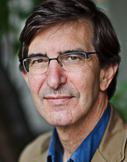
George Perkovich is the Japan Chair for a World Without Nuclear Weapons and a senior fellow in the Carnegie Endowment for International Peace’s Nuclear Policy Program. He works primarily on nuclear deterrence, nonproliferation, and disarmament issues.
Recent Work
George Perkovich
George Perkovich
Carnegie does not take institutional positions on public policy issues; the views represented herein are those of the author(s) and do not necessarily reflect the views of Carnegie, its staff, or its trustees.

While the EU and European governments are embracing the much-lauded middle-power moment, this entails three difficult conundrums.

Richard Youngs

Europe is facing rising populism internally as well as external pressures from Russia, China, Turkey, and the United States.

Dimitar Bechev

Much has been said of the changes Brussels is trying to make to the EU enlargement process. Here’s why gradual integration might—or might not—be the answer.
Dimitar Bechev

The European Commissioner for Trade is headed to China. But after President Xi’s bridge-building visit to Washington, can a more isolated EU overcome Beijing’s stranglehold on critical raw materials? Who will blink first?

Rym Momtaz, ed.

European NATO countries are wrestling with the possibility of U.S. disengagement from the alliance. With the continent’s security increasingly uncertain, governments must restore the credibility of their collective defense.



Hans-Dieter Lucas, Adam Thomson, Pierre Vimont