

Research
- +6
Yasmine Farouk, Nathan J. Brown, Maysaa Shuja Al-Deen, …
{
  "authors": [
    "Michele Dunne"
  ],
  "type": "testimony",
  "centerAffiliationAll": "dc",
  "centers": [
    "Carnegie Endowment for International Peace",
    "Malcolm H. Kerr Carnegie Middle East Center"
  ],
  "collections": [],
  "englishNewsletterAll": "menaTransitions",
  "nonEnglishNewsletterAll": "",
  "primaryCenter": "Carnegie Endowment for International Peace",
  "programAffiliation": "MEP",
  "programs": [
    "Middle East"
  ],
  "projects": [],
  "regions": [
    "North Africa",
    "Egypt"
  ],
  "topics": [
    "Political Reform"
  ]
}
Source: Getty
The bombing of a Coptic Christian church on New Year's Day reflected a sharp rise in religious friction that has been slowly brewing in Egypt for years.
Source: January 20

Let me begin by expressing my condolences to the families of the victims of the January 1 church bombing and January 11 shooting attack in Egypt, and my hope that the Egyptian government will soon bring the perpetrators to justice. We still do not know for certain whether terrorist groups outside Egypt were involved in the January 1 bombing; certainly al-Qaeda groups were fanning the flames of sectarian tension in Egypt specifically for the past few months and encouraging attacks.
That being said, these attacks took place within a specific social, political, and religious context inside Egypt. Perhaps they were carried out by terrorists who sought to capitalize on those issues to create instability inside Egypt and perhaps they were carried out by Egyptians with local motivations and little or no real connection to al-Qaeda. In either case, these attacks cannot be viewed in isolation from the sectarian tensions that have been brewing in Egypt for years.
The Egyptian government does not bear direct responsibility for these events nor would Egyptian officials ever have wanted such tragedies to occur. Still, senior officials have hastened to attribute these horrific acts to external actors, while they have been quick to deny that internal sectarian tensions could be to blame. Whatever the identity of the perpetrators, these attacks and the widespread anti-government protests that followed them should serve as a wake-up call for Egyptian leaders. It is time for them to end the serious and persistent discrimination against non-Muslims that exists in Egyptian law and practice and to find more effective ways of addressing escalating tensions between Muslims and Christians.
While the Egyptian government does not actively persecute or repress Christians, a prejudicial legal framework has created a permissive environment that allows Egyptian officials and private individuals to discriminate against Christians freely and with impunity. The requirement to list religion on national identity cards, the inequality in practices surrounding conversion (Christians may change their religious affiliation to Muslim, for example, but Muslims may not change theirs to Christian or any other religion), and the different laws and policies surrounding places of worship for various religions all create resentment among Christians, Baha’is, Shiites, and others who are not Sunni Muslims.
Moreover, Christians are severely underrepresented in government positions, whether appointed or elected. While Christians represent 8 to 15 percent of the Egyptian population, the only government institution in which they enjoy a similar presence is the cabinet, where there are three Christians among 32 ministers. There is only one Christian among Egypt’s 28 provincial governors, very important positions appointed by President Hosni Mubarak. Likewise, Christians are nearly invisible in the senior ranks of the armed forces and internal security forces.
President Mubarak’s National Democratic Party (NDP) has adopted laudable theoretical positions on the equality of all citizens, in contrast to groups such as the Muslim Brotherhood, which hold that a Christian should not be eligible to be president. But the NDP nominated only ten Christians out of a total of more than 750 candidates for parliamentary elections in November 2010. In the end three of them won and Mubarak appointed seven others, leaving Christians holding only two percent of seats in the People’s Assembly.
Perhaps the most serious and directly relevant aspect of Egyptian authorities’ behavior has been the longstanding failure to bring to justice those who have committed violence against Christians. The last decade began with sectarian violence in the Upper Egyptian village of al-Kosh, in which 21 Christians and one Muslim were killed in January 2000; no one has ever been convicted of killing any of the Christians. A State Security court issued on January 16 the first verdict in the killing of seven Christians and one Muslim policeman in Naga Hammadi on Coptic Orthodox Christmas in January 2010, sentencing one of the perpetrators to death while two others await the conclusion of their trials. There is a sense among Egyptian Christians that justice for such crimes has been long delayed at best, and that in many cases investigations were mishandled and authorities were eager to put the incidents behind them.
The handling of such crimes is typical of the approach of Egyptian authorities, who tend to treat sectarian tensions less as a threat to the security of citizens and more as a threat to the security of the state from its citizens. From this attitude springs an approach to sectarian tensions that is light on justice but heavy on brutality, as seen in the death of al-Said Bilal, a young Alexandria man who turned up dead within 24 hours of being detained for questioning in the January 1 bombing.
Treating sectarianism as a regime security problem rather than as a deeply rooted social phenomenon has prevented the Egyptian government from effectively addressing the underlying causes of animosity and discrimination. Egyptian authorities’ protestations that “national unity” is intact and that “the Christians are not a minority” until now have functioned to deny rather than acknowledge problems and to end rather than begin serious discussion of them.
There are some signs of possible positive steps; for example, the NDP reportedly is drafting a new law to unify regulations governing construction of all places of worship, whether Muslim or Christian. It remains to be seen, however, whether such initiatives will continue once the outrage over the recent bombing subsides. One problem for the Egyptian government is that discussing sectarian issues will lead to broader questions about what the rights of all citizens are or should be. The 2009 Arab Human Development Report discussed this problem at length as it pertains to all Arab countries, concluding that “peaceful co-existence in multi-ethnic and multi-sectarian societies rests on evolved forms of citizenship.” In other words, discrimination against Christians and sectarian tensions are likely to persist until all Egyptian citizens enjoy enhanced human, civil, and political rights.

Former Nonresident Scholar, Middle East Program
Michele Dunne was a nonresident scholar in Carnegie’s Middle East Program, where her research focuses on political and economic change in Arab countries, particularly Egypt, as well as U.S. policy in the Middle East.
Recent Work



Yasmine Farouk, Nathan J. Brown, Maysaa Shuja Al-Deen, …
Robert Springborg, Emile Hokayem, Becca Wasser, …
Carnegie does not take institutional positions on public policy issues; the views represented herein are those of the author(s) and do not necessarily reflect the views of Carnegie, its staff, or its trustees.

The EU’s new migration policy is not suited to today’s realities. With climate change increasingly becoming a driver of displacement, Europe needs to rethink its deterrence-focused approach.

Shana Tabak

Preparing candidate countries for EU membership is no longer enough. As the enlargement process becomes a reality, the union must also prepare its own societies.

Iliriana Gjoni
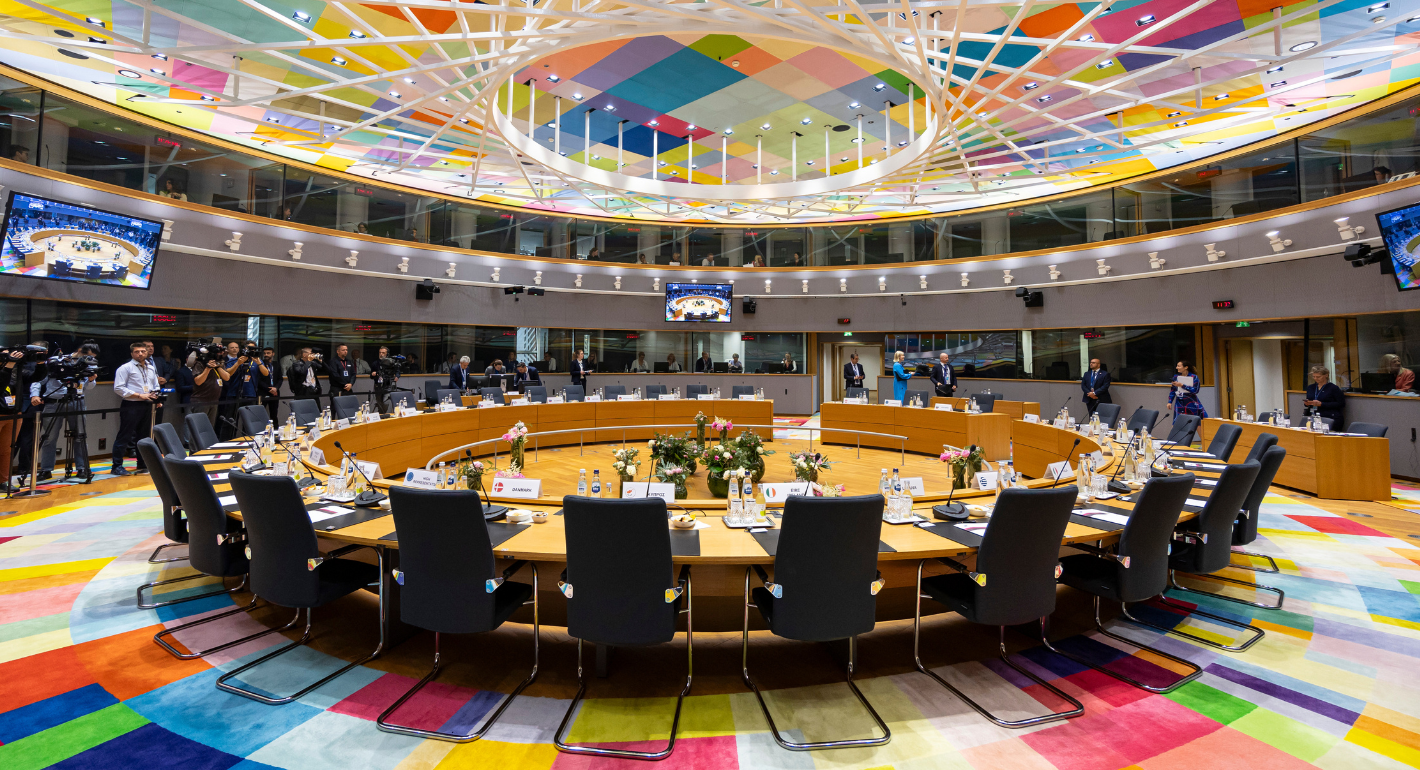
Countries face several hurdles in joining the EU, including the final stage of ratifying their accession treaties. Procedural reforms and substantive adjustments could help move the process forward.

Stefan Lehne
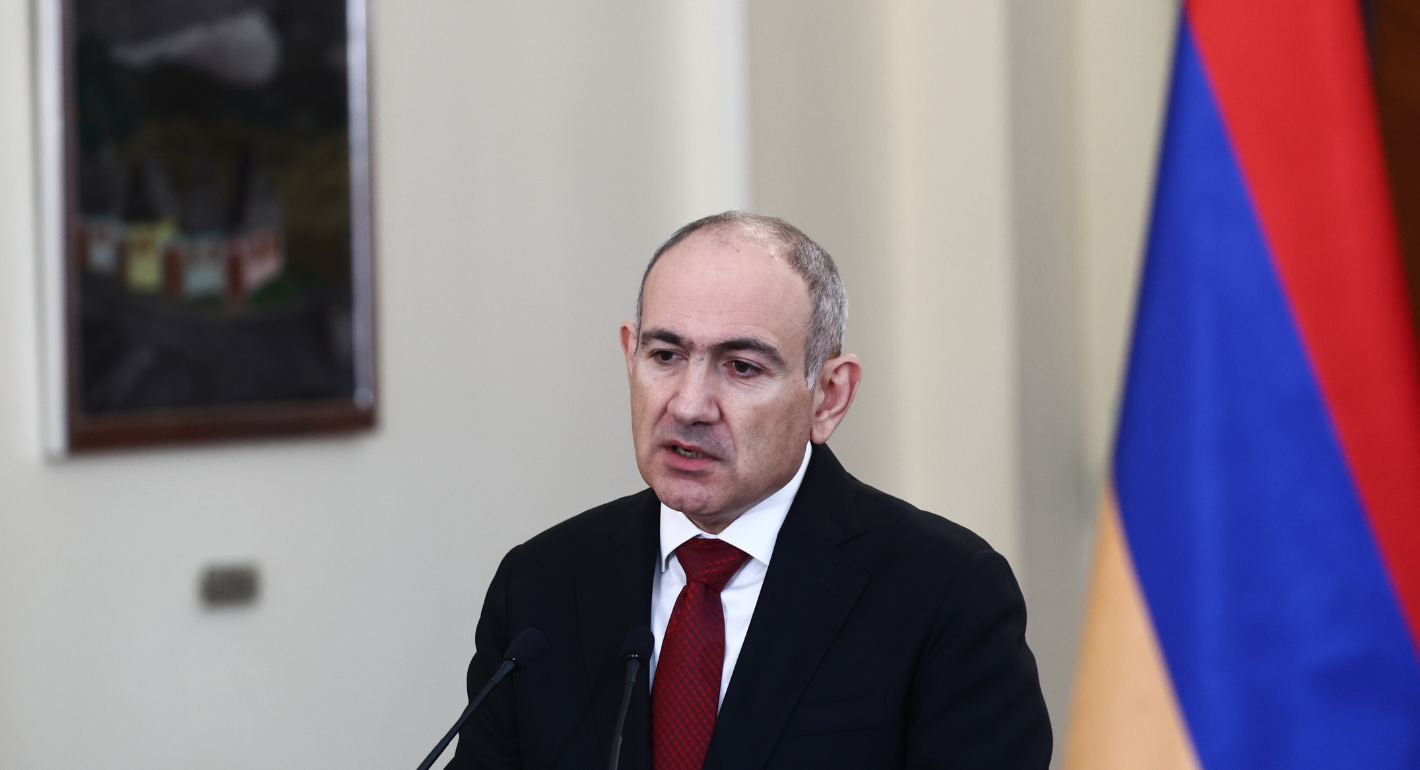
Europe has an interest in supporting Armenian leader Nikol Pashinyan as he tries to make peace with neighbors and loosen ties with Russia. But it is depersonalized support in the long term, not quickfire flash, that will win the day.

Thomas de Waal
Montenegro and Albania are frontrunners for EU enlargement in the Western Balkans, but they can’t just sit back and wait. To meet their 2030 accession ambitions, they must make a strong positive case.

Dimitar Bechev, Iliriana Gjoni