

Commentary
Shana Tabak, Alejandro Martin Rodriguez
{
  "authors": [
    "Shana Tabak"
  ],
  "type": "commentary",
  "blog": "Strategic Europe",
  "centerAffiliationAll": "",
  "centers": [
    "Carnegie Endowment for International Peace",
    "Carnegie Europe"
  ],
  "englishNewsletterAll": "",
  "nonEnglishNewsletterAll": "",
  "primaryCenter": "Carnegie Europe",
  "programAffiliation": "",
  "regions": [
    "Europe",
    "Maghreb",
    "Middle East",
    "North Africa"
  ],
  "topics": [
    "EU",
    "Foreign Policy",
    "Migration",
    "Climate Change"
  ]
}
Source: Getty
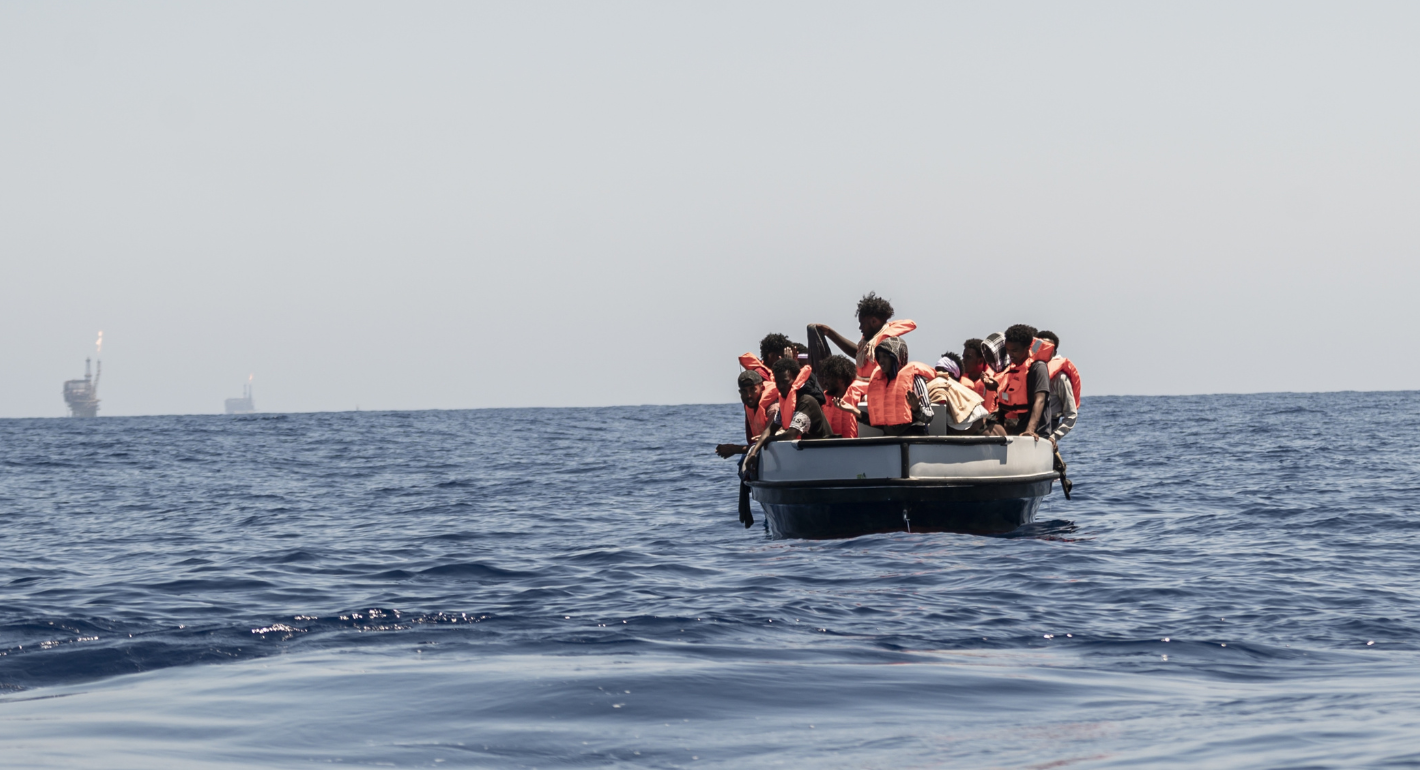
The EU’s new migration policy is not suited to today’s realities. With climate change increasingly becoming a driver of displacement, Europe needs to rethink its deterrence-focused approach.
It might as well be 2015 all over again, at least for some in the EU institutions.
Even though increased political polarization, divergence from EU and international law, and persistent human rights abuses at European borders have made it clear that a new policy is needed, the Pact on Migration and Asylum that goes into effect on June 12, 2026, remains defined by a refugee influx from more than ten years ago.
The pact has a massive blind spot: the acceleration of the climate crisis in the intervening years. While offering a fleeting nod to climate change, it makes no concrete policy recommendations to address the consequent impacts on human habitability, displacement, and migration.
This siloed approach lacks foresight and misses an opportunity to better align migration and development strategies with climate policy. While it’s impossible to predict the size of migrant flows, we know that crises like conflict, famine, and extreme weather—all exacerbated by climate change—affect the decision to migrate.
Europe will need new ideas, integrated strategies, and better cooperation if it is to build a migration and asylum policy that reckons with climate change’s impacts on where we live today.
The new pact itself offers the opportunity to align the policy targets of comprehensive migration frameworks and climate-resilient development. Only a migration protocol explicitly aligned with robust agreements to fund adaptation and resilience in countries of origin could truly seek to mitigate climate as a driver of displacement.
As it currently stands, the pact consists of ten interconnected policies across the migration lifecycle, meant to enable a better-managed system of migration into the EU and characterized by technologically advanced management and tracking of migrants’ applications, more stringent controls, and expedited deportation processes. The pact also designates “safe countries of origin,” presuming that nationals from these countries have no basis for protection and should be fast-tracked for deportation.
But that emphasis on deterrence neglects that the drivers of irregular migration—such as conflict, starvation, and political repression—are exacerbated by climate impacts. Scholars explain that the human climate niche, understood as the conditions best suited for human habitability, is shrinking and that by the year 2070, a third of humanity may live outside it. Deterrence has never proved to be effective at reducing irregular migration, though it may result in quick domestic wins for politicians.
In addition to its reliance on deterrence, the pact also depends on return mechanisms, including through return hubs—centers outside the EU’s borders where migrants are sent to make it easier to expel those who are undocumented. These mechanisms shortsightedly send migrants to some of the countries on earth least well-prepared to grapple with climate impacts, which are also the same countries already hosting disproportionate numbers of refugees.
Yet, it does include some policies that could be well suited in the context of climate displacement. The Migration and Preparedness Blueprint was created to better monitor and anticipate mass migration movements, establishing responses to mass arrivals or force majeure situations. While it has primarily been applied to cross-border displacement from Ukraine, its stated aim of “developing an early warning and forecasting system at the EU level” is readily adaptable to rapid-onset climate crises such as floods, hurricanes, or wildfires that can quickly displace massive numbers of people. Early warning systems have proved to be crucial in averting and minimizing climate-related displacement, and thus the blueprint offers an opportunity for anticipatory action that may diminish long-term climate displacement.
The Skills and Talent Mobility Partnerships provision offers another opportunity. It references the potential of migrant workers to contribute to the green and digital transitions by providing the European labor market with the skills it needs. This could be leveraged to address the EU’s demand for skilled labor to drive the green transition amidst Europe’s ageing workforce. The recent energy crisis—prompted by the war in Iran—reinforces the urgency of reducing EU dependence on fossil fuels, a labor-intensive transition that requires electricians, solar panel installers, and other green-skilled workers.
As the International Organization for Migration highlights, applying this provision to the goals of the EU Green Deal would reduce the siloes between the union’s climate and migration policies while framing migration as a form of climate adaptation that benefits both sending and receiving countries. Spain’s recent experience demonstrates that an increased immigrant workforce can boost economic prosperity, while reducing reliance on imported fossil fuels. The pact is well-positioned to scale such a model, bolstering the capacity of the European labor market while fostering a climate-resilient transition.
A third provision warrants careful attention. The pact’s Eurodac database tracks migrant activity across the EU, and critics have rightly articulated human rights concerns about misuse of personal data. Yet, if comprehensive data is already being gathered, it could also offer EU researchers a means of understanding how climate drives migrants’ decisions, particularly if complemented by tools such a questionnaire on climate displacement, which could illustrate key tipping points. This opportunity to better understand climate displacement should not be overlooked, provided robust data safeguards are implemented.
The EU’s Pact on Migration and Asylum arrives at a consequential moment, yet reveals a framework built for the political pressures of 2015, not the climate realities of today. Not only does the pact repackage migration policies that have led to human rights abuses and suffering, but it is also not entirely fit for purpose. While the pact misses an opportunity to overtly and proactively address the impacts of climate on human displacement, it does contain tools that could begin to bridge the gap between migration policy and climate science—if policymakers choose to use them. A migration policy that relies on deportation and deterrence while ignoring the climate’s impact on where and how people can live is one that is written for an outdated reality.
Subscribe to Strategic Europe, delivered every Tuesday and Thursday!

Senior Fellow and Director, Climate Mobility Project, Sustainability, Climate and Geopolitics Program
Shana Tabak is senior fellow and director of the Climate Mobility Project at the Carnegie Endowment for International Peace.
Recent Work

Shana Tabak, Alejandro Martin Rodriguez
Carnegie does not take institutional positions on public policy issues; the views represented herein are those of the author(s) and do not necessarily reflect the views of Carnegie, its staff, or its trustees.

While the EU and European governments are embracing the much-lauded middle-power moment, this entails three difficult conundrums.

Richard Youngs

Much has been said of the changes Brussels is trying to make to the EU enlargement process. Here’s why gradual integration might—or might not—be the answer.

Dimitar Bechev

The European Commissioner for Trade is headed to China. But after President Xi’s bridge-building visit to Washington, can a more isolated EU overcome Beijing’s stranglehold on critical raw materials? Who will blink first?

Rym Momtaz, ed.

The domestic impacts of how long it is taking to end the war in Ukraine have pushed the French electorate to the political extremes and compromised the country’s diplomatic capacity.
Rym Momtaz

Before the next wave of EU enlargement takes place, the union needs to grapple with thorny questions of how power is distributed among its members.


Emil Sondaj Hansen, Ditte Brasso Sørensen