

Commentary
Amr Hamzawy
{
  "authors": [
    "Amr Hamzawy"
  ],
  "type": "legacyinthemedia",
  "centerAffiliationAll": "",
  "centers": [
    "Carnegie Endowment for International Peace",
    "Carnegie Europe",
    "Malcolm H. Kerr Carnegie Middle East Center",
    "Carnegie Russia Eurasia Center"
  ],
  "collections": [
    "Arab Awakening"
  ],
  "englishNewsletterAll": "",
  "nonEnglishNewsletterAll": "",
  "primaryCenter": "Carnegie Endowment for International Peace",
  "programAffiliation": "",
  "programs": [],
  "projects": [
    "Eurasia in Transition"
  ],
  "regions": [
    "North Africa",
    "Egypt",
    "Middle East"
  ],
  "topics": [
    "Political Reform",
    "Democracy"
  ]
}
Source: Getty
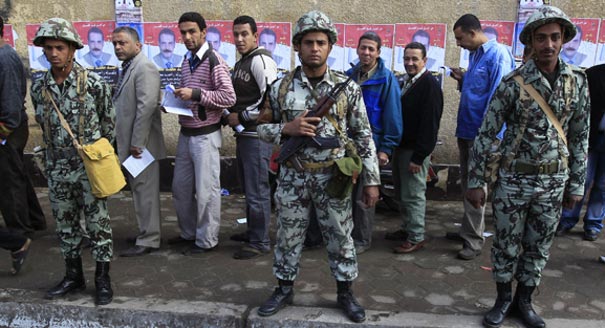
Egypt has been fundamentally changed by the events since Jan. 25, and the challenge now is to translate the changes flowing from the popular uprising into the concrete procedures and safeguards necessary for a genuine transition to democracy.
Source: Washington Post

Recent events have compelled Egyptian intellectuals, politicians, entrepreneurs, journalists and others to join together to find a way out of the impasse between protesters and the Mubarak government. The Committee of Wise Men, for which I serve as spokesman, aims to be a mediating body between the two sides as well as present some kind of a road map for the transition.
We called on Mubarak to demand a set of constitutional amendments before delegating control of the transition process. This transition must include a lifting of the state of emergency; the dissolution of the illegitimate People's Assembly and Shura Council (the two chambers of Parliament that have come from rigged and flawed elections); the formation of an independent legal committee to amend the constitution; and the lifting of laws restricting political freedoms. These are the essential steps that will put Egypt on a safe path to democracy. They are also the steps by which the international community should judge our government's commitment to reform.
Only with clear and serious guarantees will the hundreds of thousands of people who have protested peacefully for a democratic government be convinced that this a serious proposition, one that underpins their security and safety and ensures that those responsible for the violence, human rights abuses and bloodshed in recent days are to be brought to account.
Otherwise, the long heritage of suspicion and distrust that so many in Egypt share about the regime's promises to allow real change will be entrenched, and it will make them fearful of what will come next if they no longer demonstrate.
Egyptians must do more than just protest. The absence of a youth movement with clear leadership and representation has been one obstacleto meaningful negotiation. There has been limited dialogue between state institutions and the youth groups as well as between the state and various political actors and committees. We believe we have responsibilities, starting with helping our young people see how to establish a democratic framework to represent their interests as a viable collective force and not as individuals. State institutions must in turn accept a collective dialogue with representatives of our youth.
We are convinced that the best way forward is to institutionalize the dialogue taking place today and convert it into a national conference or round-table negotiation between state institutions, youths, the political forces and independent national figures. This model would establish the powers and set the specific timeframes to produce a democratic political system in Egypt. And only then will the people's revolution be safe.

Director, Middle East Program
Amr Hamzawy is a senior fellow and the director of the Carnegie Middle East Program. His research and writings focus on Egypt’s and other middle powers’ involvement in regional security in the Middle East, particularly through collective diplomacy and multilateral conflict resolution
Recent Work
Amr Hamzawy
Amr Hamzawy
Carnegie does not take institutional positions on public policy issues; the views represented herein are those of the author(s) and do not necessarily reflect the views of Carnegie, its staff, or its trustees.

An overwhelming victory by a far-right-wing party in a small state in eastern Germany will have major repercussions for Chancellor Friedrich Merz’s coalition.

Judy Dempsey

In supporting Europe’s far-right, MAGA and Russia both want the same thing: a weaker EU. Europe must defend itself without abandoning the openness these forces exploit.

Armida van Rij

The hybrid warfare landscape is evolving rapidly, leaving policymakers without clear strategies. To better inform their work in addressing emerging challenges, governments must dig deeper into the underlying dynamics at play.


Raluca Csernatoni, Alicia Wanless

As the EU confronts profound challenges, several leaders have called for fundamental reform to the union’s model—but only modest, superficial changes have resulted. What if Europe really could be reimagined from zero today: What should such a redesigned European order look like?

Richard Youngs, ed.
Far-right leader Marine Le Pen can—and will—run in France’s next presidential election. What does the outcome of her appeal against a 2025 embezzlement conviction mean for the country’s political future?
Catherine Fieschi