• Research
  • Strategic Europe
  • About
  • Experts
Carnegie Europe logoCarnegie lettermark logo
EUNATO
  • Donate
{
  "authors": [
    "Michele Dunne"
  ],
  "type": "legacyinthemedia",
  "centerAffiliationAll": "dc",
  "centers": [
    "Carnegie Endowment for International Peace",
    "Malcolm H. Kerr Carnegie Middle East Center"
  ],
  "collections": [
    "Arab Awakening"
  ],
  "englishNewsletterAll": "menaTransitions",
  "nonEnglishNewsletterAll": "",
  "primaryCenter": "Carnegie Endowment for International Peace",
  "programAffiliation": "MEP",
  "programs": [
    "Middle East"
  ],
  "projects": [],
  "regions": [
    "North Africa",
    "Egypt"
  ],
  "topics": [
    "Political Reform"
  ]
}
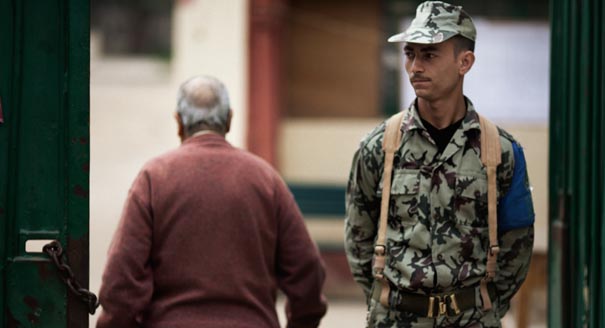
Source: Getty

In The Media

Forcing the Military to Choose

The Egyptian military will play a critical role in Egypt's transition period, but whether they will support a democratic transition or the status quo remains to be seen.

Link Copied
By Michele Dunne
Published on Feb 11, 2011

Source: New York Times

Forcing the Military to ChooseSo far the Egyptian military has patiently stuck with President Mubarak in his strategy of doling out concessions with an eyedropper, well past the point at which they would have made any impression on the demonstrators. It is not entirely clear how much of a decision-maker Mubarak will continue to be, or whether he has given much of those powers to Vice President Suleiman. In any event, Suleiman shows no signs of wanting to operate differently from Mubarak, and probably will continue to offer the occasional carrot while applying the stick.

Another question is whether the military will have a public voice separate from that of Mubarak and Suleiman. The Supreme Military Council's "communique #1" issued on Thursday said it would "support the legitimate demands of the people." That statement suggests an effort to establish such a voice, which is a striking departure from the past 20 years or so, in which the military did not speak on political issues. 
 
The Egyptian demonstrators seem to be gaining rather than losing momentum, and at some point soon may try to force the military to choose between the Mubarak/Suleiman regime and the Egyptian people. They could do this by marching en masse, several hundred thousand strong, to the presidential palace and threatening to go over the walls. Such tactics would place much more pressure on the military than it has experienced up until now.
 
The army would then have to choose between shooting at unarmed protesters or calling on the political leaders to step aside or to meet the protesters' main demands: that Mubarak resigns, the state of emergency be lifted, and the parliament dissolved. It is not clear how much communication there is between the army and the youth organizations steering the protests, and whether such scenarios have been discussed.

About the Author

Michele Dunne

Former Nonresident Scholar, Middle East Program

Michele Dunne was a nonresident scholar in Carnegie’s Middle East Program, where her research focuses on political and economic change in Arab countries, particularly Egypt, as well as U.S. policy in the Middle East.

    Recent Work

  • Research
    Islamic Institutions in Arab States: Mapping the Dynamics of Control, Co-option, and Contention
      • +6

      Yasmine Farouk, Nathan J. Brown, Maysaa Shuja Al-Deen, …
  • Research
    From Hardware to Holism: Rebalancing America’s Security Engagement With Arab States
      • +8

      Robert Springborg, Emile Hokayem, Becca Wasser, …

Michele Dunne
Former Nonresident Scholar, Middle East Program
Michele Dunne
Political ReformNorth AfricaEgypt

Carnegie does not take institutional positions on public policy issues; the views represented herein are those of the author(s) and do not necessarily reflect the views of Carnegie, its staff, or its trustees.

More Work from Carnegie Europe

  • Europe flags citizens demonstration
    Commentary
    Strategic Europe
    EU Enlargement Forgets Europeans

    Preparing candidate countries for EU membership is no longer enough. As the enlargement process becomes a reality, the union must also prepare its own societies.

      Iliriana Gjoni
  • Article
    EU Integration Without Ratification?

    Countries face several hurdles in joining the EU, including the final stage of ratifying their accession treaties. Procedural reforms and substantive adjustments could help move the process forward.

      Stefan Lehne
  • Commentary
    Strategic Europe
    There Is No Shortcut for Europe in Armenia

    Europe has an interest in supporting Armenian leader Nikol Pashinyan as he tries to make peace with neighbors and loosen ties with Russia. But it is depersonalized support in the long term, not quickfire flash, that will win the day.

      Thomas de Waal
  • Commentary
    Strategic Europe
    How to Join the EU in Three Easy Steps

    Montenegro and Albania are frontrunners for EU enlargement in the Western Balkans, but they can’t just sit back and wait. To meet their 2030 accession ambitions, they must make a strong positive case.

      Dimitar Bechev, Iliriana Gjoni

  • Commentary
    Strategic Europe
    The EU Needs a Third Way in Iran

    European reactions to the war in Iran have lost sight of wider political dynamics. The EU must position itself for the next phase of the crisis without giving up on its principles.

      Richard Youngs

Get more news and analysis from
Carnegie Europe
Carnegie Europe logo, white
Rue du Congrès, 151000 Brussels, Belgium
  • Research
  • Strategic Europe
  • About
  • Experts
  • Projects
  • Events
  • Contact
  • Careers
  • Privacy
  • For Media
  • Gender Equality Plan
Get more news and analysis from
Carnegie Europe
© 2026 Carnegie Endowment for International Peace. All rights reserved.