

Commentary
Nikolay Petrov
{
  "authors": [
    "Nikolay Petrov"
  ],
  "type": "legacyinthemedia",
  "centerAffiliationAll": "",
  "centers": [
    "Carnegie Endowment for International Peace",
    "Carnegie Russia Eurasia Center"
  ],
  "collections": [],
  "englishNewsletterAll": "",
  "nonEnglishNewsletterAll": "",
  "primaryCenter": "Carnegie Russia Eurasia Center",
  "programAffiliation": "",
  "programs": [],
  "projects": [],
  "regions": [],
  "topics": []
}
Source: Getty
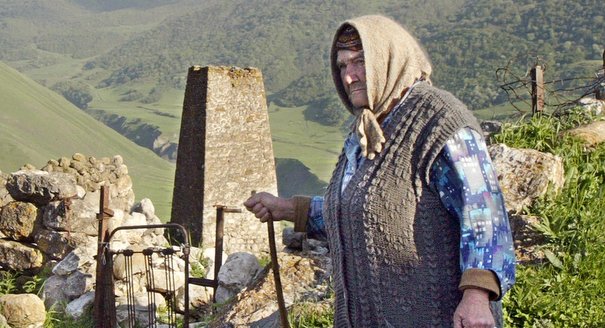
The Kremlin’s reliance on ethnic clan structures to govern the North Caucasus has only maintained and intensified the deep inequalities plaguing the society in the region.
Source: The Moscow Times

These events underscore how much the Kremlin’s North Caucasus policy has failed. Moscow is pursuing two approaches in the Caucasus: turning the ruling regimes into archaic khanates that rely on ethnic and clan elites to ensure loyalty, and relative stability enforced from above and harsh military pressure from below against potential Wahhabi insurgents as a means of combating terrorism.
The social and economic development of the North Caucasus consists of little more than developing large ski resorts, which looks absurd given the widespread violence and extremism in the region.
The decision to replace Ebzeyev with a young former official closely tied to the republic’s former leader is similar to the Kremlin’s decision last year to name Magomedsalam Magomedov as president of Dagestan. Moscow needs quick results, and it is attempting to obtain them by relying on regimes led by strong individuals backed by ethnic clans. By applying this formula first in Chechnya and now in other North Caucasus regions, Moscow is increasingly placing itself at the mercy of the region’s ethnic clans.
How can the Kremlin institute an effective policy for the North Caucasus?
First, Moscow should stop promoting an archaic model of government for the region’s ruling elite and must end its policy of prohibiting local residents from serving in posts among the regional siloviki and law enforcement structures. It should conduct a balanced policy of progressive modernization to the political system and resolve the bitter confrontation between society and law enforcement structures. The region’s democratic institutions are in worse shape than the country’s. In particular, the regional branches of national political parties are openly dominated by various clans.
Fighting with potential Wahhabists is pointless because they are only a symptom of a much larger problem. The struggle should be focused on the underlying cause: corrupt ethnic clan structures that maintain and intensify deep social inequalities, depriving youth of any prospects for the future. Without that, no financial investment will help or solve the social and economic problems or motivate the region’s most talented residents to remain in the North Caucasus.
A dialogue is needed with society as a whole and ethnic groups in particular. To a large extent, the ethnic clans supported by Moscow create the greatest barriers to establishing such a dialogue. A variety of channels and formats should be used to facilitate communication among citizens and between society and the authorities. Alexander Khloponin, Medvedev’s envoy to the North Caucasus, has had some success in applying this approach.
Finally, the 2014 Winter Olympics in Sochi tend to provoke destabilizing forces and prevent Moscow from carrying out any long-term strategy in the region. The idea of holding the Olympics in Sochi was a big mistake. The sooner the Kremlin acknowledges this fact, the lower the price in human life it will have to pay — both in the Caucasus and in the capital.
Former Scholar-in-Residence, Society and Regions Program, Moscow Center
Nikolay Petrov was the chair of the Carnegie Moscow Center’s Society and Regions Program. Until 2006, he also worked at the Institute of Geography at the Russian Academy of Sciences, where he started to work in 1982.
Recent Work
Nikolay Petrov
Nikolay Petrov
Carnegie does not take institutional positions on public policy issues; the views represented herein are those of the author(s) and do not necessarily reflect the views of Carnegie, its staff, or its trustees.