{
  "authors": [
    "Nadim Hasbani"
  ],
  "type": "legacyinthemedia",
  "centerAffiliationAll": "",
  "centers": [
    "Carnegie Endowment for International Peace",
    "Malcolm H. Kerr Carnegie Middle East Center"
  ],
  "collections": [],
  "englishNewsletterAll": "",
  "nonEnglishNewsletterAll": "",
  "primaryCenter": "Carnegie Endowment for International Peace",
  "programAffiliation": "",
  "programs": [],
  "projects": [],
  "regions": [
    "Levant"
  ],
  "topics": [
    "Political Reform"
  ]
}
Source: Getty
In The Media
The Special Tribunal for Lebanon’s Communications Problem
The absence of a coherent and disciplined communications strategy by the Special Tribunal for Lebanon is one of the main factors contributing to the current political crisis in Lebanon.
Link Copied
By Nadim Hasbani
Published on Mar 3, 2011
Source: Los Angeles Times
The Special Tribunal for Lebanon’s Communications The absence of a coherent and disciplined communications strategy by the Special Tribunal for Lebanon (STL) is one of the main factors contributing to the current political crisis in Lebanon.
One of the tribunal’s most serious communications problems has been the frequent leaks of information to the media — specifically, its alleged controversial plan to accuse members of Hezbollah of killing former Prime Minister Rafik Hariri, whose son Saad Hariri’s government collapsed in January. The leaks were widespread, appearing in outlets from Germany’s Der Spiegel to Canada’s CBC television. With little response from the tribunal, it appeared as an uncontrolled institution at the top. Most importantly, much of the Lebanese public believes today the highly charged information is true.
The tribunal also has lacked any real communications plan to build its credibility as a politically independent judicial body, including in the eyes of pro-Hezbollah and March 8 coalition supporters, who have doubted its credibility.
The public’s perceptions are hardly surprising. From its inception, the STL should have established itself as a new institution completely independent from the initial organization — the Detlev Mehlis investigation commission — charged with investigating Hariri’s assassination. That commission publicly accused Syria of Hariri’s murder and has received strong political backing from Western powers that have historically opposed Syria and Hezbollah.
In the extremely volatile Lebanese political environment, the STL should have better explained that its role was to conduct a thorough judicial investigation, looking at all possibilities no matter where they led. Instead, the tribunal gave the impression that it was continuing the political work of the commission by focusing only on Syria and then Hezbollah.
For example, when Hezbollah Secretary-General Sayyed Hassan Nasrallah accused Israel last August, in a TV appearance, of assassinating Hariri, the STL should have publicly expressed more willingness to explore the leads he suggested. Those leads made sense in the opinion of many Lebanese. Instead, the tribunal only asked, in a press release, for more documents, leaving the public with the impression that it did not consider the idea that Israel could be responsible for Hariri’s death.
In addition, the tribunal has missed important opportunities to clarify misperceptions about its work. In April 2009, when the tribunal’s pre-trial judge, Daniel Fransen, released the four Lebanese generals arrested after Hariri’s assassination, the public perceived this act as the tribunal’s attempt to correct its earlier mistake. However, the arrests were actually made in 2005 by the separate investigation commission. The release could have been used positively to remind the public that the tribunal disapproved of the commission’s decision to make the arrests shortly after they occurred.
These message mistakes, the communication strategy inconsistencies and the constant bickering among the STL’s communications staff, have caused many senior members to leave. They have also undercut the tribunal’s reputation — the exact opposite of what a communications strategy is intended to do. And they have contributed to rising tensions as Lebanon eagerly and nervously awaits the tribunal’s findings.
Carnegie does not take institutional positions on public policy issues; the views represented herein are those of the author(s) and do not necessarily reflect the views of Carnegie, its staff, or its trustees.
As the EU confronts profound challenges, several leaders have called for fundamental reform to the union’s model—but only modest, superficial changes have resulted. What if Europe really could be reimagined from zero today: What should such a redesigned European order look like?
Preparing candidate countries for EU membership is no longer enough. As the enlargement process becomes a reality, the union must also prepare its own societies.
Countries face several hurdles in joining the EU, including the final stage of ratifying their accession treaties. Procedural reforms and substantive adjustments could help move the process forward.
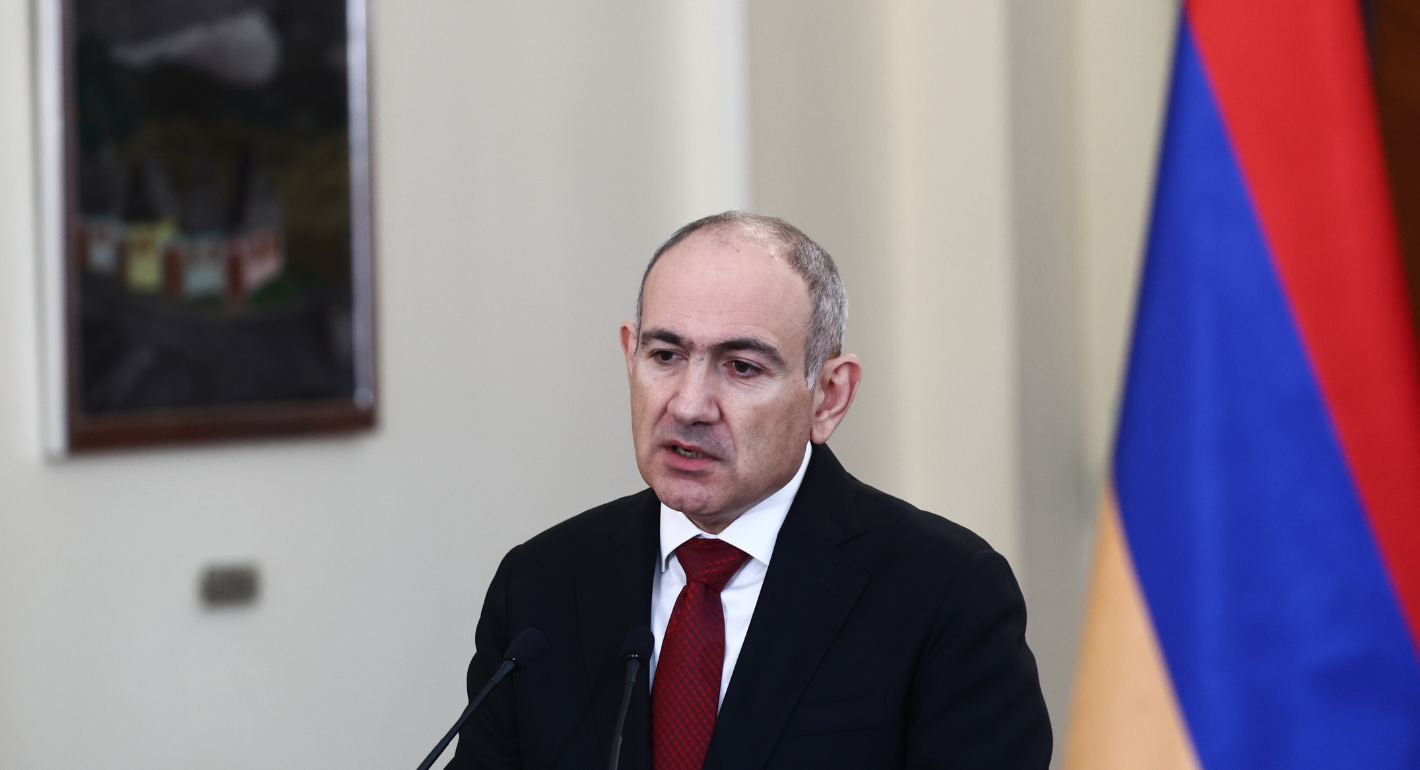
Europe has an interest in supporting Armenian leader Nikol Pashinyan as he tries to make peace with neighbors and loosen ties with Russia. But it is depersonalized support in the long term, not quickfire flash, that will win the day.
Montenegro and Albania are frontrunners for EU enlargement in the Western Balkans, but they can’t just sit back and wait. To meet their 2030 accession ambitions, they must make a strong positive case.