

Commentary
Nikolay Petrov
{
  "authors": [
    "Nikolay Petrov"
  ],
  "type": "legacyinthemedia",
  "centerAffiliationAll": "",
  "centers": [
    "Carnegie Endowment for International Peace",
    "Carnegie Europe",
    "Carnegie Russia Eurasia Center"
  ],
  "collections": [],
  "englishNewsletterAll": "",
  "nonEnglishNewsletterAll": "",
  "primaryCenter": "Carnegie Russia Eurasia Center",
  "programAffiliation": "",
  "programs": [],
  "projects": [],
  "regions": [
    "Russia"
  ],
  "topics": [
    "Foreign Policy"
  ]
}
Source: Getty
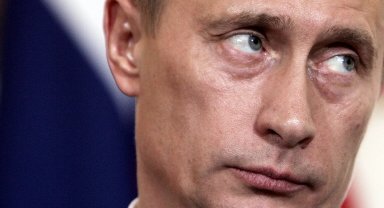
Russian authorities are preparing for a possible new economic crisis and social unrest by expanding the powers of the state security instead of enacting political reforms.
Source: The Moscow Times

This is particularly true of Prime Minister Vladimir Putin. Take, for example, his words at a meeting with writers two weeks ago and at the annual VTB conference last week with foreign investors. They both came across as superficial campaign speeches more than anything else.
His talk at the VTB conference on Oct. 6 — strangely named “Russia Is Calling!” — left a very bad impression. Speaking of future prospects in Russia, Putin used bombastic language and quoted trillion-ruble figures for planned budget expenditures without formulating any concrete goals or specifying the responsibilities that the government would shoulder.
Listening to his speech, you would think that Putin considers not only his fellow citizens to be idiots, but he also thinks the same about foreign investors, who attended the conference in large numbers. Putin’s VTB speech reminded me of his address at the Sochi economic forum in September 2008, when he referred to this country as an “island of stability” even though the global crisis had already dealt a major blow to the Russian economy. It was unclear whether Putin was trying to convince the conference participants or himself of the truth of his words.
On Sept. 28, Putin met with a group of leading Russian writers. It was obvious that Putin was ill-prepared for the meeting. He looked bad when he did not tell the truth in answer to writer Zakhar Prilepin’s question about the role that billionaire oil trader Gennady Timchenko’s ties to Putin played in Timchenko’s amazing business success and accumulation of wealth. Putin also gave flaccid answers to Prilepin’s question about the lack of investigation into charges of a $4 billion corruption scandal at state-owned oil pipeline company Transneft, as well as to his questions about the growing desire of Russians to emigrate.
Does Putin really have a clear grasp of the situation in Russia? Former Finance Minister Alexei Kudrin was convinced that he did and pointed to Putin’s planned economic and political reforms as evidence. But there is little proof that Putin has backed reforms in the past or has any serious intention of initiating them during his third presidential term. In fact, Kudrin seems to have lost faith in the government as a whole, which would explain his unwillingness to work in Dmitry Medvedev’s Cabinet when he takes over as prime minister in 2012.
Many of Putin’s recent speeches lack even a hint of strategy, and simply passing off those remarks as campaign rhetoric is no longer a satisfactory explanation. Putin’s only campaign message is the plan to conserve the status quo.
It would be wrong to conclude, however, that the government is not preparing for a worst-case scenario in the event of a new economic crisis and social unrest. It is, indeed, preparing for this — not by liberalizing or modernizing the political system, but by expanding the powers of the Federal Security Service and police and giving them, along with the military personnel, salary increases. This will help the Kremlin better control and build loyalty among the siloviki in the event of an acute economic or political crisis in the country. The true goal of this year’s so-called reforms to the Interior Ministry was not so much to improve the quality of the police force as to purge the unwanted elements, especially at the regional level where half of all police chiefs were dismissed.
Why was the Kremlin’s complex elections scenario scuttled in late summer? It was originally shaping up into a regular Shakespearean production, but in the end it looked more like something out of a Soviet-era agitprop playbook. When the opening act of this melodrama finally did begin, billionaire Mikhail Prokhorov, ultranationalist Dmitry Rogozin and Kudrin were all left standing in the wings as extras.
It would appear that the announcement concerning Putin’s return to the presidency was made earlier than planned. This is less of an indication of Putin’s confidence in his own strength and more his fear that Medvedev’s own presidential aspirations were getting out of hand. It also indicates Putin’s desire to solidify his hold on power and his realization that the West is too preoccupied with its own problems to worry about the legitimacy of Russia’s elections. It also looks like Putin, afraid of the second wave of crisis coming to Russia, decided not to risk initiating painful reforms amid the expected turbulence.
Having already trashed the Right Cause party, will Putin now toss the Strategy 2020 proposals he commissioned liberal economists to formulate last year into the same wastebasket? It would seem so because Putin has made no reference to them in his recent speeches, except perhaps in his derogatory allusion to “those in a hurry to make political changes” and in his fondness for paraphrasing Pyotr Stolypin that we do not need great upheavals but a great Russia.
Where is Putin is calling us? It would seem that he is calling us to the land of his dreams — a cross between a great Soviet Russia and Stolypin’s Russia, both of which exist only in Putin’s imagination.
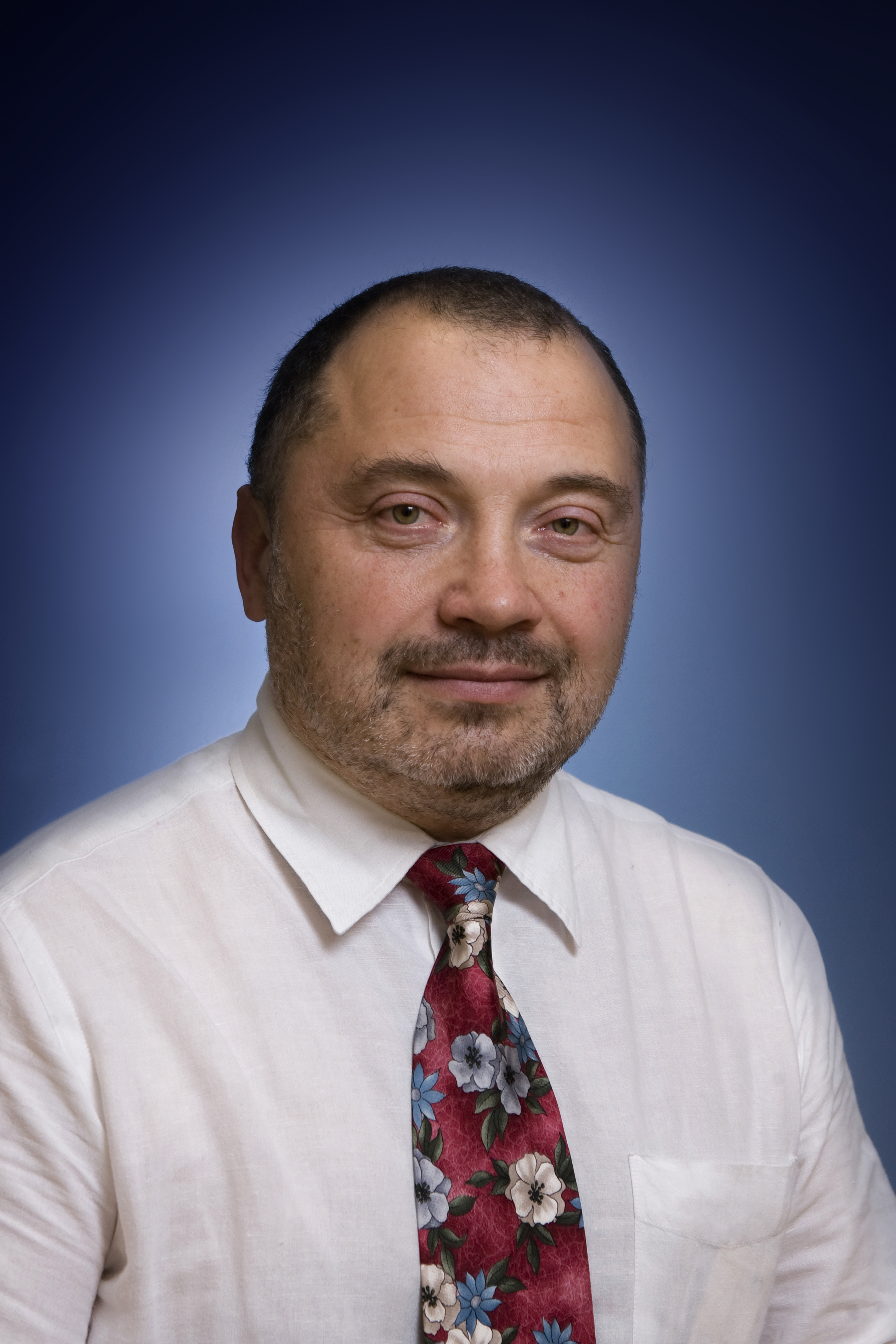
Former Scholar-in-Residence, Society and Regions Program, Moscow Center
Nikolay Petrov was the chair of the Carnegie Moscow Center’s Society and Regions Program. Until 2006, he also worked at the Institute of Geography at the Russian Academy of Sciences, where he started to work in 1982.
Recent Work
Nikolay Petrov
Nikolay Petrov
Carnegie does not take institutional positions on public policy issues; the views represented herein are those of the author(s) and do not necessarily reflect the views of Carnegie, its staff, or its trustees.

Are Germany’s economic, industrial, and political struggles becoming a liability for the EU’s ability to rise to the geopolitical moment?

Rym Momtaz, ed.

European Commission President Ursula von der Leyen is about to give her annual address on the state of the EU. Here’s what she won’t—but should—say.
Rym Momtaz

The aftermath of the Ceuta crisis shows Europe has drawn the wrong lessons. Rather than doubling down on failed migration policies, the EU needs to address the underlying roots of such episodes.

Richard Youngs

Canadian Prime Minister Mark Carney has twice inspired praise for standing up to U.S. President Donald Trump: at the 2026 World Economic Forum in Davos and on Canada-U.S. trade negotiations. Is Carney showing a third way better than the EU has in dealing with the Trump administration?
Rym Momtaz, ed.

The EU’s responses to two recent incidents expose the gulf between European perceptions and capabilities. Unless the union can bridge that gap, it will never become a real geostrategic power.
Rym Momtaz