Israel Will Make a Cost-Benefit Analysis of an Attack on Iran's Nuclear Facilities
The International Atomic Energy Agency says Iran has worked on developing nuclear weapon designs and on testing components. It comes amid rumors that Israel is preparing to attack Iran's nuclear facilities.
Israel Will Make a Cost-Benefit Analysis of an AttThe International Atomic Energy Agency says Iran has worked on developing nuclear weapon designs and on testing components. It comes amid rumors that Israel is preparing to attack Iran's nuclear facilities.
Deutsche Welle: Will this report change Western perceptions from suspicion to certainty that Iran's nuclear program has military dimensions?
Hibbs: I think it would be fair to say that the report certainly will intensify greatly the suspicion in the western camp that Iran is developing nuclear weapons. I would hesitate to use the word certainty because the report, significantly, does not assign political responsibility for any of the activities described in the report. There is nothing in the report pointing to a mastermind in Iran who has ordered these activities to be carried out.
The report says "worked on designing an atomic bomb" - does the IAEA still lack concrete evidence that Iran is building an atomic bomb?
When you talk about building an atomic bomb that means you have a series of short-term focused events resulting in a device that has nuclear material and can be exploded and detonated and the report does not present any information suggesting that is a near term outcome. What it talks about is a gamut of activities, procurement, research, physics which have been carried out over a period beginning at the end of the 1980s.
Iran, until 2008, had told the agency that some of these activities that it was willing to discuss were predicated on interest by Iran in civilian nuclear applications. The significance of the agencies report is that for the first time it shows an entire spectrum of activities spanning 20 years. Where it may be the case that individual activities could be justified by civilian applications, the overwhelming impression that you get over 20 years is that all of these activities are highly consistent with activities in other countries that were working on nuclear weapons over the last several decades.
Interestingly it talks about a "structured program" until 2003, which is when the US said Iran stopped weaponization research, but that activities continued after this. Does this mean the US was wrong in that 2007 intelligence assessment?
I don't know enough about what the parameters of the intelligence assessment were in the US. That document is classified. There is a report which has been declassified and there are other aspects of the intelligence assessment which are under wraps. But it would be fair to say that one of the significant aspects of the report from the agency is that it attests, or testifies to, activities which have continued in Iran after 2003 and it suggests that if there is a military industrial complex that's involved in the nuclear program in Iran then that relationship has continued after 2003 and that some activities that would be deemed useful for developing a nuclear weapon had continued up until the present.
The IAEA says Iran has built a large explosives vessel at the Parchin military complex southeast of Tehran - what's the significance of this?
All of the nuclear weapons programs, the clandestine programs, that we've known about since the 1970s have included a lot of activities related to testing of high explosives for a nuclear device. This is an activity that in other programs has been carried out in parallel with the acquisition, development and production and procurement necessary for other parts of the nuclear program and the production of nuclear material.
So if there is a nuclear weapons program in Iran it would be highly consistent with that expectation that there would be work in high explosives testing and it's possible that high explosives testing could be motivated by interest in nuclear weapons.
Russia and China are unhappy with the wording of this report. Could it have been tougher without their reservations?
The agency has been under pressure from both Western governments, particularly US, and the governments of China and Russia, as you mentioned, to cast the report to include or to exclude certain information. It appears to me that the report goes very far in describing an entire range of activities which Iran has been engaged in for a long period of time. I think that in Russia and China there was concern that too detailed a description of activities might prove embarrassing and would be counter-productive to the diplomatic process.
It's important in this regard to keep in mind that long before this report was completed, as early as the first week of October, the Chinese and Russian governments were signalling to their counterparts in the Western states on the board that they would not be in favour of moving toward a resolution in the board room that would cite Iran for non-compliance based on these activities cited in the report.
And there were many reasons for that; the primary reason given by Russia and China is that in their view a detailed expose of these activities given by the agency would in fact derail the diplomatic process. That is not the view of the western group. The Western group takes the view that the agency, over a period of several years now, has accumulated a dossier which suggests very strongly that Iran is engaged in activities which are contrary to its peaceful use pledge under the non-proliferation treaty of which Iran is a member.
What are the options for the US and its allies now?
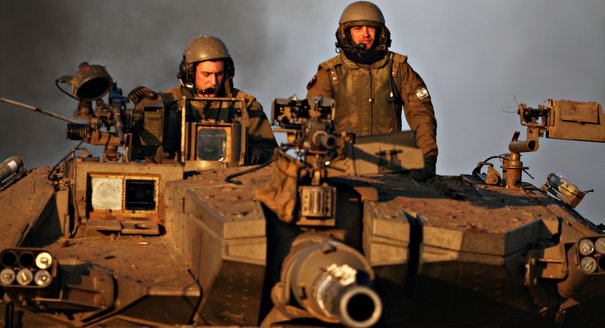
There has been speculation in Israel that the Israeli government would - as a result of what is discussed in the report - strike nuclear facilities in Iran. I think that if the Israelis are seriously considering an attack on nuclear installations in Iran it will not be on the basis of what's in the report. Israel will be making a cost-benefit analysis of what an attack on nuclear facilities in Iran would imply.
But it's important to make clear that this report, while it details a host of activities that Iran has carried out since the late 1980s, says nothing about the prospects for Iran's success. It illuminates a number of activities that we have seen in other nuclear weapons programs that are all consistent with the drive for nuclear weapons capabilities.
But on the basis of what's in the IAEA report we don't know anything, really, about how successful the Iranians have been in these endeavours that have been enumerated by the agency. At the end of the report we are not any closer to being able to make a judgement about how close Iran is to possessing nuclear arms.
Hibbs is a Germany-based nonresident senior fellow in Carnegie’s Nuclear Policy Program. His areas of expertise are nuclear verification and safeguards, multilateral nuclear trade policy, international nuclear cooperation, and nonproliferation arrangements.
Carnegie does not take institutional positions on public policy issues; the views represented herein are those of the author(s) and do not necessarily reflect the views of Carnegie, its staff, or its trustees.
When the U.S.-Iran memorandum of understanding was announced, the UK, France, Germany, and Italy declared their readiness to help demine the Strait of Hormuz and lift nuclear sanctions on Tehran. But does Europe need new tools to recover a diplomatic role?
The EU’s new migration policy is not suited to today’s realities. With climate change increasingly becoming a driver of displacement, Europe needs to rethink its deterrence-focused approach.
Europe seems to have accepted its sidelining in the Middle East. The EU must reassert its support for the international rules-based order and step up engagement.
Amid uncertainty caused by the Iran war, the global drive for nonproliferation has stalled. With Europe diplomatically marginalized and countries reassessing their nuclear options, efforts to curb the spread of nuclear weapons risk becoming irrelevant.
Five countries staged the biggest political boycott in Eurovision history over Israel’s participation. With the FIFA World Cup and other sporting or cultural touchstones on the horizon, are boycotts effective?