

In The Media
Lahcen Achy
{
  "authors": [
    "Lahcen Achy"
  ],
  "type": "legacyinthemedia",
  "centerAffiliationAll": "",
  "centers": [
    "Carnegie Endowment for International Peace",
    "Malcolm H. Kerr Carnegie Middle East Center"
  ],
  "collections": [],
  "englishNewsletterAll": "",
  "nonEnglishNewsletterAll": "",
  "primaryCenter": "Malcolm H. Kerr Carnegie Middle East Center",
  "programAffiliation": "",
  "programs": [],
  "projects": [],
  "regions": [
    "Egypt",
    "Gulf",
    "Levant",
    "Maghreb"
  ],
  "topics": [
    "Economy"
  ]
}
Source: Getty
Arab states can benefit from the experiences of growing and stable emerging countries, including the lesson emerging countries offer that there is no inconsistency between economic growth and social equity.
Source: Al-Hayat

In its latest annual report, the UNDP refined its approach to human welfare by suggesting an index adjusted for inequality. Because of their uneven income distribution compared to the world average, Arab countries were downgraded by 27 percent on the human development ladder.
Most economists have long thought that the widening gap between the rich and the poor was vital for economic growth, and thus any active search for ways to redistribute income would be ineffective and counterproductive. Three arguments were usually offered to justify this claim. First, the wealthy tend to save a larger portion of their income compared to poorer groups. Those savings finance productive investments, which boost economic growth and benefit the whole society. Second, the focus on redistribution by excessively taxing income and wealth could distort incentives and discourage production and investment, which might end up hurting the poor. Third, the cost required to implement and manage redistributive schemes can be high, which ultimately would limit their effectiveness.
However, recent studies, such as the IMF’s Andrew Berg and Jonathan Ostry’s September 2011 offering in Finance and Development, reveal that there is no inconsistency between economic growth and equity. In fact, a fair income distribution is vital to promoting and sustaining economic growth. Emerging countries that achieve rapid economic growth over years or decades tend to have less income inequality compared to those that fail to grow.
The rich in many developing countries, including the Arab states, tend to overspend on luxury goods and services that are often imported. National savings, thus, travel overseas instead of boosting domestic investments that create jobs and improve overall well-being. Conversely, middle and poor social classes usually buy local goods and services, thus contributing to domestic economic growth.
Large imbalances in income distribution also typically lead to social unrest and instability, which adversely affects investment and economic growth. There is no doubt that excessive income inequality in the Arab world has played a major role in spreading instability, raising public outrage, and igniting the Arab revolutions. Berg and Ostry found that improving the distribution of income by just 10 percent prolongs the period of stable growth by 50 percent. In fact, equitable distribution of income is much more important to sustainable economic growth than foreign investment and trade openness, which are usually the focus of Arab countries’ economic policies.
The choice of effective redistribution policies can be tricky. Some can result in distorted incentives and hurt economic growth. International experience over the past two decades reveals that policies that ensure equal-opportunity access to education and targeted social spending for disadvantaged groups are the most effective. Not surprisingly, policymakers in Latin American countries, known for their wide income inequality, have focused on these policies.
Arab states can benefit from the experiences of growing and stable emerging countries. One of key lessons they offer is that there is no inconsistency between economic growth and social equity. Policies that provide social protection and ensure access to education and health care for disadvantaged groups, beyond their ethical and human value, contribute directly to economic growth, political stability, and security.
Former Nonresident Senior Associate, Middle East Center
Achy is an economist with expertise in development, institutional economics, trade, and labor and a focus on the Middle East and North Africa.
Recent Work
Lahcen Achy
Lahcen Achy

When the U.S.-Iran memorandum of understanding was announced, the UK, France, Germany, and Italy declared their readiness to help demine the Strait of Hormuz and lift nuclear sanctions on Tehran. But does Europe need new tools to recover a diplomatic role?

Rym Momtaz, ed.

As geopolitical rivalry weaponizes global supply chains, the EU’s true vulnerability lies in emerging-risk imports. For these goods, suppliers are growing more concentrated, substitution more difficult, and political risk is looming.

Sinan Ülgen

The EU is putting together a new security strategy to meet today’s myriad challenges. But for any proposal to be effective, the union needs to grapple with its identity and ambitions.

Pierre Vimont

The EU’s new migration policy is not suited to today’s realities. With climate change increasingly becoming a driver of displacement, Europe needs to rethink its deterrence-focused approach.

Shana Tabak
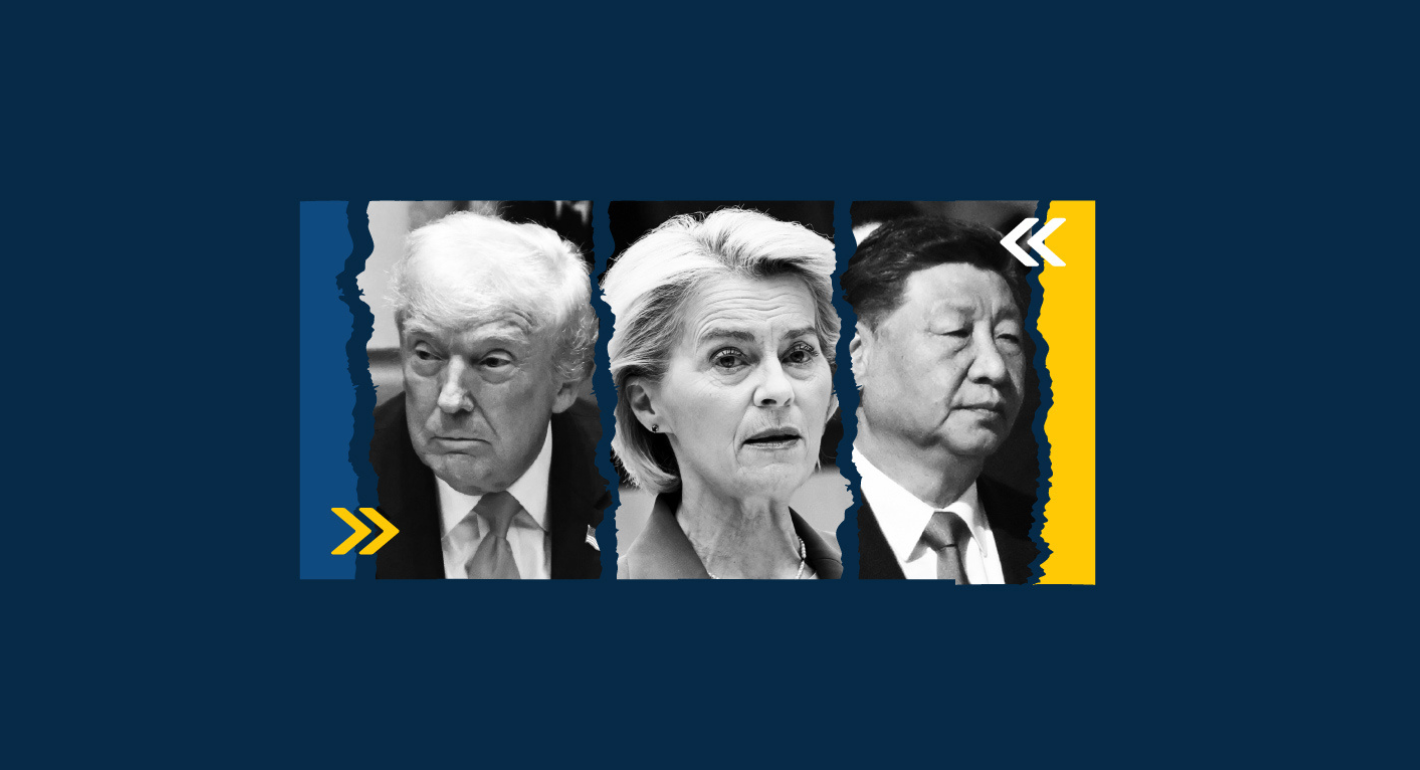
Between the United States’ market-driven approach and China's state-led industrial strategy, Europe is reckoning with how it can remain competitive in the global economy. But is Europe in danger of becoming a U.S. or China colony?
Noah Barkin, Anu Bradford