

Commentary
Judy Dempsey
{
  "authors": [
    "Judy Dempsey"
  ],
  "type": "legacyinthemedia",
  "centerAffiliationAll": "",
  "centers": [
    "Carnegie Endowment for International Peace",
    "Carnegie Europe"
  ],
  "collections": [],
  "englishNewsletterAll": "",
  "nonEnglishNewsletterAll": "",
  "primaryCenter": "Carnegie Europe",
  "programAffiliation": "",
  "programs": [],
  "projects": [],
  "regions": [
    "Russia",
    "North America"
  ],
  "topics": []
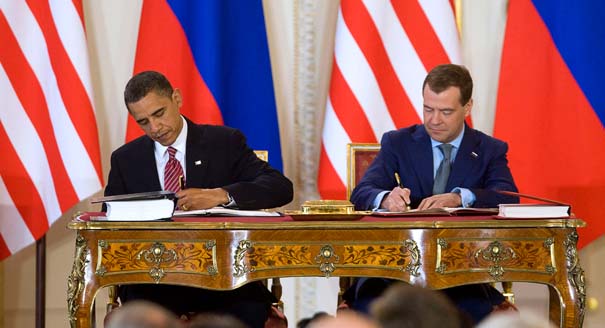
}
Source: Getty
The Obama administration is not giving up on reaching new arms control accords with the Russians and that includes the possibility of clinching a deal over tactical nuclear weapons.
Source: Munich Calling

She was the chief negotiator of the New Strategic Arms Reduction Treaty (New START) with the Russian Federation.
In a fairly upbeat assessment of the state of play for arms control, Ms. Gottemoeller said in an exclusive interview with MSC that the U.S. was willing to consider trade offs, such as the U.S.’s up-load capabilities as part of a package to persuade Russia to reduce it huge arsenal of tactical nuclear weapons.
This interview follows our recent article on arms control, where we were far less optimistic than Ms. Gottemoeller.
The administration, Ms. Gottemoeller added, wanted to negotiate arms controls reductions in three areas: in deployed strategic nuclear weapons, in non-deployed strategic nuclear weapons, and in non-strategic nuclear weapons, or tactical nuclear weapons, that concern Europe.Dempsey: Late last year, the Americans broke off conventional arms control talks with Russia. Why?
Assistant Secretary Gottemoeller: The situation simply could not continue indefinitely. The Russian Federation had “suspended implementation” of the Conventional Forces in Europe Treaty (CFE) in December 2007. Last fall, we decided we needed to take action. Together with a group of other Treaty signatories--NATO allies and partners Moldova and Georgia--we agreed to halt implementation of the Treaty with Russia. We continue to implement the CFE Treaty with all the other states-parties. We were sending a message; we considered it to be a rational countermeasure, and did it more in sorrow than in anger. It was a message to Russia that we would like to see them come back into implementation of the Treaty. The United States is committed to revitalizing the conventional arms control regime in Europe and continues to consult on finding a way forward with our Treaty partners.
Dempsey: What could restart negotiations?
Assistant Secretary Gottemoeller: Right now, I think we’re in a good place. It is still premature to talk about negotiations, but ceasing the implementation of the CFE Treaty toward Russia actually opens up an environment to explore new opportunities for the future of conventional arms control in Europe. But first we need to do some very basic work on the concepts and substance, together with our allies and partners, including the Russians. Everybody knows that the CFE Treaty simply is not relevant anymore to the current security situation in Europe. It was negotiated at a time when the Warsaw Pact was still standing against us.
Dempsey: It was a Cold War relic?
Assistant Secretary Gottemoeller: What we have now is an opportunity for a regime that would be clearly post Cold War. We need to think ahead about what will be most helpful, contributing to resolving the frozen conflicts and strengthening regional security. I think the Russians have the same interest in stable and predictable security relationships as other countries.
If you look at the entirety of Russia’s security outlook, tactical nuclear weapons are an important card, because its conventional forces are so weak. Where do we stand with regard to tactical nuclear weapons?
It is true that the Russian military doctrine is quite clear on the strategic importance they give to tactical nuclear weapons. But we need to pull the aperture wider. When President Obama signed the New START Treaty on April 8, 2010, he said that the United States would like to negotiate further reductions in three categories of nuclear arms: in deployed strategic nuclear weapons, in non-deployed strategic nuclear weapons (for example, held in storage facilities) and in non strategic nuclear weapons, the so-called tactical nuclear weapons, which are the ones that concern Europe. The President made it very clear that we want to tackle all three categories in the next arms reduction negotiations with Russia.
Dempsey: But why should the Russians agree to cuts in tactical weapons?
Assistant Secretary Gottemoeller: Again, you have to look at the full picture. The Russians have always said that they are concerned about U.S. up-load capabilities…
Dempsey: …meaning that the U.S. could relatively quickly bring back a substantial number of reserve nuclear weapons from storage…
Assistant Secretary Gottemoeller: …and that could be a part of the picture for future negotiations. I am not saying that we are making an official proposal at this point. But you have to have an idea what the trade-offs might be.
Dempsey: So far, there really has not been much movement on tactical weapons.
I would not say that. In fact, there has been movement in two areas: First, the United States has made it clear that we want to begin talking sooner rather than later about the issues affecting further reductions. And we want to begin talking sooner rather than later about transparency measures that we might pursue even before we get back to the negotiating table. And so, we are looking at some ideas in that regard. In the meantime, there is some important homework that we have to do within the NATO Alliance--the NATO Deterrence and Defense Posture Review is taking place right now. We know that NATO is committed to an extended deterrent and will remain a nuclear alliance for as long as nuclear weapons exist. In May, we are going to have the NATO summit in Chicago. That is an opportunity to reach some conclusions on what NATO policy is going to be with regard to non-strategic nuclear weapons.
Dempsey: Does missile defense complicate things?
We hope not! (laughs) Because we talk until we are blue in the face to make the point that we believe cooperation on missile defenses in Europe would be very much in the interests of the Russian Federation. Our goal is to reach agreement on a political framework to move missile defense cooperation forward and strengthen the overlapping capabilities that we have. We want to address the common threat that ballistic missiles pose for security in Europe, including for Russia. Through this cooperation, Russia would see first-hand that this system is designed and capable to defend only against missiles originating from the Middle East. At the same time, we have been trying to convey to them also that U.S. and NATO missile defenses in Europe are not intended nor will they be capable to undermine the Russian strategic offensive armed forces. The Russians remain to be convinced. But I don’t think it’s a hopeless situation. Not by any stretch of the imagination.
This article was originally published in the Munich Security Conference's Munich Calling.

Nonresident Senior Fellow, Carnegie Europe
Judy Dempsey is a nonresident senior fellow at Carnegie Europe
Recent Work
Judy Dempsey
Judy Dempsey
Carnegie does not take institutional positions on public policy issues; the views represented herein are those of the author(s) and do not necessarily reflect the views of Carnegie, its staff, or its trustees.
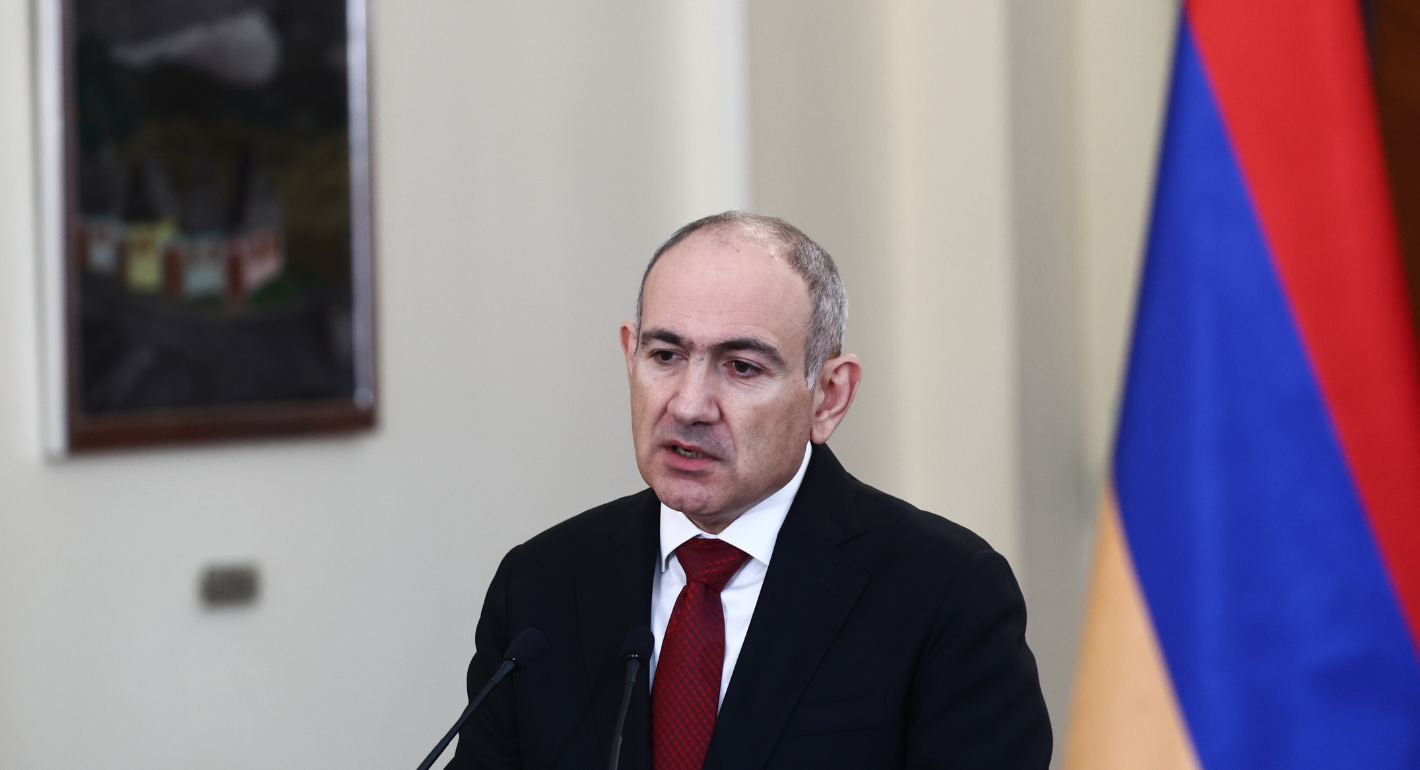
Europe has an interest in supporting Armenian leader Nikol Pashinyan as he tries to make peace with neighbors and loosen ties with Russia. But it is depersonalized support in the long term, not quickfire flash, that will win the day.

Thomas de Waal
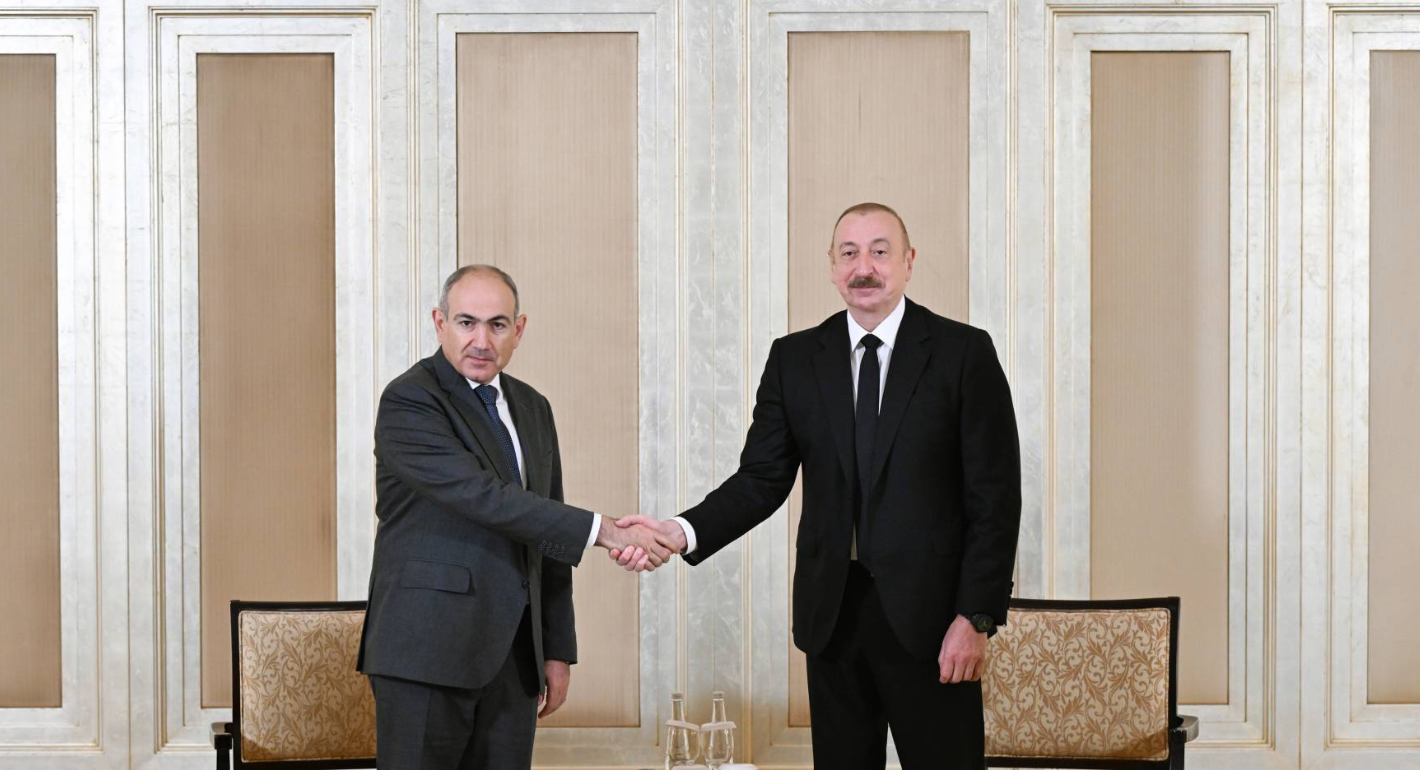
The U.S.-sponsored TRIPP deal is driving the Armenia-Azerbaijan peace process forward. But foreign and domestic hurdles remain before connectivity and economic interdependence can open up the South Caucasus.
Thomas de Waal, Areg Kochinyan, Zaur Shiriyev
The war in Ukraine is costing Russia its leverage overseas. Across the South Caucasus and Middle East, this presents an opportunity for Europe to pick up the pieces and claim its own sphere of influence.

William Dixon, Maksym Beznosiuk

Amid increased polarization and the influence of disinformation, radical-right parties are once again gaining traction across Europe. With landmark elections on the horizon in several countries, are the EU’s geostrategic vision and fundamental values under existential threat?


Catherine Fieschi, Cas Mudde
French President Emmanuel Macron has unveiled his country’s new nuclear doctrine. Are the changes he has made enough to reassure France’s European partners in the current geopolitical context?

Rym Momtaz, ed.