

Commentary
Nathan J. Brown
{
  "authors": [
    "Nathan J. Brown"
  ],
  "type": "legacyinthemedia",
  "centerAffiliationAll": "dc",
  "centers": [
    "Carnegie Endowment for International Peace",
    "Malcolm H. Kerr Carnegie Middle East Center"
  ],
  "collections": [
    "Arab Awakening"
  ],
  "englishNewsletterAll": "menaTransitions",
  "nonEnglishNewsletterAll": "",
  "primaryCenter": "Carnegie Endowment for International Peace",
  "programAffiliation": "MEP",
  "programs": [
    "Middle East"
  ],
  "projects": [],
  "regions": [
    "North Africa",
    "Egypt"
  ],
  "topics": [
    "Political Reform"
  ]
}
Source: Getty
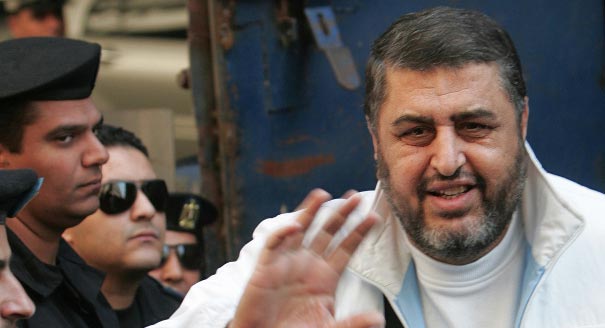
The Egyptian Muslim Brotherhood's decision to abandon its pledge not to run a presidential candidate is a strong indication of the Brotherhood’s conversion to a fully political logic.
Source: National Interest

One year ago, when I met him shortly after he was released from prison, I pressed al-Shater on the Brotherhood’s electoral ambitions. He was clearly haunted by the experiences of Algeria’s Islamists (FIS) and Palestine’s Hamas. (In his mind, both groups were denied the fruits of their electoral victory by domestic and international actors who preferred a coup to democracy.) Thus, the Brotherhood’s path to power would be gradual, he said. Yes, they might seek an electoral majority in a decade, but by that time he anticipated being in retirement. But now, merely twelve months later, al-Shater is running for his country’s top job.
The problem for Egypt is not al-Shater personally. Since the Brotherhood is still a fairly closed organization with a strong sense of discipline, it is difficult to state with precision very much about individual leaders. But my personal impression—formed in a series of meetings with al-Shater over the past year—is that he stands out among his colleagues for his practical focus, sense of responsibility and ability to listen carefully to other points of view. It is certainly those characteristics that endeared him for a while to many young mavericks within the movement (before he showed that he expected them ultimately to toe the line); it has also led him to take the lead in finding ways to reassure visiting foreign leaders anxious about the implications of the Brotherhood’s rise.For all his talents, al-Shater’s candidacy throws Egyptian politics into a state of complete uncertainty. First, there is the question of whether the presidential election will take place as planned. While there has been no move to cancel or postpone it, the announcement of al-Shater’s candidacy comes as the Brotherhood finds itself in the midst of bitter feuds with almost every other political actor and some key institutions: in recent weeks, the movement has publicly (if only verbally) clashed with liberals, the Coptic Church, the Islamic university of al-Azhar, Salafis, the military, the media and the judiciary. At this point, the movement seems to have picked a fight with everybody except the U.S. Department of State and Senator John McCain.
The Brotherhood’s political isolation, combined with its popularity and legions of loyal foot soldiers, may make for an unsteady mix. A full coup would not be necessary to disrupt the process. It might be possible for Brotherhood opponents to disrupt things through various legalisms, such as lawsuits or by finding al-Shater legally ineligible because of his past (highly political) convicitions. The Brotherhood clearly fears such a path, since it has criticized the Presidential Election Commission (whose decisions cannot be appealed) and implied its head is in the military’s pocket.
A second source of extreme uncertainty is the election itself. Assuming al-Shater’s candidacy and the balloting move forward, Egypt simply has no experience in competitive presidential campaigns, making it very hard to predict how people will vote. After the 2011 parliamentary elections, we have some sense that in those elections, organizational presence and local reputation are critical to mobilizing supporters, likely far more than specific program or ideology. But what of presidential balloting? The campaign and the balloting could be quite different. Who will vote, and how much will name recognition, individual reputation, personal charisma, program, organization and ideology count?
Yet another source of uncertainty stems from the fact that the rules of the political game are not yet written. The process of drafting a new constitution is in complete shambles as a result of the Brotherhood-led parliament having elected an Islamist-dominated body, provoking most non-Islamists (at this point, more than one quarter of those designated) to refuse to take their seats. The interim constitution--in operation until the permanent one is approved--is full of gaps and ambiguities, and even when it is comparatively clear, its operation is unpredictable. Consider one example of the many possible political paths: right now, the Brotherhood’s political party holds about 40 percent of the seats. That is enough to dominate the parliament with some parties in an electoral alliance with the Brotherhood and others in disarray. But an elected Brotherhood president might provoke most of the other deputies to line up against the Brotherhood, leading to gridlock.
Finally, one of the underappreciated uncertainties is the long-term effect of the current situation on the Brotherhood. Long accustomed to being a social movement with a broad agenda, ambiguous legal status, and oppositional pose, the Brotherhood is having to turn itself into a governing political party. The best minds in the movement have shifted from the Muslim Brotherhood organization to the movement’s political wing, the Freedom and Justice Party. The nomination of al-Shater forced his resignation from the top decision-making bureau of the Brotherhood, but it also makes him the most prominent Brotherhood figure (possibly eclipsing the more bashful Mohammed Badie, the formal leader). Offered the opportunity to participate, the Brotherhood seems to be shifting the logic of its decision making—from a former focus on religious values and long-term transformation of Egyptian society to new short-term political tactics.
Called to explain its decision to abandon its pledge not to run a presidential candidate, the Brotherhood has tried to respond. A fair summary of the justification would be: “In order not to endanger the revolution and democracy, we agreed not to run a candidate. But things have changed. We now see that the revolution and democracy are in danger. So we feel called upon to run a candidate.” There is no better indication of the Brotherhood’s conversion to a fully political logic.

Nonresident Senior Fellow, Middle East Program
Nathan J. Brown, a professor of political science and international affairs at George Washington University, is a distinguished scholar and author of nine books on Arab politics and governance, as well as editor of five books.
Recent Work
Nathan J. Brown
Nathan J. Brown
Carnegie does not take institutional positions on public policy issues; the views represented herein are those of the author(s) and do not necessarily reflect the views of Carnegie, its staff, or its trustees.

Before the next wave of EU enlargement takes place, the union needs to grapple with thorny questions of how power is distributed among its members.


Emil Sondaj Hansen, Ditte Brasso Sørensen

As the EU confronts profound challenges, several leaders have called for fundamental reform to the union’s model—but only modest, superficial changes have resulted. What if Europe really could be reimagined from zero today: What should such a redesigned European order look like?

Richard Youngs, ed.

The EU’s new migration policy is not suited to today’s realities. With climate change increasingly becoming a driver of displacement, Europe needs to rethink its deterrence-focused approach.

Shana Tabak

Preparing candidate countries for EU membership is no longer enough. As the enlargement process becomes a reality, the union must also prepare its own societies.

Iliriana Gjoni
Countries face several hurdles in joining the EU, including the final stage of ratifying their accession treaties. Procedural reforms and substantive adjustments could help move the process forward.

Stefan Lehne