

• Research
  • Strategic Europe
  • About
  • Experts
Carnegie Europe logoCarnegie lettermark logo
EUUkraine
  • Donate
{
  "authors": [
    "Milan Vaishnav",
    "Justin Sandefur"
  ],
  "type": "legacyinthemedia",
  "centerAffiliationAll": "dc",
  "centers": [
    "Carnegie Endowment for International Peace"
  ],
  "collections": [],
  "englishNewsletterAll": "ctw",
  "nonEnglishNewsletterAll": "",
  "primaryCenter": "Carnegie Endowment for International Peace",
  "programAffiliation": "SAP",
  "programs": [
    "South Asia"
  ],
  "projects": [],
  "regions": [
    "North America",
    "South America"
  ],
  "topics": [
    "Economy"
  ]
}

Source: Getty

In The Media

Three Questions about Honduras’s New Charter City

Honduras has altered its constitution to open the way to building a new “Special Economic Zone," but this charter city raises some important questions.

Link Copied
By Milan Vaishnav and Justin Sandefur
Published on Jun 14, 2012

Source: Center for Global Development

One of the biggest experiments in development economics is about to begin on Honduras’s Northern Coast.  Honduras has altered its constitution to open the way to ceding a large tract of land to build a new “Special Economic Zone”, modeled on NYU economist Paul Romer’s idea of charter cities — new cities, built up from scratch, where first-world institutions and third-world immigrants can meet and do business.

CGD has close ties to this idea.  Romer is a CGD non-resident fellow, and CGD president Nancy Birdsall and senior fellow Michael Clemens are both associated with the Transparency Commission that will oversee the Honduran experiment.  CGD does not take institutional positions though, and as anyone who’s visited an internal seminar or staff lunch knows, there’s room for vigorous debate.

Back in April, the members of the Transparency Commission met here in DC, and over lunch CGD staff had a chance to hear them explain their ideas for the city and ask questions.  Since then, there’s been an active debate in the hallways here about the charter city model.  We want to take that debate into the public domain.  To kick things off, here are three questions that we think proponents of the Honduran initiative need to grapple with.

  • Democracy: Is the charter city model at odds with principles of accountability and democracy?
  • Time inconsistency: Can Honduras credibly commit to investors that the rules of the zone won’t change?
  • History and context: Is it realistic to talk about creating an institutional blank slate in the Honduran jungle?

Our musings on these questions got a bit long for the blog, so we’ve posted them as a CGD essay where we explain some of our concerns in more detail and offer a couple of ideas to address them.

This article originally appeared at the Center for Global Development.

About the Authors

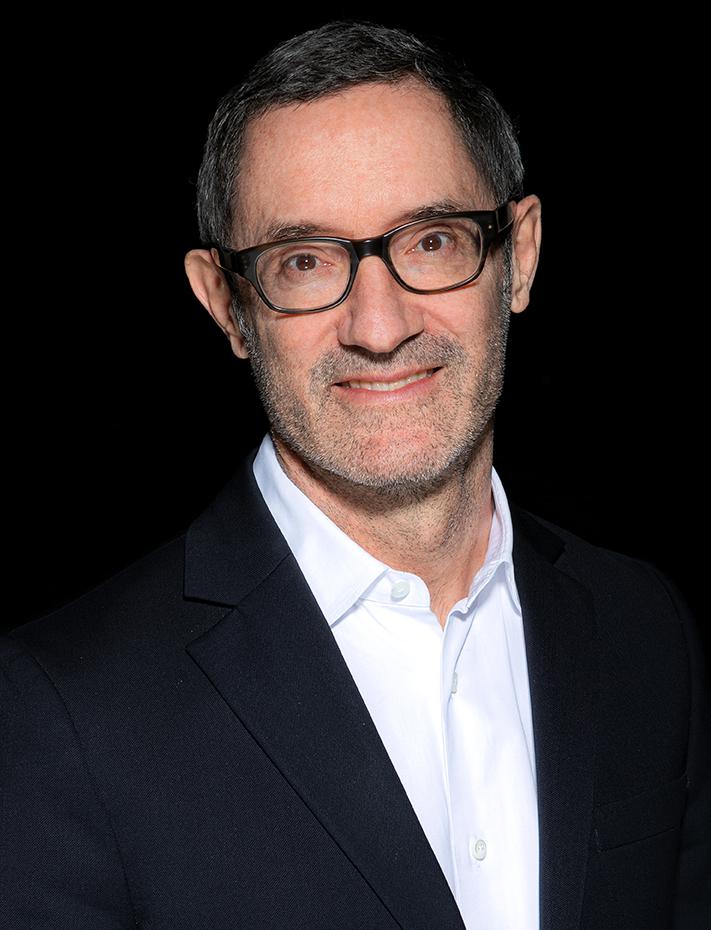
Milan Vaishnav

Director and Senior Fellow, South Asia Program

Milan Vaishnav is a senior fellow and director of the South Asia Program and the host of the Grand Tamasha podcast at the Carnegie Endowment for International Peace. His primary research focus is the political economy of India, and he examines issues such as corruption and governance, state capacity, distributive politics, and electoral behavior. He also conducts research on the Indian diaspora.

Justin Sandefur

Center for Global Development

Authors

Milan Vaishnav
Director and Senior Fellow, South Asia Program
Milan Vaishnav
Justin Sandefur
Center for Global Development
EconomyNorth AmericaSouth America

Carnegie does not take institutional positions on public policy issues; the views represented herein are those of the author(s) and do not necessarily reflect the views of Carnegie, its staff, or its trustees.

More Work from Carnegie Europe

  • Commentary
    Strategic Europe
    How Europe Can Survive the AI Labor Transition

    Integrating AI into the workplace will increase job insecurity, fundamentally reshaping labor markets. To anticipate and manage this transition, the EU must build public trust, provide training infrastructures, and establish social protections.

      Amanda Coakley

  • Commentary
    Strategic Europe
    Taking the Pulse: Can the EU Attract Foreign Investment and Reduce Dependencies?

    EU member states clash over how to boost the union’s competitiveness: Some want to favor European industries in public procurement, while others worry this could deter foreign investment. So, can the EU simultaneously attract global capital and reduce dependencies?

      • Rym Momtaz

      Rym Momtaz, ed.

  • Commentary
    Strategic Europe
    Europe Falls Behind in the South Caucasus Connectivity Race

    The EU lacks leadership and strategic planning in the South Caucasus, while the United States is leading the charge. To secure its geopolitical interests, Brussels must invest in new connectivity for the region.

      Zaur Shiriyev

  • Commentary
    Strategic Europe
    The EU and India in Tandem

    As European leadership prepares for the sixteenth EU-India Summit, both sides must reckon with trade-offs in order to secure a mutually beneficial Free Trade Agreement.

      Dinakar Peri

  • Commentary
    Strategic Europe
    Taking the Pulse: Is the EU Too Weak to Be a Global Player?

    Beset by an increasingly hostile United States, internal divisions, and the threat of Russian aggression, the EU finds itself in a make-or-break moment. U.S. President Donald Trump calls it a decaying group of nations headed by weak leaders. Is Europe able to prove him wrong?

      Thomas de Waal

Get more news and analysis from
Carnegie Europe
Carnegie Europe logo, white
Rue du Congrès, 151000 Brussels, Belgium
  • Research
  • Strategic Europe
  • About
  • Experts
  • Projects
  • Events
  • Contact
  • Careers
  • Privacy
  • For Media
  • Gender Equality Plan
Get more news and analysis from
Carnegie Europe
© 2026 Carnegie Endowment for International Peace. All rights reserved.