• Research
  • Strategic Europe
  • About
  • Experts
Carnegie Europe logoCarnegie lettermark logo
EUUkraine
  • Donate
{
  "authors": [
    "Karim Sadjadpour"
  ],
  "type": "legacyinthemedia",
  "centerAffiliationAll": "dc",
  "centers": [
    "Carnegie Endowment for International Peace"
  ],
  "collections": [
    "Arab Awakening"
  ],
  "englishNewsletterAll": "menaTransitions",
  "nonEnglishNewsletterAll": "",
  "primaryCenter": "Carnegie Endowment for International Peace",
  "programAffiliation": "MEP",
  "programs": [
    "Middle East"
  ],
  "projects": [],
  "regions": [
    "Middle East",
    "Syria"
  ],
  "topics": [
    "Political Reform",
    "Foreign Policy"
  ]
}
Source: Getty

In The Media

Chaos In Syria And Regional Implications

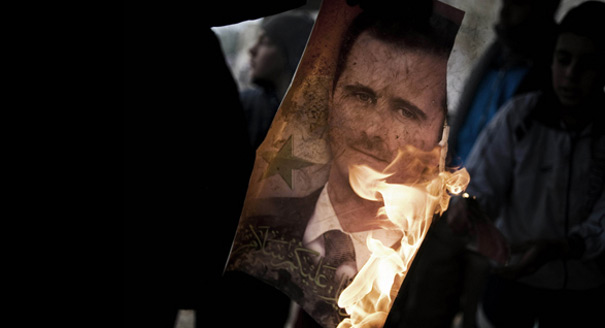
As violence continues to spiral out of control in Syria, the United States has begun to play a larger behind the scenes role in aiding the Syrian opposition.

Link Copied
By Karim Sadjadpour
Published on Jul 23, 2012

Source: NPR's Diane Rehm Show

As the battle for Aleppo becomes increasingly violent, government troops in Damascus have gone door to door in an effort to clear out the rebels in the capital. Violence continues to spiral out of control with the international community hesitating to take action, due to the complexity of the Syrian case. In recent days, rebels have stepped up guerrilla style attacks in urban areas and the Syrian army has responded with gunships and tanks. Speaking on the Diane Rehm Show, Carnegie's Karim Sadjadpour explained that over 3,000 people have been killed in July alone and the United States has begun working behind the scenes, along with Gulf States like Qatar and Saudi Arabia, to support the rebels.  Sadjadpour said “I think what the U.S. can do is to help the opposition help themselves, meaning helping them with ammunitions, with weapons, with information, with intelligence.” However, “there's very little appetite to have U.S. boots on the ground,” concluded Sadjadpour.

About the Author

Karim Sadjadpour

Senior Fellow, Middle East Program

Karim Sadjadpour is a senior fellow at the Carnegie Endowment for International Peace, where he focuses on Iran and U.S. foreign policy toward the Middle East.

    Recent Work

  • Q&A
    What’s Keeping the Iranian Regime in Power—for Now

      Aaron David Miller, Karim Sadjadpour, Robin Wright

  • Q&A
    How Washington and Tehran Are Assessing Their Next Steps

      Aaron David Miller, David Petraeus, Karim Sadjadpour

Karim Sadjadpour
Senior Fellow, Middle East Program
Karim Sadjadpour
Political ReformForeign PolicyMiddle EastSyria

Carnegie does not take institutional positions on public policy issues; the views represented herein are those of the author(s) and do not necessarily reflect the views of Carnegie, its staff, or its trustees.

More Work from Carnegie Europe

  • Commentary
    Strategic Europe
    The Fog of AI War

    In Ukraine, Gaza, and Iran, AI warfare has come to dominate, with barely any oversight or accountability. Europe must lead the charge on the responsible use of new military technologies.

      Raluca Csernatoni

  • Commentary
    Strategic Europe
    How to Join the EU in Three Easy Steps

    Montenegro and Albania are frontrunners for EU enlargement in the Western Balkans, but they can’t just sit back and wait. To meet their 2030 accession ambitions, they must make a strong positive case.

      Dimitar Bechev, Iliriana Gjoni

  • Commentary
    Strategic Europe
    Taking the Pulse: Can NATO Survive the Iran War?

    Donald Trump has repeatedly bashed NATO and European allies, threatening to annex Canada and Greenland and deploring their lack of enthusiasm for his war of choice in Iran. Is this latest round of abuse the final straw?

      • Rym Momtaz

      Rym Momtaz, ed.

  • Commentary
    Strategic Europe
    On NATO, Trump Should Embrace France Instead of Bashing It

    Donald Trump’s repudiation of NATO goes against the Make America Great Again vision of a U.S.-centered foreign policy. If the goal is to preserve the alliance by boosting Europe’s commitments, leaning into France’s vision is the most America First way forward.

      • Rym Momtaz

      Rym Momtaz

  • Commentary
    Europe Doesn’t Like War—for Good Reasons

    The wars in Ukraine and the Middle East are existential threats to Europe as a peace project. Leaders and citizens alike must reaffirm their solidarity to face up to today’s multifaceted challenges.

      Marc Pierini

Get more news and analysis from
Carnegie Europe
Carnegie Europe logo, white
Rue du Congrès, 151000 Brussels, Belgium
  • Research
  • Strategic Europe
  • About
  • Experts
  • Projects
  • Events
  • Contact
  • Careers
  • Privacy
  • For Media
  • Gender Equality Plan
Get more news and analysis from
Carnegie Europe
© 2026 Carnegie Endowment for International Peace. All rights reserved.








