• Research
  • Strategic Europe
  • About
  • Experts
Carnegie Europe logoCarnegie lettermark logo
EUUkraine
  • Donate
{
  "authors": [],
  "type": "other",
  "centerAffiliationAll": "",
  "centers": [
    "Carnegie Endowment for International Peace"
  ],
  "collections": [],
  "englishNewsletterAll": "",
  "nonEnglishNewsletterAll": "",
  "primaryCenter": "Carnegie Endowment for International Peace",
  "programAffiliation": "",
  "programs": [],
  "projects": [],
  "regions": [
    "North Africa",
    "Egypt"
  ],
  "topics": []
}
Source: Getty

Other

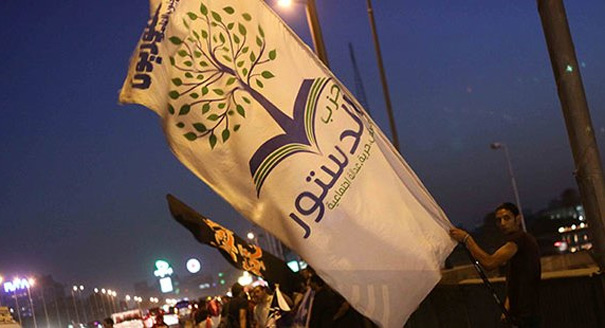
Constitution Party

A backgrounder on the Constitution Party.

Link Copied
Published on Oct 31, 2012

This resource was published on 10/31/2012 and is not updated to reflect changing circumstances.

The Al-Dostour Party was launched in April 2012 by Nobel laureate Mohamed ElBaradei as a broad nonideological party with the aim of advancing the January 25 revolution’s goals and democracy in Egypt. The party was officially licensed in September 2012 to be one of the few serious non-Islamist contenders set to challenge the ruling Islamist government in the coming parliamentary elections later this year or early 2013.

Major Party Figures

Mohamed ElBaradei: President and founding member
George Ishak: founding member
Emad Abou Ghazi: founding member
Ahmed Harara: founding member
Mohamed Yousri Salama: founding member
Gamila Ismail: founding member
Hossam Eissa: founding member
Mohamed Ghoneim: founding member

Background

After a weak performance in the 2011–2012 parliamentary elections, non-Islamists refocused their efforts on organizing and challenging the ruling Freedom and Justice Party for power in 2012.

On April 28, Mohamed ElBaradei and some of Egypt’s most notable public intellectuals, liberal, and leftist figures announced their intent to found the Al-Dostour Party in order “to save the great January 25 revolution, which has been derailed, and is almost aborted, and to restore our unity.”

Al-Dostour describes its ideology as “Egyptian and inclusive,” distancing itself from the Islamist-secular divide and focusing instead on issues that people care and agree about like education, healthcare, and poverty. In practice, most Egyptians largely view Al-Dostour, founded as a response to the increasing influence of Islamists, as a political rival of the Muslim Brotherhood’s Freedom and Justice Party.

On September 16, the Political Parties Affairs Committee approved the establishment of Al-Dostour. On the same day it was reported that the Adl Party and the Egyptian Social Democratic Party were seeking to merge with the new organization.

Platform

The party is rooted in five main principles and beliefs:

  1. Citizenship and good governance
  2. Government’s important role in economic development
  3. Government’s responsibility to achieve social justice
  4. Peaceful political life
  5. Self-reliance, identity protection, and opening to the world

Political Issues

  • Guaranteeing fundamental human rights to citizens by permanently enshrining them in the constitution
  • Establishing a democratic republic based on popular sovereignty and citizens’ rights, with equal powers between the branches (the party does not advocate either a presidential or parliamentary system)
  • Guaranteeing the independence of print and broadcast media broadcast from government institutions
  • Promoting a system of governance based on party pluralism and the right of every citizen to establish a political party so long as it is not based on principles contrary to fundamental human rights
  • Supporting the full independence and separation of the judiciary from the executive, abolishing state security courts, and forbidding military courts from trying civilians
  • Strengthening civil society groups, including unions and syndicates, by inhibiting government interference in their affairs
  • Ending state interference and oversight over religious institutions like al-Azhar and Christian churches, believing that religion is owned by the people and not the state
  • Strengthening and giving more powers to elected local assembles and ending state interference in their internal affairs
  • Ensuring that the incumbent government will respect the independence and neutrality of state institutions, because total government control of the state leads to government oppression of the citizen

Socioeconomic Issues

  • Containing poverty and providing opportunities and fundamental services to all citizens
  • Providing universal healthcare and reducing costs by fundamentally reforming the healthcare system
  • Stabilizing the tax rate on all citizens to avoid tax evasion and ensuring that the poor do not pay the same rate as the rich
  • Ensuring price and market stability by decreasing inflation, combating monopolies, and strengthening consumer rights groups
  • Providing dignified work opportunities with just pay, believing that work is a fundamental right of citizens
  • Developing slums and marginalized communities, and providing them with public services
  • Reforming the government pay structure and addressing the issue of overemployment
  • Implementing agricultural reforms that would free farmers from exploitation and revitalize Egyptian farming villages
  • Expanding workers’ ownership of factories by supporting cooperatives and public-private enterprises that give shares to workers
  • Developing Egypt’s electricity infrastructure and increasing dam energy output
  • Supporting renewable energy in all of its forms
  • Reforming energy subsidies by eliminating subsides for heavy users and keeping them in place for responsible users, incentivizing citizens to be greener
  • Reforming the educational system to promote innovation and civic education

Foreign Policy Issues

  • Proposing a new and holistic perspective for dealing with traditional national security priorities for Egypt that include: the Nile Basin, the Arab world, and more broadly the Middle East, including Turkey and Iran, the Mediterranean Sea, the Atlantic Ocean, and the Sahel
  • Restructuring the Arab League since its current form fails to foster a real atmosphere of cooperation between Arab states
  • Supporting the rights of Palestinians while steering Egypt away from empty rhetoric and focusing on a sound strategy to solve the Palestinian-Israeli conflict
  • Reforming Egypt’s relationship with the United States to steer it away from the binary choice between alliance and enmity
  • Reevaluating the value of U.S. assistance to Egypt to ensure that costs will not outweigh benefits
  • Ensuring that Egypt’s relationship with the United States is not simply tied to Egypt’s relationship with Israel
  • Expanding and strengthening cooperation with the European Union, not as an alternative to the United States, but as a close and understanding partner
North AfricaEgypt

Carnegie does not take institutional positions on public policy issues; the views represented herein are those of the author(s) and do not necessarily reflect the views of Carnegie, its staff, or its trustees.

More Work from Carnegie Europe

  • Commentary
    Strategic Europe
    Taking the Pulse: What Issue Is Europe Ignoring at Its Peril in 2026?

    2026 has started in crisis, as the actions of unpredictable leaders shape an increasingly volatile global environment. To shift from crisis response to strategic foresight, what under-the-radar issues should the EU prepare for in the coming year?

      Thomas de Waal
  • Commentary
    Can Europe and Africa Mend Fences?

    Despite the strategic importance of relations between the EU and the African Union, deep divisions remain between the blocs. At their upcoming summit, both partners should strive to build a mutually beneficial cooperation.

      Marta Martinelli
  • EU Pact for Mediterranean
    Article
    The EU’s Dead-on-Arrival Pact for the Mediterranean

    The EU’s new Pact for the Mediterranean aims to reshape the bloc’s relations with its Southern neighborhood. But the initiative lacks concrete measures to address societal divides and the region’s pressing challenges.

      Richard Youngs
  • The EU Needs Values-Based Engagement in the Southern Mediterranean
    Commentary
    Strategic Europe
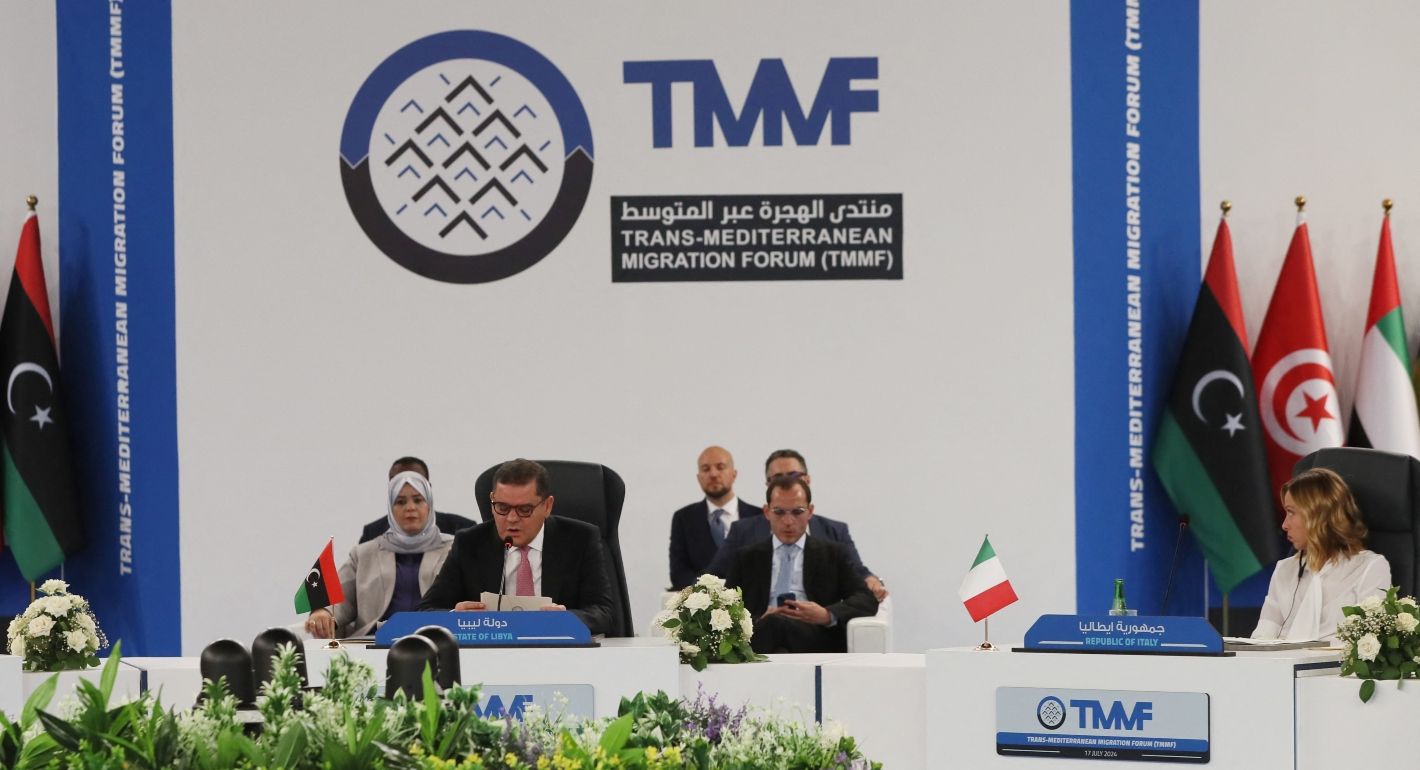
    The EU Needs Values-Based Engagement in the Southern Mediterranean

    As the EU prepares a new pact for its Southern neighborhood, the union should balance economic and security interests with support for civil society, political reforms, and inclusive governance.
      • Hussein Baoumi headshot

      Hussein Baoumi

  • Paper
    Understanding the Energy Drivers of Turkey’s Foreign Policy

    Turkey’s dependence on energy imports has an impact on the country’s economic and geopolitical orientation. Turkish leaders should devise energy policies that respond to domestic priorities, regional ambitions, and the challenges posed by climate change.

      • Francesco Siccardi

      Francesco Siccardi

Get more news and analysis from
Carnegie Europe
Carnegie Europe logo, white
Rue du Congrès, 151000 Brussels, Belgium
  • Research
  • Strategic Europe
  • About
  • Experts
  • Projects
  • Events
  • Contact
  • Careers
  • Privacy
  • For Media
  • Gender Equality Plan
Get more news and analysis from
Carnegie Europe
© 2026 Carnegie Endowment for International Peace. All rights reserved.