

Commentary
Yukon Huang, Isaac B. Kardon, Matt Sheehan
{
  "authors": [
    "Yukon Huang"
  ],
  "type": "legacyinthemedia",
  "centerAffiliationAll": "dc",
  "centers": [
    "Carnegie Endowment for International Peace"
  ],
  "collections": [],
  "englishNewsletterAll": "asia",
  "nonEnglishNewsletterAll": "",
  "primaryCenter": "Carnegie Endowment for International Peace",
  "programAffiliation": "AP",
  "programs": [
    "Asia"
  ],
  "projects": [],
  "regions": [
    "East Asia",
    "China"
  ],
  "topics": [
    "Economy"
  ]
}
Source: Getty
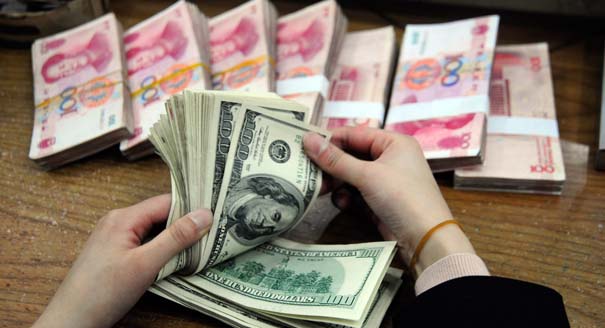
Even as the currency war between China and the United States recedes, the battle over foreign investment and technology transfer policies will continue to escalate in the coming months.
Source: Council on Foreign Relations

Over the past year, markets were fixated on China's economic slowdown given the unrealistic hope that continued double-digit growth might compensate for the problems afflicting the OECD economies. But slower growth will be good for China if it represents a more sustainable path. As a maturing economy, quality rather than quantity of growth is what now matters.
With slackened import demand in the United States and Europe, China's already much reduced trade surplus will continue to decline. The renminbi is no longer significantly out of line, although the United States will probably be the last to acknowledge the new reality.
Currency wars will recede as the source of tension for the two countries, but circumstances will push them to battle over foreign investment and technology transfer policies. This is evident in the recent outcries over security risks as Chinese firms seek greater access to the U.S. market and U.S. firms are pressured to share valuable technologies as the price for accessing China's market.
China is the center of an Asian production sharing network that brings in components from other countries for assembly with export of the final product to the West. But these are low paying assembly jobs, and the priority now is to develop more sophisticated product lines that can generate the better paying positions needed to sustain rapid growth.
Beijing believes that this needs to come through development of "indigenous" technology, as was the case with South Korea and Taiwan. This involves securing the technological expertise either from abroad or developing it locally with or without the involvement of foreign partners. Thus tensions over technology transfer and respect for intellectual property rights will likely dominate discussions between the United States and China this coming year even as the rhetoric over exchange rates moderates.
This piece was originally published by the Council on Foreign Relations.

Senior Fellow, Asia Program
Huang is a senior fellow in the Carnegie Asia Program where his research focuses on China’s economy and its regional and global impact.
Recent Work


Yukon Huang, Isaac B. Kardon, Matt Sheehan
Yukon Huang, Genevieve Slosberg

The hybrid warfare landscape is evolving rapidly, leaving policymakers without clear strategies. To better inform their work in addressing emerging challenges, governments must dig deeper into the underlying dynamics at play.


Raluca Csernatoni, Alicia Wanless
As geopolitical rivalry weaponizes global supply chains, the EU’s true vulnerability lies in emerging-risk imports. For these goods, suppliers are growing more concentrated, substitution more difficult, and political risk is looming.

Sinan Ülgen

The EU is putting together a new security strategy to meet today’s myriad challenges. But for any proposal to be effective, the union needs to grapple with its identity and ambitions.

Pierre Vimont
Amid uncertainty caused by the Iran war, the global drive for nonproliferation has stalled. With Europe diplomatically marginalized and countries reassessing their nuclear options, efforts to curb the spread of nuclear weapons risk becoming irrelevant.

Jane Darby Menton
Between the United States’ market-driven approach and China's state-led industrial strategy, Europe is reckoning with how it can remain competitive in the global economy. But is Europe in danger of becoming a U.S. or China colony?


Noah Barkin, Anu Bradford