

Research
- +10
Rosa Balfour, Frances Z. Brown, Yasmine Farouk, …
{
  "authors": [
    "Moisés Naím"
  ],
  "type": "legacyinthemedia",
  "centerAffiliationAll": "",
  "centers": [
    "Carnegie Endowment for International Peace"
  ],
  "collections": [],
  "englishNewsletterAll": "",
  "nonEnglishNewsletterAll": "",
  "primaryCenter": "Carnegie Endowment for International Peace",
  "programAffiliation": "",
  "programs": [],
  "projects": [],
  "regions": [
    "North America"
  ],
  "topics": [
    "Political Reform",
    "Economy",
    "Global Governance"
  ]
}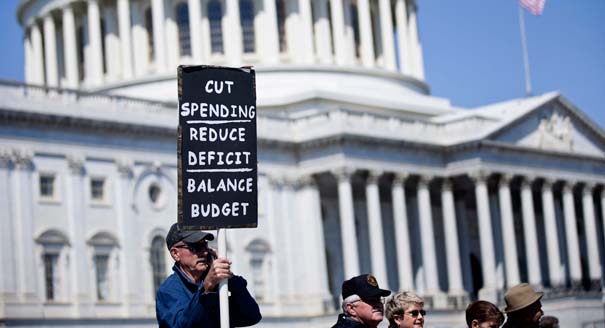
Source: Getty
Although the change in power dynamics has led to increased competition and advanced opportunities for voters, citizens, workers, and entrepreneurs, it is also tied to the political gridlock taking place around the world.
Source: Yahoo's Daily Ticker
Speaking on Yahoo's Daily Ticker, Carnegie's Moisés Naím discussed the fleeting nature of power. Chief executives in 30 of 34 democracies are dealing with a parliament controlled by the opposition, as landslide victories are becoming "endangered species." Political gridlock has been observed at home in Washington, D.C. with the sequester, as well as abroad with the outcome of the Italian elections. The trend is evidenced in corporations as well, asserted Naím. Although the financial sector continues to be powerful, the use and the capacity of their power are constrained.
Although this change in power dynamics seems beneficial and a shift to celebrate, there are risks, Naím continued. Aside from the increased competition, more intense scrutiny, and advanced opportunities for voters, citizens, workers, and entrepreneurs, the downside is manifesting in the gridlock observed in politics. Gridlock is creating weaker democracies with governments incapable of delivering timely decisions effectively. This is in turn making decisions on a global level more difficult. Furthermore, the capacity for countries to work collaboratively to tackle issues is declining, explained Naím.
It would be too simple to say the Internet, media, and other IT revolutionary technologies are the driving forces, Naím added. These are simply tools that are being used by users. But these users are being driven, directed, and motivated by tertiary factors. These tectonic changes, as Naím described them, include changes in demographics as well as the international distribution of assets and activities. The forces behind the shift in power can be categorized as either the More revolution, the Mobility revolution, and the Mentality revolution.
This interview was originally broadcast on Yahoo's Daily Ticker.

Distinguished Fellow
Moisés Naím is a distinguished fellow at the Carnegie Endowment for International Peace, a best-selling author, and an internationally syndicated columnist.
Recent Work



Rosa Balfour, Frances Z. Brown, Yasmine Farouk, …
Moisés Naím
Carnegie does not take institutional positions on public policy issues; the views represented herein are those of the author(s) and do not necessarily reflect the views of Carnegie, its staff, or its trustees.

As the EU confronts profound challenges, several leaders have called for fundamental reform to the union’s model—but only modest, superficial changes have resulted. What if Europe really could be reimagined from zero today: What should such a redesigned European order look like?

Richard Youngs, ed.
While Russia is not ready to sue for peace on Europe’s terms, it could still either seek a ceasefire in Ukraine or try escalation. Brussels needs to prepare for both and prioritize that preparation over normative discussions.
Kadri Liik

As geopolitical rivalry weaponizes global supply chains, the EU’s true vulnerability lies in emerging-risk imports. For these goods, suppliers are growing more concentrated, substitution more difficult, and political risk is looming.

Sinan Ülgen

The EU is putting together a new security strategy to meet today’s myriad challenges. But for any proposal to be effective, the union needs to grapple with its identity and ambitions.

Pierre Vimont
Between the United States’ market-driven approach and China's state-led industrial strategy, Europe is reckoning with how it can remain competitive in the global economy. But is Europe in danger of becoming a U.S. or China colony?
Noah Barkin, Anu Bradford